They are sticking to it when the family is reunited.

65d06e8b0cf2c58fb4880ef5

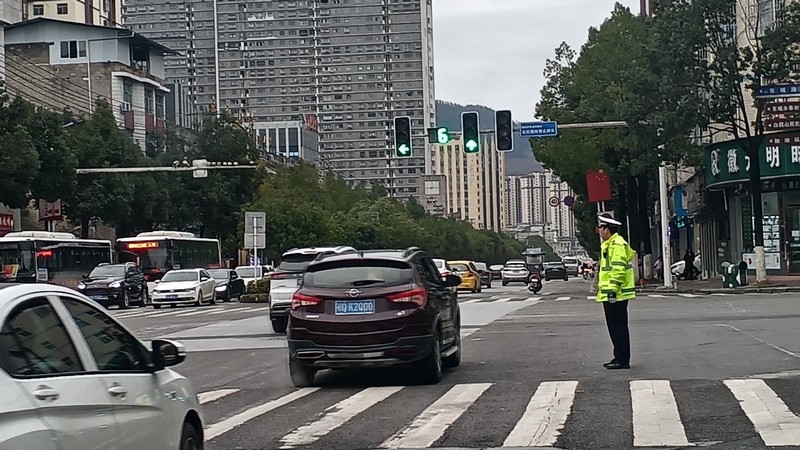
Direct traffic.

65d06eee0cf26148d5d8914b

Help citizens push carts.

65d06ebd0cf26148d5d89149

Security check.

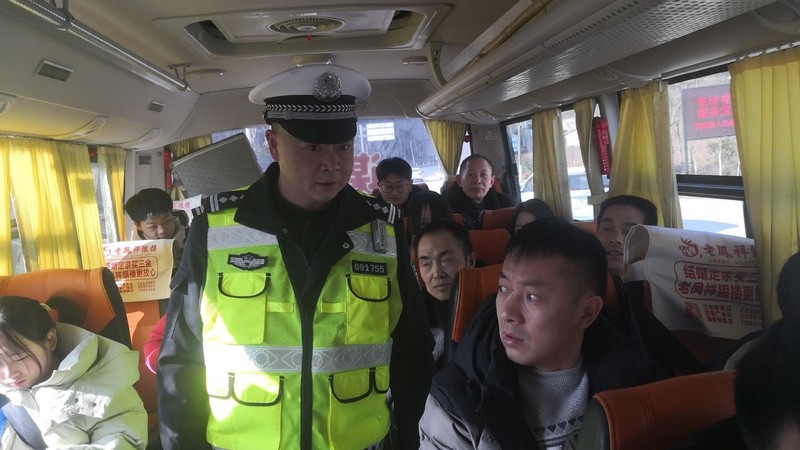
During the Spring Festival holiday, in Lichuan, no matter in the winding and rugged national and provincial roads or in the busy urban areas, you will always see a group of people who give up their families and give up the days of family reunion, still stick to their jobs, protect peace and ensure smooth flow, and play a "Peace Song" with loyalty and responsibility. They are all the auxiliary police officers of the traffic police brigade of Lichuan Public Security Bureau.

Protecting peace on the national and provincial lines

February 10th, the first day of the Spring Festival. The long-lost sun jumped out of the mountains and shone warmly on the earth.

"It’s foggy on the mountain, so be sure to keep a good distance and pass slowly!" Early in the morning, on the Tianping of Qiyue Mountain on National Highway 350, the fog was locked and the warning lights flashed. On the roadside, the auxiliary police officers of the 1st Squadron of the Traffic Police Brigade of Lichuan City Public Security Bureau are checking the passing buses on the road to see if the passengers are wearing their seat belts, and urging the drivers not to be overcrowded or overloaded, drive carefully and travel safely.

In order to do a good job in passenger traffic safety management during the Spring Festival holiday and prevent serious passenger traffic accidents, the traffic police brigade of Lichuan Public Security Bureau adheres to the management concept of "safety supervision is not excessive, and safety guards don’t close". All directly affiliated squadrons organize police forces to strengthen patrol control and watch over provincial highways such as 318, 350 and 242 in their respective jurisdictions, and strictly investigate serious traffic violations such as overcrowding, overloading, speeding and fatigue driving of more than six passenger vehicles, so as to do it effectively.

At the top of Qiyue Mountain on National Highway 318, the whistling mountain wind is chilly. Early in the morning, Yang Hua, a policeman of the passenger squadron, led the police to be on duty at the top of the mountain. The old policeman who has worked in the passenger management post for many years, looking at the sporadic snow on the road, always worried, stopped a bus from the city to Jiannan, and told the driver to drive carefully on the ice and snow road.

Keep busy on Baochang post.

February 12, the third day of the New Year. Lichuan ushered in the first round of traffic peak after the holiday. In many places, such as the overpass in the city and the traffic lights at the east expressway, the police officers on duty are full of energy, standing on the road, turning, waving their arms and whistling, and the vehicles pass safely and orderly under their command.

"This intersection is the traffic in and out of the city ‘ Master valve ’ A little carelessness will cause traffic congestion. We have been fighting in this position for three days and the traffic flow has not decreased. " On February 15, at the intersection of the east traffic lights of the urban expressway, the policeman Gao Deyun was directing traffic.

In order to win the tough battle of Spring Festival travel rush and Spring Festival, the traffic police brigade of Lichuan Public Security Bureau strictly implements the measures to ensure the smooth traffic in the city, and assigns personnel, posts and responsibilities, giving full play to the strength of the whole brigade to ensure the smooth traffic in the city.

The brigade set up 23 duty points in the urban area, and arranged police stations on six avenues for patrol control. Take the way of "technology+labor" to remove traffic jams and direct vehicles to travel smoothly. At the intersection of traffic peak, the road police call the command room through walkie-talkie to optimize the allocation of traffic lights and improve the road access rate. It is reported that during the Spring Festival holiday, the command room adjusted the traffic lights for more than 300 times a day on average.

In order to realize the seamless connection between the police and the police, and to ensure that the security posts are not lost, the brigade takes turns to eat or send lunch boxes to the duty stations to strengthen the security.

On Baochang Hill, the wheels are rolling and the cold wind is blowing gently. The people’s auxiliary police don’t have steaming meals like home and canteen, but their inner enthusiasm for the people’s smooth flow and their confidence and determination to win the "smooth war" are better than the cold. In the car and on the roadside, they quickly finished their lunch boxes and returned to Baochanggang in time to direct the traffic.

"Others have holidays, and we have ‘ Guan ’ The bigger the holiday, the busiest time for our traffic police! " In the battle of Baochang, the battalion chief in charge of commanding the operation felt sincerely to Yongsheng.

Stick to the accident post

On the first day of New Year’s Day, in the accident handling squadron of the traffic police brigade of Lichuan City Public Security Bureau, police officers Sun Defeng and Zhu Bozheng led the police to stick to the police post. On the desk, the noodles of fast food barrels are emitting hot air, which is their "different breakfast" on the first day of the Spring Festival.

At 9 o’clock in the morning, I received the "110" alarm instruction: there was a traffic accident in the urban area, and the police needed to be dealt with!

A warning is an order. Zhu Bo immediately led the police to drive the police car to the accident site for disposal … …

During the Spring Festival, in order to ensure the rapid handling of traffic accidents in the jurisdiction, the civilian auxiliary police on duty in the accident handling brigade gave up the opportunity to reunite with their families, stuck to the police post after the accident, and strictly performed their duties without leaving their posts.

In the long night, the police on duty are waiting in their posts. When they are sleepy, they will nap on the sofa for a while, and when they are hungry, they will eat fast food noodles to ensure that when an accident occurs, the handling police will arrive at the scene for disposal at the first time.

"In the Spring Festival, our accident handling police are all based on their posts ‘ Home ’ , rarely reunite with family. " Police Li Chuanbin said.

It is reported that during the Spring Festival holiday, the traffic police brigade of Lichuan Public Security Bureau dispatched more than 500 police officers, inspected more than 1,000 passenger vehicles, and promptly directed and guided more than 50,000 vehicles. By strictly guarding against duty, the overall traffic in the jurisdiction is smooth and smooth.

What enlightenment did "China Rural Tourism Super IP" bring to Chongqing to share its experience in rural revitalization?

  Core tips

  On June 12th, 2021 Chongqing Rural Revitalization and Cultural Tourism Industry Development Summit Forum was held in Chongqing International Expo Center. Experts from all over the country and practitioners of rural revitalization shared cutting-edge observation and practical experience. Among them, located in Guanzhong Plain, yuanjiacun, Liquan County, Shaanxi Province, which is known as the "super IP of rural tourism in China", is worth dissecting. In this forum, Zaijianwei, the leader of China Rural Revitalization yuanjiacun Research Group, brought a case study of yuanjiacun’s "Rural Life Complex Boosting Rural Revitalization".

  Rural revitalization, Chongqing has great development potential. How to do a good job of rejuvenating the countryside and draw a magnificent picture of the countryside? In this issue of Weekly, we will take yuanjiacun as a case, interpret its key to success, analyze its development experience, and explore what enlightenment Chongqing rural revitalization can get from it.

  Yuanjiacun’s Three Keys to Development

  Yuanjiacun, Yanxia Town, Liquan County, Xianyang City, Shaanxi Province, is a small village with only 62 households and 286 people. It used to be a "rotten village" with "no oil for lighting, no cattle for farming, and no success in work", and almost no young people were seen.

  There is a street in the east and west of the village, with two rows of houses in the north and south. There is neither the beauty of green mountains nor the style of the old town. Since 2007, yuanjiacun, with villagers as the main body and villages as the carrier, has devoted itself to urbanization, scenic spots and commercialization, fully restored Guanzhong folk customs and rebuilt rural life. Tourists experience rural life in all directions, from zero distance and from multiple angles, and truly realize the "integration of village and scenery", thus forming a unique super IP and well-known brand of rural tourism. The total number of tourists exceeds hundreds of millions, and the annual per capita of farmers purely exceeds 100,000 yuan. "yuanjiacun Model" provides vivid samples and examples for rural construction, development and revitalization in other places, and has become a rare phenomenon in rural areas of China in recent decades.

  The first key—

  Build a complex of rural life and show the original ecological lifestyle and traditional customs.

  Yuanjiacun has successfully built a complex of rural life, which is one of the secrets of its success.

  "Can you show and reflect the traditional customs of the countryside and the daily life of the villagers? This is an invisible but real-time resource among us. Yuanjiacun succeeded. We didn’t rely on natural resources or artificial resources, and we didn’t spend a lot of money to build a garden. Instead, we took the villagers as the main body to restore rural life. " Zhai Jianwei said that rural tourism in yuanjiacun includes villages and villages, but mainly farmers, so it can give different experiences to urban people. "You can’t move villagers out for tourism, which is a big discount on the tourism experience."

  Yuanjiacun takes the traditional customs of the countryside and the daily life of the villagers as resources, and makes tourism out of nothing. The village is the scenic spot, and the home is the scenic spot. The village and the landscape are integrated, and the whole people participate. We will resolutely put an end to fancy sculptures and landscapes. The simple, sincere and lively faces of the villagers are the most unique resources.

  It is worth mentioning that by implementing the strategy of "going into the city and going out of the province", yuanjiacun has implanted the rural lifestyle of yuanjiacun into the city, so that urban residents can experience rural life at their doorsteps. At the same time, through "going out", yuanjiacun has built a rural life complex project with local folk culture and historical characteristics. At present, more than 10 provinces and cities, including Shanxi, Henan, Beijing, Hubei, Qingdao and Jiangsu, are under construction.

  The second key—

  The third industry brings the second industry to promote the first industry, so that everyone can make money if they have business.

  Zai Jianwei said that the second secret of yuanjiacun’s success lies in two local initiatives: first, it has engaged in an innovative model of rural tourism, integration of three industries; The second is to innovate the organizational model and let all villagers participate, thus putting an end to disorderly and vicious competition in the industry.

  In addition, yuanjiacun has built a platform for farmers’ entrepreneurship, training villagers to become the main body of management and entrepreneurship, making them the bosses and shareholders, so that every family can have business and everyone can earn money. At the same time, market-oriented, reverse development, promote one production with three industries and two industries, and realize the integrated development of three industries.

  For example, yuanjiacun has a historical tradition of making spicy seeds. Guo Zhanwu, secretary of the village party branch, restored the folk scene in this pass through creative design: under a dirt slope in Kangzhuang Old Street, yuanjiacun, an old ox, a stone millstone and a peasant woman splashed the ground chili pepper with boiled rapeseed oil, and the street was full of fragrance. This kind of experience is not only delicious food and beautiful scenery, but also memories and homesickness. Tourists buy while watching, and the products are in short supply.

  The village then guided the villagers to build workshops to expand the production capacity of oil-pungent seeds and gradually industrialize them. Transforming an experience scene of tertiary industry into a processing project of secondary industry, a bottle of oily pepper, from the initial annual turnover of less than 100 thousand yuan, to the operating income of more than 8 million yuan in 2018.

  The third key—

  Give full play to the advantages of the village collective, so that the interests of all villagers are shared.

  Yuanjiacun adjusts income distribution by means of joint-stock cooperation, avoids polarization, successfully solves the problem of increasing the income of all villagers, and fundamentally ensures the sustainable development and rural revitalization of yuanjiacun, which is also the third secret of the success of "yuanjiacun Model".

  Take the pepper professional cooperative led by the village collective as an example. At first, a farmer in yuanjiacun used yellow cattle to grind peppers, which was very popular with tourists and promoted the sales of peppers. According to the past practice, when villagers see which industry is profitable, many industries will emerge overnight, which will lead to similar industries and homogeneous competition of products. However, in order to protect this industry, we should explore ways to build cooperatives through villagers’ shareholding, realize the healthy development of the industry and drive the villagers’ income. Today, through this model, the sales of pepper industry has exceeded 15 million yuan.

  To put it simply, yuanjiacun’s success has solved three problems: first, how to get people to come; second, how to make money; and third, how to divide the money.

  Learning from yuanjiacun, Chongqing can exert its strength in these aspects.

  Dialogue guests > > >

  Researcher, Chongqing Academy of Social Sciences, Ding Zhongbing

  Director of Rural Industry Division, Agricultural and Rural Committee of Aifeng City

  Wu Wencong, Party Secretary of Dashi Township, Dianjiang County

  Secretary of the branch of Hejiayan Village, Huatian Township, Taotao Youyang

  The development of rural industries should pay attention to exploring the multiple functions of agriculture and rural areas.

  Chongqing Daily: yuanjiacun first sold a kind of homesickness, a way of life, and then developed a variety of industries. So how can we jump out of the industry to develop industries when developing rural industries?

  Ding Zhongbing: The development of rural industries should pay attention to exploring the multiple functions of agriculture and rural areas. In China, the countryside is not only a production space for agricultural products, but also a living space full of homesickness and returning to nature. It is an activated display space for Chinese traditional excellent culture and a long-standing farming civilization, and an ecological space for people to live in harmony with nature. Especially in the background of increasing urban population and people’s income level, the functions of production, life, ecology and culture in agriculture and rural areas increasingly show their scarcity of resources and unique value.

  At the same time, although many mountainous villages in Chongqing do not have comparative advantages in grain production and bulk agricultural products production, their natural ecological environment is generally good, their folk customs are simple, and their traditional production and life forms are well preserved. We can learn from the experience of industrial development in yuanjiacun, Shaanxi Province, and strive to build a rural life complex to attract people from the city to experience life in the countryside, so as to build rural tourism into a leading industry and leading industry for the revitalization of rural industries.

  Ai Feng: Chongqing also has a similar local rural industry of "integration of three industries". For example, Fuling mustard tuber, Jiangjin pepper, Tongnan lemon, etc., all of which have a good industrial base, have developed a whole industrial chain from seedling raising to planting, processing, cold storage, sales and transportation, and integration of agriculture and tourism. The biggest common point in the cultivation and development of these industries is to jump out of the industry itself to develop.

  Compared with industrial development, in fact, we should learn from yuanjiacun’s ability to develop, cultivate and make a name for itself through village collective stock cooperation. Combined with the actual situation, Chongqing put forward the idea of building industrial clusters in different levels for the development of rural industries. Based on the extension of industrial chain and the expansion of industrial functions, a number of rural advantageous industrial clusters with hundreds of millions of towns and villages, tens of billions of districts and counties, and hundreds of billions of modern mountainous high-efficiency agriculture were built. At the same time, according to different business entities, we should create corresponding industrial alliances and industrial consortia to solve various problems in the development of the whole industrial chain of rural industries, and then promote the high-quality and efficient development of rural industries.

  Wu Wencong: Dashi Township and yuanjiacun have similar historical and folk cultural resources. We can learn from yuanjiacun’s practice of showing local people’s original ecological life and traditional customs to develop rural tourism. As a national intangible cultural heritage, Dashi bamboo weaving has been included in the rural revitalization plan. Dashi Township has a historical tradition of bamboo weaving, and some villagers still have the skills of weaving Dashi bamboo weaving. We can learn from yuanjiacun to show the living conditions of these people to tourists, and at the same time, we will force the scale and industrialization of the secondary production of Dashi bamboo weaving through tertiary tourism. In addition, with the help of the planning of agricultural cultural tourism, Dashi bamboo weaving will "go out" and become a national-renowned cultural tourism product.

  Tao Tao: Hejiayan Village has become a well-known "online celebrity Village" with terraced fields and Gong Mi. We must also learn from yuanjiacun how to create unique homesickness symbols, such as how to attract tourists to spend deeply with the original ecological Tujia diaojiao building and original traditional farming culture.

  The development of rural industries needs to be transformed and upgraded from product economy to experience economy.

  Chongqing Daily: In the process of development, yuanjiacun’s industry has undergone transformation and upgrading. What enlightenment does this have for the development of rural industries in Chongqing?

  Ding Zhongbing: The development of rural industries should strive to realize the transformation and upgrading from product economy to experience economy. Experience economy is an economic type that relies on service and makes consumers leave a deep impression or rich feelings on something or phenomenon through feeling and memory.

  At the same time, in the process of developing rural tourism, yuanjiacun does not simply provide tourists with sightseeing products, agricultural special products and tourist souvenirs, but focuses on providing rural life experience, farming experience and holiday and leisure experience for urban people, leaving a good feeling for people to go and want to go, thus realizing the sustainable development of rural tourism. Many villages in Chongqing can learn from yuanjiacun’s industrial development experience, vigorously develop in-depth experience-based rural tourism, expand the profit space, and enhance the ability of sustainable development.

  Tao Tao: At present, with the help of the municipal rural revitalization and assistance team, Hejiayan Village has realized the integrated development of agriculture, literature and tourism with the resources of terraced fields, traditional farming culture and ancient villages, and has transferred more than 50 sets of idle farmhouses through the village collective to build rural villagers’ houses. At the same time, through land transfer, the village collectively built 10,000 mu of terraced fields, which promoted the villagers to increase their income through multiple channels while expanding their industries.

  The village also signed an agreement with Youyang Tourism Investment Company on the overall development and construction of Hejiayan rural tourism, preparing to build a camping base and a landscape glass plank road to create a boutique rural tourism product. At the same time, the Huatian terraced fields and the Cangpugai prairie backed by them will be bundled and planned to build a demonstration zone for leisure and cool. We will also build a 26-kilometer-long rural tourism loop, where tourists can not only taste the Gong Mi and local honey, but also visit the alpine grassland, enjoy the scenery and enjoy the cool, and have a leisure holiday.

Theoretical Paradigm Innovation Significance of Building a Community of Life on Earth (Academic Roundtable)

  On October 12, 2021, the Chairman of the Supreme Leader attended the Summit of the 15th Conference of the Parties to the Convention on Biological Diversity and delivered a keynote speech, profoundly explaining the great significance of protecting biodiversity, advocating "building a community of life on earth together", and showing the world the responsibility and determination of China as a big country to protect biodiversity and strengthen global environmental governance. Biodiversity is related to the well-being of the earth’s homeland and the sustainable development of mankind. General Secretary of the Supreme Leader’s important exposition on jointly building a community of life on earth has broken through the theoretical paradigm of traditional utilitarian economics research and brought revolutionary cognition of biodiversity economics.

  Human beings are a part of the life community of the earth, and the relationship between human beings and nature has gone through the process from primitive civilization passively adapting to nature to agricultural civilization actively utilizing nature. In the era of industrial civilization, the western traditional industrialization road excessively seeks to accumulate and expand material wealth while ignoring the national ecological well-being, and unilaterally emphasizes the conquest of nature, which leads to the aggravation and deterioration of the ecological environment and the continuous decline of biodiversity. At the United Nations Conference on Environment and Development held in 1992, more than 100 countries, including China, signed the Convention on Biological Diversity, which started the practical process of protecting the earth’s biodiversity. The Convention is one of the international environmental conventions with the largest number of signatories in the world, with a total of 196 parties.

  After the entry into force of the Convention on Biological Diversity, the Conference of the Parties will be held every two years, and the biodiversity protection targets for the next 10 years will be set every 10 years. After a long and difficult negotiation, the 10th meeting held in Japan in 2010 adopted the United Nations Biodiversity 2020 Target (referred to as "Aichi Target"), and for the first time in the world, it put forward 20 action targets over a 10-year period, which is a milestone. However, the evaluation of the "Aichi Goal" conducted by the United Nations in 2020 shows that the report card for implementing the goal is not satisfactory. At the global level, none of the 20 "Aichi Goals" has been fully realized, and only six have been partially realized.

  Turning political consensus into economic action needs the support of economic theory. Some international explorations have been made in this regard. For example, in the field of biodiversity economics, in 2005, Ecosystem and Human Well-being: A Comprehensive Report on Biodiversity, one of the results of the Millennium Ecosystem Assessment project of the United Nations, analyzed the relationship between biodiversity, ecosystem services (referring to the benefits that human beings get from ecosystems) and human well-being, expounded the value of biodiversity, evaluated the impact of ecosystem degradation on human well-being, and provided the basis for protecting biodiversity. In order to further deepen the analysis of economic theories, methods and policies, in early 2019, the West formed a report "Biodiversity Economics: dasgupta Assessment", which explained the economic value of biodiversity, provided a comprehensive analysis framework on the basis of ecological and earth science research, discussed how to consider the most precious natural capital of human beings in economic research, and tried to endow biodiversity with utility attributes similar to traditional products and services, so as to protect it by market means.

  These studies are of positive significance to the protection of biodiversity, but their theoretical basis is mostly the hypothesis of rational economic man based on utilitarianism, emphasizing the pursuit of the maximization of individual self-interest. Based on this assumption, its prescription is nothing more than internalizing the external cost of biodiversity protection through taxation, avoiding the "tragedy of the commons" of biodiversity protection through property rights transactions of natural resources, and accounting the capital value of biodiversity through "shadow price". These methods can promote eco-environmental protection in different degrees, but because the same market accounting method and uniform market discount rate are used to calculate the benefits of economic development and biodiversity protection, there are also problems such as amplifying the current economic benefits and reducing the biodiversity benefits with low market transaction value but lasting and huge future benefits. It is from this utilitarian-based theoretical paradigm that some politicians in the United States refuse to sacrifice their current interests and contribute to the common future interests of mankind in the global biodiversity protection. After signing the Convention on Biological Diversity in the 1990s, the ratification procedure has not been completed. Some parties to the Convention on Biological Diversity have not fully fulfilled their responsibilities to achieve the "Aichi Target", resulting in a global biodiversity protection level far below expectations.

  China’s overall implementation of the "Aichi Target" is better than the global average, and it is one of the most effective countries in the world. In recent years, China has adopted a series of effective policies and measures to promote ecological protection and restoration, delineated and strictly adhered to the red line of ecological protection, and earnestly implemented the "Aichi Goal". Among the 20 goals, 3 have made progress beyond the requirements of the "Aichi Goal", 13 have made key progress, and 4 have achieved phased results. As a developing country with fragile ecological environment and a large population, China has been able to hand over such an excellent answer sheet in biodiversity protection, which shows the important guiding significance of the Supreme Leader’s Socialism with Chinese characteristics Thought in the new era to the modernization of harmonious coexistence between man and nature. This also shows that the theoretical research of biodiversity economics based on utilitarianism has obviously lagged behind practice, and it is necessary to build a new theoretical paradigm to promote the innovative development of biodiversity economics.

  General Secretary Supreme Leader’s important exposition on jointly building a community of life on earth provides scientific guidance for the innovative development of biodiversity economics. In the new era, to innovate and develop biodiversity economics and construct a new theoretical paradigm, we should be based on the harmonious coexistence between man and nature, uphold the concept of life community on earth, and realize the coexistence, common prosperity and sharing of members of life community, rather than maximizing the self and current interests of "rational economic man". We should deeply realize that biodiversity is both natural wealth and economic wealth; It is not only related to the development of contemporary people and time and place, but also to the sustainable development of mankind. When calculating the benefits of economic development and biodiversity protection, it is necessary to distinguish between material assets and biodiversity assets to ensure both economic vitality and natural sustainable development. In methodology, it emphasizes systematicness and relevance, and it is not appropriate to simply analyze the marginal benefit or cost efficiency of a single factor. In the system of the earth life community, animals, plants and microorganisms form a dynamic balance, and mountains, rivers, forests, fields, lakes, grass, sand and ice are interrelated and evolve in a coordinated way. It is necessary to carry out integrated protection and systematic management, so that a good ecological environment can become an inexhaustible source of sustainable development.

  (Author: Beijing University of Technology)

  People’s Daily (February 14, 2022, 07 edition)

Main clinical manifestations and epidemic characteristics of highly pathogenic avian influenza

  Xinhuanet Beijing, February 2 (Reporter Yao Runfeng, Dong Jun) According to the introduction of the Office of the National Command for the Prevention and Control of Highly Pathogenic Avian Influenza, the acute infection of avian influenza has no specific clinical symptoms, and in a short period of time, symptoms such as loss of appetite, sudden rise in body temperature and high mental depression can be seen, accompanied by a large number of deaths.

  Highly pathogenic avian influenza is similar to common avian influenza virus, which can be prevalent all year round, but it is easy to be prevalent in winter and spring because avian influenza virus has strong resistance at low temperature. All kinds of birds with different ages can be infected with highly pathogenic avian influenza, which has an acute onset and rapid spread, and its mortality rate can reach 100%.

  Avian influenza is short for avian influenza. According to the different pathogenicity of avian influenza, avian influenza can be divided into highly pathogenic avian influenza, low pathogenic avian influenza and non-pathogenic avian influenza. Recently, avian influenza caused by H5N1 serotype at home and abroad is called highly pathogenic avian influenza, with high morbidity and mortality and great harm. Xinhuanet (Editor: Liu Feng)

Interpretation of the Planning Outline of xiong’an new area, Hebei Province: Green Xiongan Spring Tide

  New era, new blueprint.

  On April 1st, xiong’an new area just turned one year old. The Planning Outline of xiong’an new area, Hebei Province was born in spring.

  Millennium plan, national affairs. The CPC Central Committee with the Supreme Leader as the core is far-sighted, and puts forward that the function of relieving Beijing’s non-capital is a "bull’s nose", which is a major national strategy to promote the coordinated development of Beijing, Tianjin and Hebei and build a high-level socialist modern city. Xiong’ an was born from this.

  World vision, international standards, China characteristics, high point positioning. The 19th National Congress of the Communist Party of China proposed: planning from a high starting point and building xiong’an new area with high standards. The The Politburo Standing Committee (PSC) meeting in February this year called for creating "Xiong ‘an quality" and becoming a model for the whole country in promoting high-quality development.

  If you are on the right path, you are not afraid of being far away. Under the guidance of Socialism with Chinese characteristics Thought of the Supreme Leader in the New Era, we will adhere to ecological priority and green development, draw a new blueprint and start a new journey in spring. With the clanging pace of national rejuvenation, a great idea is taking root and sprouting on the land of Xiong ‘an.

  Blue dream, surging new vitality of Baiyangdian

  Overlooking the new district, the most striking thing is the blue waters — — Baiyangdian and Xiong ‘an are thriving because of water. Will the development and construction bring pollution to Baiyangdian?

  With ecological priority and green development, Xiong ‘an should be built into a model city of ecological civilization in the new era. Times have changed. The spring here is full of birds and flowers, and Xiong ‘an is a newborn of ecological civilization. "The development and construction of the new district should be based on the premise of protecting and restoring the ecological function of Baiyangdian." Wu Hequan, academician of China Academy of Engineering and deputy head of the Beijing-Tianjin-Hebei Collaborative Development Expert Advisory Committee, said.

  The lotus lake written by the writer Sun Li and the reeds in Zhang Ga’s hometown are all fascinating. However, Baiyangdian has also been threatened by "thirst" and pollution.

  Entering Xiong ‘an time, Baiyangdian will glow with new vitality.

  Delineate boundaries and protect ecology. In the new area, the ecological protection red line with Baiyangdian core area as the main area is delineated in advance, and the long-term combination of forest patches and ecological corridor construction is gradually expanded. Yang Baojun, president of China Urban Planning and Design Institute, said: "Scientifically delimit the control lines such as the red line of ecological protection, and make overall plans to ensure that a blueprint is carried out to the end."

  Let the water get more, move and live. Qu Jiuhui, an academician of the China Academy of Engineering and a researcher at the Center for Ecological Environment Research of the Chinese Academy of Sciences, said: "Running water does not rot, and only when the water moves can it be dynamic and recover ‘ Kidney of North China ’ The function of. "

  Where does the water come from? Draw the Yellow River into Hebei to replenish the lake, and let the milk of the mother river feed Baiyangdian. In November last year, the project of diverting water from the Yellow River to Hebei to make up the lake has been tried. Building the White River — Zhulong River and other water system connectivity projects, dispatching upstream reservoirs to replenish water. In April last year, Wang Kuai and Xidayang Reservoir joined hands to replenish water for Baiyangdian Lake.

  Make the water cleaner. The new district insists on "controlling the source — — Pollution interception — — "River management" means ensuring the water quality to meet the standard and reappearing a "white ocean" through river basin system management. Comprehensively eliminate "scattered pollution" enterprises, increase the collection and treatment of urban and rural sewage, and make the water quality of rivers such as Fuhe River reach the standard.

  From May to October last year, the environmental protection department organized a centralized environmental protection law enforcement inspection team in xiong’an new area to carry out periodic inspections on "scattered pollution" enterprises, pollution-receiving pits and ponds, garbage dumps and livestock and poultry farms. In the new area, eight rivers entering the lake were drained and the illegal sewage outlets along the river were blocked.

  Make the water more beautiful. Through ecological management, the good ecosystem of Baiyangdian Lake will be restored. The beauty of the water town in the dream lies in "the reed is green and the lotus is red". The new area will transform the existing reed field lotus pond and reproduce the beautiful scenery of Baiyangdian "the reed sea lotus pond".

  Prosperous because of water, the water city is in harmony. Qu Jiuhui said: "The long-term plan will build Baiyangdian National Park, which is a kind of protection with higher threshold and stricter standards, protecting Baiyangdian’s unique natural environment and building Baiyangdian into a home where man and nature coexist harmoniously."

  Baiyangdian is to Xiong ‘an what the West Lake is to Hangzhou. "Water is the source of life, and Baiyangdian’s ecological conservation of the new district is like ‘ Porridge oil ’ Just as valuable. " Julia, a professor-level senior engineer of Shenzhen Institute of Building Research, said.

  Even the mountains lead to the sea, and the north and the south blend. A connecting Taihang Mountain Range — "Bohai Bay" and the ecological corridor around Baiyangdian will build a regional ecological security pattern, protect xiong’an new area and nourish Beijing, Tianjin and Hebei.

  Green Poetry, Opening a New Model of Ecological Livability

  Green life, poetic dwelling. How will the future life scene of the new district be opened? Xiong ‘an should build a green and livable new city and a high-level socialist modern city. This is China’s exploration and the answer to the world.

  Blue and green are the background colors of Xiong ‘an. This is the beautiful homeland that many urbanites yearn for: the blue-green space in the new district accounts for no less than 70%. "In the past, in some places, houses were built first, and then green was used. Green was just an ornament. The proportion of blue waters, green vegetation and blue-green space is relatively large, and the new area is embedded in green land like a pearl. " Yang Baojun said, "The proportion of development and construction land in the new district does not exceed 30%."

  Respect nature and conform to it. Forest and city blend together, and forest and water depend on each other. "Build a city and erect a forest." When Julia talked about "Xiong ‘an Green and New District Blue", he unconsciously raised the volume. "The new district coexists with nature, which can calm people down and make them feel at ease."

  Opening the planning map of xiong’an new area is like walking into the green "fairy tale town" in the movie, with high value and good temperament. "One lake, three belts, nine pieces and many corridors" support the ecological security pattern of the new district, and Baiyangdian plays the role of ecological conservation, and builds the green belt around Baiyangdian, the green belt around the starting area and the green belt around the new district. Nine large-scale near-natural forests will be bred between urban groups and important ecological conservation areas. Green corridors will be built along both sides of major rivers and traffic trunk lines. Julia said: "These can play a role in protecting blue, increasing green, ventilation and dust suppression."

  Millennium Xiulin, care for the new district. The new district took the lead in afforestation shortly after its establishment. As of this spring, more than 7 million trees had been planted in advance. Julia said: "First afforestation can form a microclimate, and the green coverage rate in the starting area is planned to reach 50%." Looking forward to the future, the forest coverage rate in the new area will increase from the current 11% to 40%.

  The new area will cultivate Chinese style, lake scenery and innovative fashion. The park is close at hand, 300 meters into the park, 1 kilometer into the forest belt, 3 kilometers into the forest, 100% avenue. Yang Baojun said: "With high-quality urban environment and high-level public services, there is no ‘ Big city disease ’ Some people will naturally make choices. "

  Looking forward to the life scene in Xiong ‘an: North China water town surrounded by forest and lake, and China picture scroll where the city and the green blend. "The proportion of blue-green space in Xiong’ an, the layout of public services such as parks and greenways are all world-class standards, and new urban legends will be created here." Julia is full of expectations for the new district. "Xiong’ an carries the people’s expectations for the city, and it must have the warmth that makes people happy and show the dawn of the future city."

  The water is clear, the ground is green, and you should breathe freely. Xiong ‘an will build an urban ventilation corridor to break the circulation of urban heat island and transport the cool and fresh air of Baiyangdian to the city center. Julia said: "Natural wind is nutritious!"

  Xiong’ an terminal energy consumption will all adopt clean energy, and renewable energy consumption will not be less than 50%. Gao Junhai, deputy director of the Institute of Ecological Environment of the Water and Engineering Branch of China Urban Planning and Design Institute, said: "There is geothermal energy in the local area, and reed is used to provide biomass energy. Zhangbei and other places have abundant wind energy and electric energy to be transferred." At present, the county town of Xiongxian mainly uses geothermal energy for heating in winter, replacing 120,000 tons of standard coal every year, making the county town a "smoke-free city".

  Xiong’ an advocates a low-carbon travel mode of "bus+bicycle+walking", with 90% of green and low-carbon travel in the starting area to solve "big city diseases" such as traffic congestion. The construction of narrow road dense network will make bus travel and transfer more convenient, the service radius of bus station will not exceed 300 meters, and the transfer time of hub will not exceed 5 minutes. The new district will build a greenway network connecting the inside and outside, so that people who like riding and walking can relax and start the "slow life" of the city. Yang Baojun said: "This layout provides people with convenient social and leisure places, with feelings and sentiments, making life better."

  Green kinetic energy stirs up new development concepts.

  Xiong’an new area will never engage in land finance! What does the new district take to "eat"? By what? The answer is: green development.

  Xiong’an new area will open up new kinetic energy and take the road of green development. The new district should build an innovative demonstration area with new development concepts, create "Xiong ‘an quality" and create a national model for high-quality development in the new era. It will focus on undertaking Beijing’s non-capital functions, lay out high-end high-tech industries, and develop into an important growth pole of Beijing-Tianjin-Hebei world-class urban agglomeration.

  "40 years of reform and opening up, from Shenzhen speed to Pudong development, Xiong’ an shoulders a different historical mission!" Xu Rong, deputy director of Shenzhen Planning and Land Commission who participated in Xiong ‘an planning, said.

  Xiong’an new area has implemented a negative list and prohibited the construction of backward production capacity with high pollution, high energy consumption and high water consumption. The industrial system has been frozen: a new generation of information technology, biotechnology, high-end modern service industry and new material industry. Undertake well-known universities and high-end medical care. Build a world-class scientific and technological innovation platform and lay out national laboratories and engineering research centers.

  Green production, break and stand. In the past year, the new district investigated "scattered and polluted" enterprises, banned and shut down 9853 enterprises, and rectified and reformed 2245 enterprises.

  "xiong’an new area will not copy the low-end industries transferred from Beijing, and the new district should cultivate a new engine of a modern economic system." Yang Baojun said.

  Chunjiang water heating Over the past year, Internet companies such as Tencent, Alibaba and Baidu have rushed to the beach, and more than 100 high-end high-tech enterprises have been approved for registration and will be stationed in the new district. Yang Baojun said: "The data industry will become the highlight of the new district!"

  The new district promotes green municipal construction and operation mode, so that the concept of green development is deeply rooted in every inch of land.

  Build a sponge city and make the new district "smooth inside and outside". "God-given nectar should return to Mother Earth." Julia sighed with emotion, "Some cities are too ‘ Hard ’ , just have ‘ Look at the sea when it rains ’ Wait. " The new area respects the natural background and promotes the functions of urban ecological space in rainwater storage and rainwater runoff purification. Comprehensive use of "rain garden, sunken green space, ecological wetland" and other low-impact development facilities to achieve natural accumulation and purification of all medium and small rainfall, and the annual total runoff control rate in urban built-up areas is not less than 85%.

  There are "treasures" in the garbage. In accordance with the requirements of "reduction, recycling and harmlessness", the new district has fully implemented the classification and reduction of garbage at the source, classified transportation and disposal, and all domestic garbage has been treated harmlessly.

  Energy conservation is green action, and Xiong ‘an promotes green buildings. "Different from the later improvements in some places, Xiong ‘an is a new city with its own ‘ Green gene ’ 。” Julia said, "Planning guides the selection of green building materials, develops and selects natural building materials with local characteristics, as well as building materials with higher environmental protection certification, old materials utilization and waste recycling."

  At present, the first large-scale construction project after the establishment of xiong’an new area — — The main structure of Xiong ‘an Citizen Service Center has been completed, and all eight single buildings are fabricated buildings. The floor panels and other components are prefabricated by the factory and transported to the site for direct hoisting, which saves steel and reduces construction waste.

  The red lake at sunrise wins the fire, and the green male surges in the spring tide!

  The realization of the blueprint is a new long March. One crop after another, xiong’an new area will surely create brilliant achievements that belong to the new era.

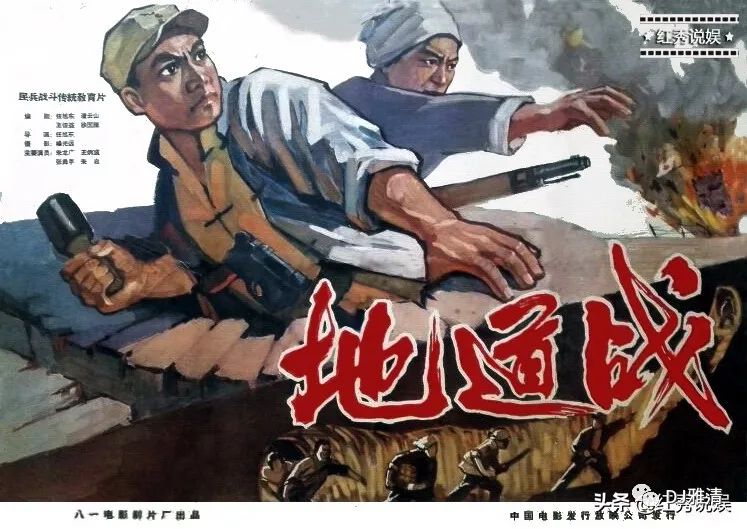
The film Tunnel Warfare Longguang Zhu Zhang Yongshou is alive, while Yamada and Commander Tang have passed away.

Original Hong Xiu Shuo Entertainment DJ Yaqing

In the 1960s, this excellent theme was selected by Bayi Factory, and it was decided to make a film "Tunnel Warfare". Later, Xudong Ren, Xu Guoteng, Wang Junyi and Pan Yunshan wrote the script and constantly polished it. In 1965, the film Tunnel Warfare was filmed and released on New Year’s Day in 1966. By the end of 2012, this film has set a record of billions of people watching it, and it can be said that it is one of the most familiar movies for Chinese people.

Fu Gengchen, who is in charge of the soundtrack in the film, has written songs for many outstanding works such as Sparkling Red Star, Advancing into the Central Plains and Sparkling Red Star. Fu Gengchen was only 29 years old when he wrote music for Tunnel Warfare.

Anyone who has seen the movie "Tunnel Warfare" should be deeply impressed by the theme song "Tunnel Warfare" and the episode "Chairman Mao’s Words". In fact, the author of the lyrics is Xudong Ren, the director of this film. Accompanied by "the sun shines everywhere, Chairman Mao’s thoughts shine golden", Gao Chuanbao read "On protracted war"; "Guerrilla warfare was launched in the Great Plains, and villages and households were connected into tunnels. The invaders dared to come and beat him to death." The enemy was defeated. The song in "Tunnel Warfare" was once described as follows: The enemy was frightened when he heard it; Hearing this, the people are full of blood and infinite strength in their hearts!

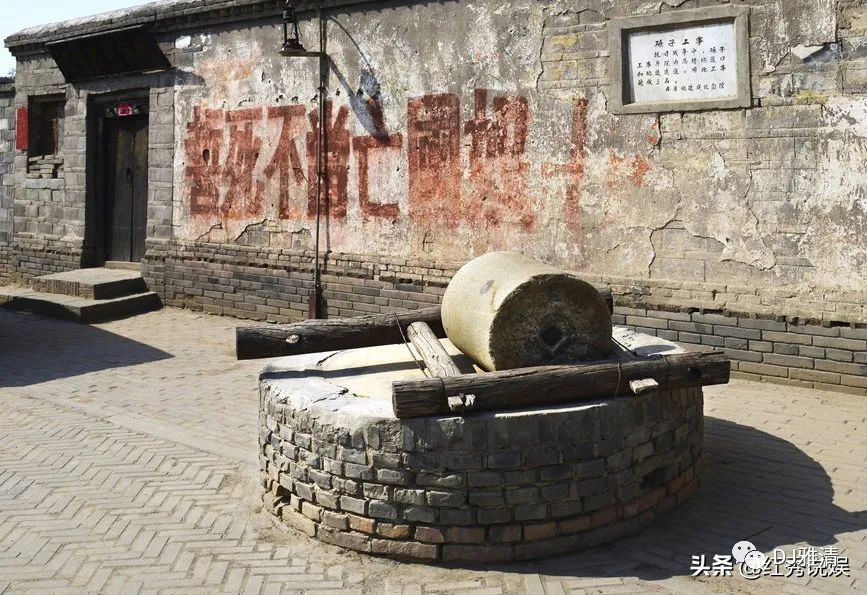
The prototype of "Gaojiazhuang" in the film is Gaoping Village, Zhengding County, Hebei Province, which is also called "Anti-Japanese Pioneer Village". But at that time, because of the flood, the local tunnel did not meet the shooting conditions. The film crew turned to Ran Zhuang, Lizhuang and Tangzhuang, which were nearby, for combined shooting, and tried to restore the scene at that time.

Ranzhuang Tunnel Warfare Site

The tunnels criss-crossing in the movie and the shadowy guerrillas must have left a deep impression on everyone. In fact, all the pictures in the tunnel in the film were set in Bayi Factory, but with excellent lens application, it looks like shooting in a real tunnel.

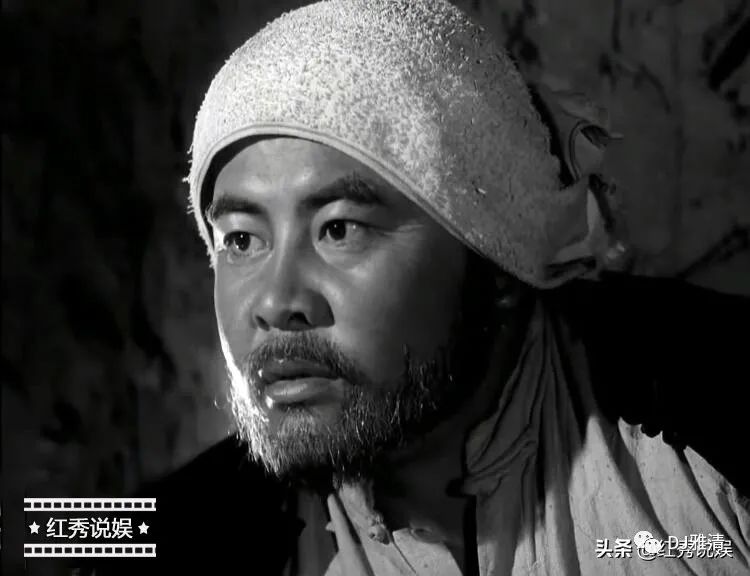
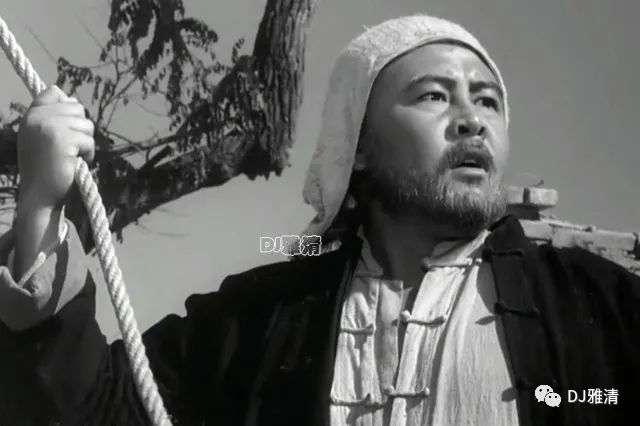
In the movie, the first appearance is Gao Laozhong, the party branch secretary played by Bingyu Wang. In order to cover the villagers’ evacuation and escape, he risked his life to sound the alarm, but unfortunately he was discovered by the Japanese army, and finally he sounded a Grenade and died with the enemy. When playing this role, Bingyu Wang was actually only in his twenties, but it was a big test to play a father and son with Longguang Zhu, who was similar in age, and to show a sense of vicissitudes of life.

Bingyu Wang, an actor from Beijing Film Factory, has played the roles of Uncle Man in Private Zhang Ga, Zhou Yunpeng in Journey to Wan Li and Liu Dabo in Hai Xia. Unfortunately, Bingyu Wang died in 1982 at the age of 47. It’s a pity that we didn’t see more of his works on the screen.

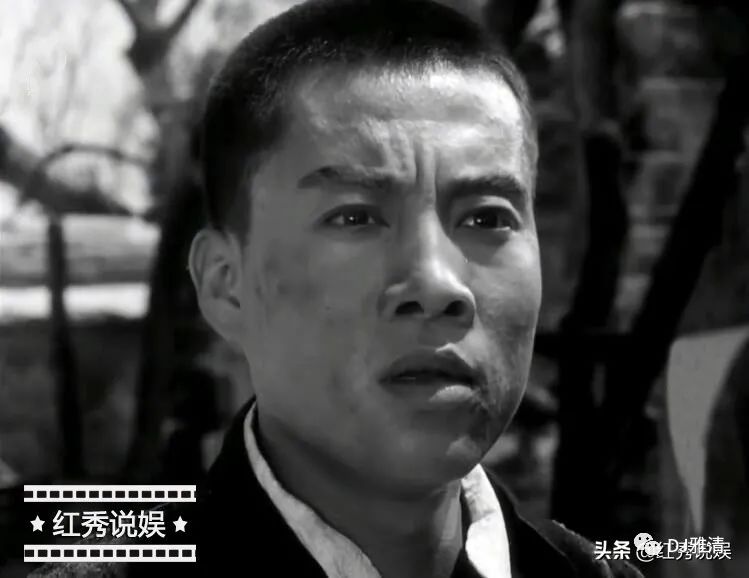
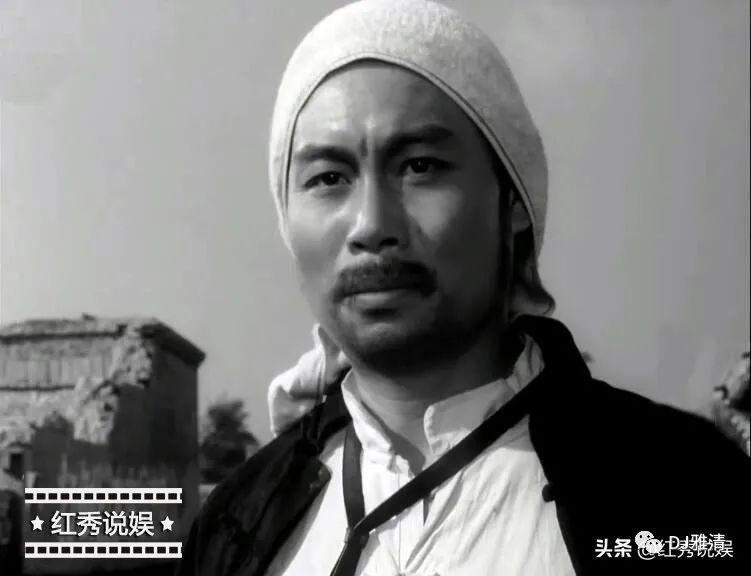
Gao Chuanbao, the son of Gao Laozhong and the captain of the militia, was played by actor Longguang Zhu. He also performed brilliantly in films such as "Jiao Yulu" and "Wooden House". Besides, he also played an amazing role, that is, the Tathagata Buddha in the 86th edition of The Journey to the West. Do you know? If it weren’t for the introduction of the audience, I wouldn’t have recognized him as Gao Chuanbao who was praised by director Xudong Ren as "handsome, mighty and good at acting". In September this year, it was Longguang Zhu’s 82nd birthday, and Hong Xiu wished him a long and healthy life, smiling often.

The prototype of Gao Laozhong and Gao Chuanbao was Liu Fool, the party branch secretary and militia captain of Gaoping Village at that time. Although his name didn’t sound severe, during the War of Resistance against Japanese Aggression period, he led a militia team of 70 or 80 people to repel thousands of Japanese attacks.

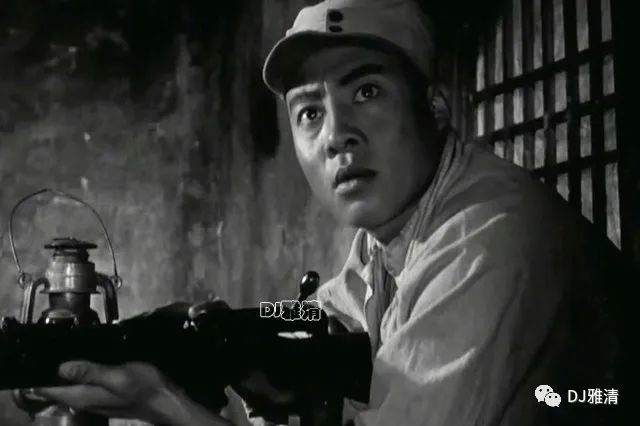
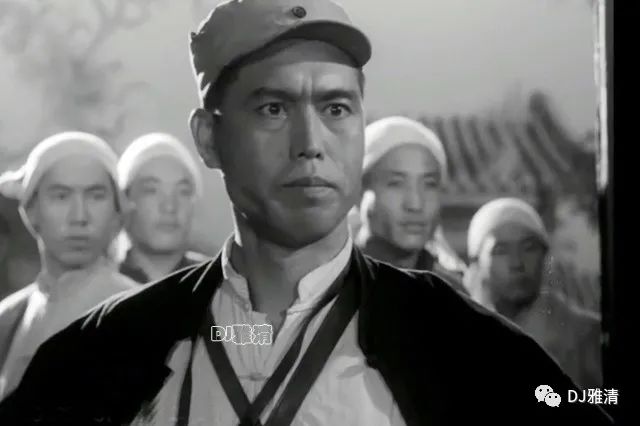
Zhao Ping, the district chief who formulated the "Sparrow" tactics, was originally played by Zhang Yongshou. He has played Shao Jianbo in Lin Hai Xue Yuan and Fang Yong in Surprise. As a famous actor and director of Bayi Film Studio, Zhang Yongshou has many works on the screen.

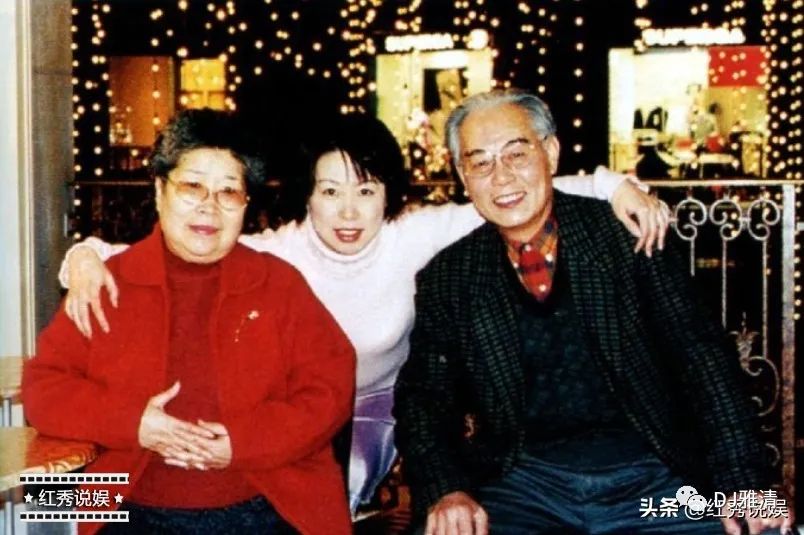
He is also regarded as Liu Xiaoqing and Tang Guoqiang’s Bole on the road of performing arts. At that time, when filming the movie "South China Sea Storm", he chose Tang Guoqiang; When filming the Great Wall of the South China Sea, he chose Liu Xiaoqing. Today, 87-year-old Zhang Yongshou and his wife Zhang Jiamao live in Beijing. Zhang Xihe, the eldest son, and Zhang Wang, the second son, are both film and television workers. Zhang Wang is a famous producer, who has produced films such as Sunny Days and The Great Wall. The youngest daughter, Zhang Man, is developing her career abroad.

Zhang Yongshou and Zhang Man.

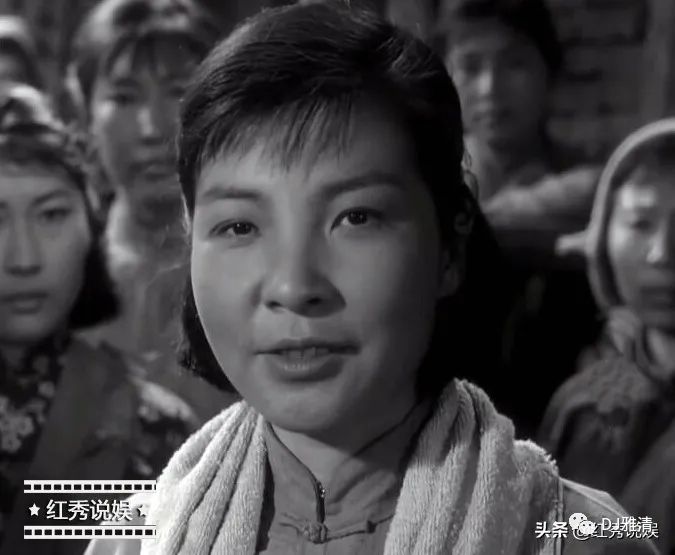
Xiujie Liu, who plays Lin Xia, director of the Women’s Rescue Association, has only appeared in a few films, but her simple and natural performance can touch many audiences, and her performance is both physical and mental. In the film, she said to Longguang Zhu, "Pass the treasure, be careful" is gentle; He was firm when he said, "We want to fight wolves, but we can’t let them bite us.". However, in the later stage of Xiujie Liu’s acting career, little information can be found, but the Lin Xia she created has been fixed in the hearts of the audience. On July 27th, 2020, Xiujie Liu died at the age of 87.

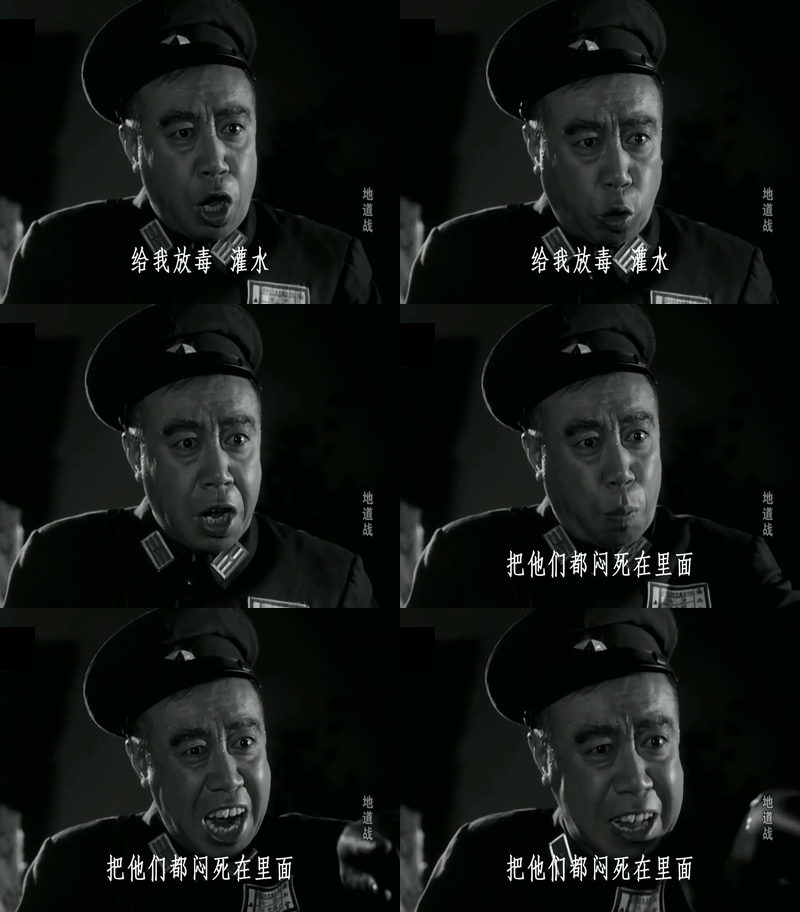
Wang Xiaozhong, an old actor with rich experience in villains on the screen, plays the Japanese army captain Yamada in Tunnel Warfare this time. When Wang Xiaozhong was young, he studied in the Telecommunications College of Fengtian Railway Institute set up by the Japanese, and many teachers in the school were retired soldiers. I think this is also the reason why he played a very thorough role in the image of Japanese soldiers. He has appeared in the image of Japanese many times on the screen, such as Nakamura, the special high-tech director in Never Gone Radio, and Tada, the intelligence consultant in Wildfire and Spring Breeze Fighting the Ancient City. But every role he plays is different, and in his opinion, even a supporting role needs careful consideration. On January 22nd, 2016, Wang Xiaozhong died in Guangzhou at the age of 88.

Tang Bing, commander of the Imperial Association Army, will be played by the famous actor Liu Jiang. Liu Jiang likes performing arts since he was a child, and he is particularly interested in movies and dramas. He has appeared in the movies "Sparkling Red Star" and "Breaking through the Wujiang River", and has also created many classic vivid images, leaving impressive lines, such as "I’m Hu Hansan back!" And "high, really high!" .

However, he was in poor health in his later years: in 1995, Liu Jiang was diagnosed with various cancers. However, he is optimistic and cheerful, but he has also appeared in several films, most of which are positive images. On May 1, 2020, Liu Jiang died in his sleep at the age of 95. This also means that the "five villains" on the screen: Ge Cunzhuang, Statement, Chen Qiang, Fang Hua and Liu Jiang have all passed away.

There are many excellent supporting actors in the film, such as Zhu Qi who plays Cui Lianchang, Han Dong who plays Dakang, and Hu Zihe who plays Niu Wa. Zhu Qi died in 2007; Han Guodong and Hu Ziru are both actors of the Cultural and Art Troupe of the Political Department of the Corps of Engineers, and Hu Ziru once served as the vice captain of the drama team.

Pay tribute to the previous artists for their dedication to China’s film industry. One of the classic lines, such as "quietly into the village, don’t shoot!" Do you remember? I wonder how much the audience still remembers the plot in Tunnel Warfare? Welcome everyone to interact with more netizens and fans through the message area. I’m Hong Xiu. Thank you again for your attention, praise and sharing.

This article is original by Hongxiu. Please don’t copy it without permission! Offenders will be prosecuted!

Original title: The movie "Tunnel Warfare" Longguang Zhu Zhang Yongshou is alive, "Yamada" and "Commander Tang" have passed away.

Read the original text