Solidify the spiritual power of national rejuvenation
Qiushi magazine editorial department
The power of the spirit is infinite.
"The reason why our party has been flourishing and suffering for a hundred years is because of such a strong spirit of revolution and desperation." Looking back on the great journey, the Communist Party of China (CPC)’s century-old history is not only a magnificent history of struggle and entrepreneurship, but also a history of the construction and inheritance of great spirit. In the 100 years of continuous struggle, our party took the great spirit of party building as the source, forged a series of great spirits, and built the spiritual pedigree of the Communist Party of China (CPC) people. These great spirits come down in one continuous line and are passed down from generation to generation. They are deeply integrated into the blood of our party, country, nation and people, and provide a powerful spiritual impetus for realizing national independence, people’s liberation, country’s prosperity and people’s happiness, and for realizing the Chinese nation to stand up, get rich and strengthen.
Since the 18th National Congress of the Communist Party of China, General Secretary of the Supreme Leader has attached great importance to the strength of spirit, repeatedly emphasized the importance of the great spirit of the Party, made an incisive summary and exposition of the great spirit of party building and the spiritual pedigree of the Communist Party of China (CPC) people, and put forward clear requirements for inheriting and carrying forward the great spirit of the Party. The General Secretary emphasized that "the transformation from substance to spirit and from spirit to substance is a dialectical viewpoint", "People cannot stand without spirit, and the country is not strong without spirit", "The great spirit and glorious tradition of the Party are our precious spiritual wealth and a powerful spiritual driving force to encourage us to forge ahead courageously", and "all comrades in the Party should nourish themselves and motivate themselves with the great spirit formed in the century-long struggle, and do a good job in the work of the Party and the country with a high spirit". The great spirit of the Party will always be the precious spiritual wealth of the Party and the country. This important article is an excerpt from the speeches, instructions and letters of General Secretary of the Supreme Leader from March 2013 to July 2021. It is ambitious, broad-minded, rich in connotation and full of affection, and reflects the important exposition of the General Secretary on inheriting and carrying forward the great spirit of the Party. It is highly political, ideological, instructive and realistic.
— — Regarding the great spirit of party building, the General Secretary scientifically summarized its basic connotation, emphasizing that "this is the source of the Communist Party of China (CPC)’s spirit" and "we should continue to carry forward the glorious tradition and carry forward the red blood, and forever inherit and carry forward the great spirit of party building";
— — With regard to the great spirit of the Party during the new-democratic revolution, the General Secretary focused on a series of spirits such as Jinggangshan spirit, Long March spirit, Yan ‘an spirit and Anti-Japanese War spirit, emphasizing that these great revolutionary spirits are "inexhaustible spiritual motivation to sharpen our Do not forget your initiative mind and keep our mission in mind";
— — With regard to the great spirit of the Party during the socialist revolution and construction, the General Secretary focused on a series of spirits such as the spirit of resisting US aggression and aiding Korea, the spirit of Lei Feng, the spirit of Jiao Yulu and the spirit of "two bombs and one satellite", stressing that these great spirits were, are and will remain the precious spiritual wealth of our Party.
— — Regarding the great spirit of the Party during the period of reform, opening up and socialist modernization, the General Secretary focused on a series of spirits such as the spirit of the special zone, the spirit of fighting floods, the spirit of manned space flight, and the spirit of earthquake relief, emphasizing that "reform and innovation are always the spiritual force that urges us to keep pace with the times in reform and opening up";

On the evening of June 28th, 2021, the great journey, a literary performance celebrating the centenary of the founding of the Communist Party of China (CPC), was held in the National Stadium. Dawn, a drama and dance, shows that the Chinese nation has suffered a lot since modern times, and countless people with lofty ideals have gone on and on in search of the truth of saving the country and the people. Until the birth of the Communist Party of China (CPC) in 1921, the China revolution took on a new look. Xinhua News Agency reporter Pang Xinglei/photo
— — With regard to the great spirit of the Party in Socialism with Chinese characteristics in the new era, the General Secretary focused on a series of spirits such as Saihanba spirit, lunar exploration spirit, anti-epidemic spirit, and the spirit of tackling poverty, and stressed the need to vigorously carry forward these great spirits in the new era and "continuously win new and greater victories in adhering to and developing Socialism with Chinese characteristics".
Great cause breeds great spirit, and great spirit leads great cause. At the new historical starting point of building a well-off society in an all-round way, a new journey of building a socialist modern country in an all-round way has begun, and the Communist Party of China (CPC) is uniting and leading the people of all ethnic groups across the country to stride towards the goal of the second century. Looking back on the past course and looking forward to the journey ahead, it is of great significance for us to thoroughly study and understand the important article "The great spirit of the Party is always the precious spiritual wealth of the party and the country" by the Supreme Leader General Secretary, and to learn and understand the important exposition of the General Secretary on inheriting and carrying forward the great spirit of the Party. It is of great significance for us to deeply grasp the core essence and practical requirements of the great spirit of the Party, summon up the spirit to March into a new journey and forge ahead into a new era, and hand over more excellent answers on the new road of catching up for exams.
The spiritual source of the century-old party
A hundred years of vicissitudes of life have changed dramatically, just in the prime of life.
How can a political party with just over 50 members in party member develop into the world’s largest ruling party with more than 95 million party member, a country with a population of over 1.4 billion, and significant global influence? Why lead the Chinese nation to flourish and move towards great rejuvenation at an unstoppable pace?
To understand why the Communist Party of China (CPC) can, we must understand the Communist Party of China (CPC)’s great spirit; To understand the Communist Party of China (CPC)’s great spirit, we must understand the source of the Communist Party of China (CPC)’s spirit.
At the celebration of the 100th anniversary of the founding of the Communist Party of China (CPC), General Secretary of the Supreme Leader put forward and profoundly explained the great party-building spirit for the first time: "One hundred years ago, the Communist Party of China (CPC)’s pioneers founded the Communist Party of China (CPC), forming the great party-building spirit of adhering to the truth, adhering to ideals, practicing the initial heart, taking on the mission, not being afraid of sacrifice, bravely fighting, being loyal to the party and living up to the people, which is the source of the Communist Party of China (CPC)’s spirit."
The incisive summary of 32 words condenses the essence of a hundred years, reveals the true meaning of history, and profoundly expounds the spiritual code of why the Communist Party of China (CPC) can:
— — "Insist on truth and ideals". As the vanguard of the working class in China, the people of China and the Chinese nation, it is always fundamental for the Communist Party of China (CPC) people to firmly believe in the scientific truth of Marxism and adhere to the ideals and beliefs of communism and socialism. These eight words profoundly reveal the unique advantages of our party’s advanced ideological theory and firm ideals and beliefs.
— — "practice the initial heart and take on the mission." It is the initial intention and mission of the Communist Party of China (CPC) people to seek happiness for the people of China and rejuvenation for the Chinese nation. These eight words profoundly reveal our party’s consistent historical responsibility and the fundamental purpose of a century-long struggle.
— — "Not afraid of sacrifice and heroic struggle". It is the Communist Party of China (CPC) people’s clank oath and conscious action to put personal interests and life and death aside, to be fearless of strong enemies, risks, struggles and victories, and to be ready to sacrifice everything for the party and the people at any time. These eight words profoundly reveal our party’s incomparably strong revolutionary will and invincible power.
— — "Loyal to the Party and not responsible to the people". Being loyal to the Party, never betraying the Party, persisting in taking the people as the center and putting the fundamental interests of the overwhelming majority of the people first are the unswerving political qualities of the Communist Party of China (CPC) people. These eight words profoundly reveal the noble character of our party in building the party for the public and governing for the people and the fundamental purpose of serving the people wholeheartedly.
The great party-building spirit is rich in connotation and profound in meaning, which profoundly reveals the spiritual characteristics of the Communist Party of China (CPC) people, clearly marks the spiritual coordinates of the Communist Party of China (CPC) people, and fundamentally answers the important questions of what kind of party to build and how to become a qualified communist party member. This great spirit fully embodies the nature and purpose of the advanced Marxist political party, reflects the main theme and mainstream essence of the century-old party history, is the inheritance, development and sublimation of the great spirit of the Chinese nation by our party, and is the most precious spiritual wealth of the party and the country.
"Ask the canal that clear? Because there is a source of living water. " As the source, root and soul of the Communist Party of China (CPC) people’s spiritual pedigree, the great party-building spirit runs through the party’s century-old history like a red line, guiding the way forward, rallying the struggle force, and lighting the shining spiritual torches on the great journey, which provides strong spiritual support for the party and the people to cope with various challenges, resist various risks, overcome various obstacles and solve various contradictions in different periods. As General Secretary of the Supreme Leader profoundly pointed out in this important article: "In the past 100 years, the Communist Party of China (CPC) has carried forward the great spirit of party building, built the spiritual pedigree of the Communist Party of China (CPC) people in the long-term struggle, and forged a distinctive political character."
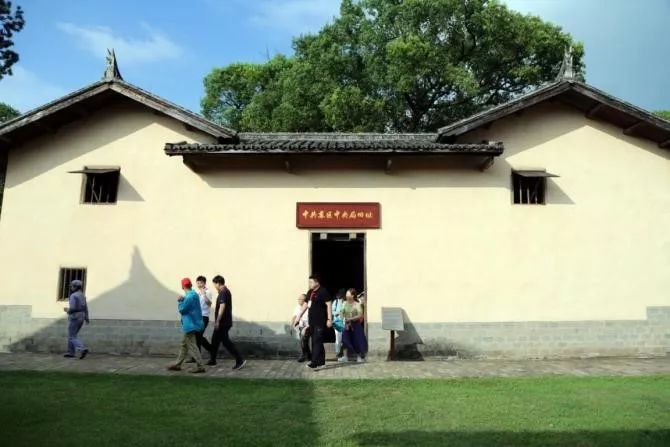
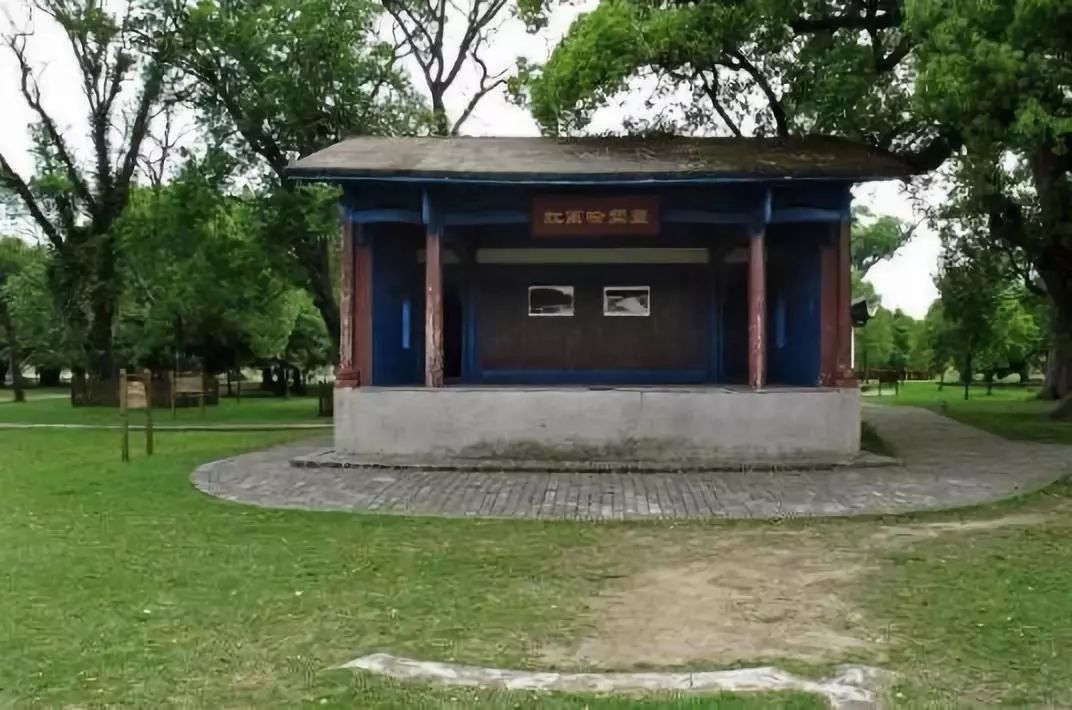
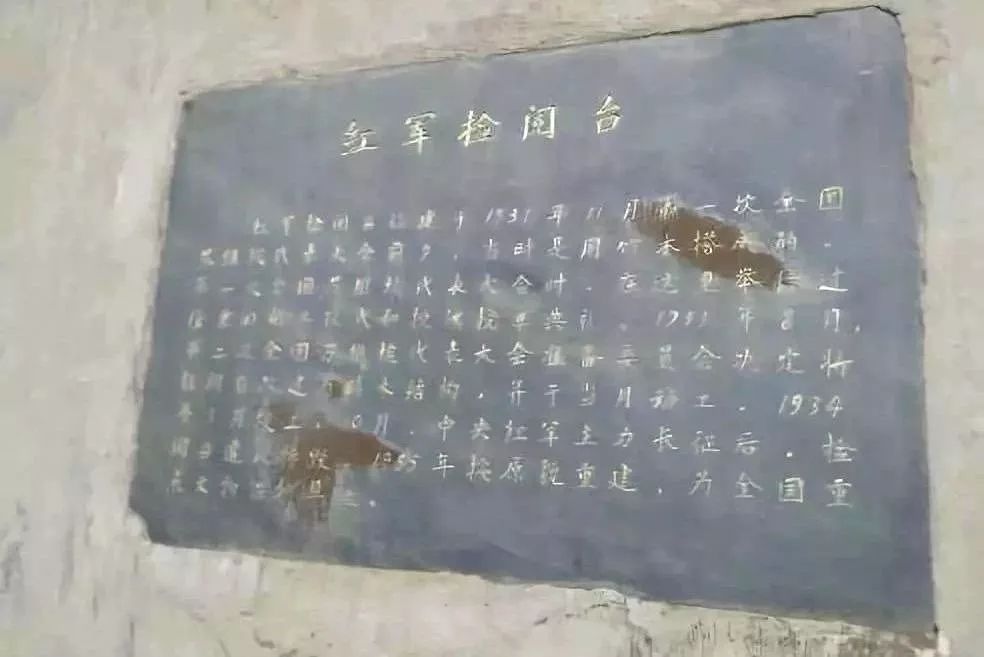
Jinggangshan Spirit, Soviet Area Spirit, Long March Spirit, Zunyi Meeting Spirit, Yan ‘an Spirit, Anti-Japanese War Spirit, Taihang Spirit, Luliang Spirit, Hongyan Spirit, Yimeng Spirit, Xibaipo Spirit, Anti-US Aid Korea Spirit, Great Northern Wilderness Spirit, Westward Movement Spirit, Hongqi Canal Spirit, Daqing Spirit, Iron Man Spirit, Lei Feng Spirit, Jiao Yulu Spirit, Wang Jie Spirit, "Two Bombs and One Satellite" Spirit, and "Two Bombs and One Satellite" Spirit. … These great spirits are dazzling and colorful, with their own different connotations, characteristics and performances, but they are in the same strain, interlinked and integrated in essence. Tracing back to the source, these spirits are concrete manifestations of the great party-building spirit in different periods, different regions, different fields and different groups of people. They embody the basic connotation and common characteristics of the great party-building spirit from different aspects, embody the party’s firm belief, fundamental purpose and fine style, and condense the great character of the Communist Party of China (CPC) people’s hard work, sacrifice and dedication, pioneering and enterprising, which has provided rich nourishment for the great cause of building, rejuvenating and strengthening the party.
Fight bloody battles and persevere
In the arduous revolutionary years, countless revolutionary martyrs shed their heads, shed their blood, fought bloody battles and persevered, wrote magnificent poems, and cast a great revolutionary spirit that will shine for generations to come.
Since the 18th National Congress of the Communist Party of China, the General Secretary of the Supreme Leader has paid a visit to the revolutionary holy land, the red former site and the revolutionary historical memorial site which are of great historical significance to our party. The general secretary said with deep affection: "Every time I go to a place, I relive those eventful years and review the difficult course that the party has gone through all the way. My soul has been shocked and my spirit has been baptized. Every time I go with reverence and come back with many feelings. " In this important article, General Secretary of the Supreme Leader narrated a series of great spirits formed by our party during the period of the new-democratic revolution, profoundly expounded its connotation and essence, and repeatedly stressed the need to inherit and carry forward the red spirit in combination with the new conditions of the times.
— — Jinggangshan Spirit: "Created the great revolutionary spirit of the Communist Party of China (CPC)".
Jinggangshan is "the cradle of China revolution". In the stormy years of blood shed, at the critical juncture of China revolution, the Communist Party of China (CPC) people, represented by Mao Zedong and Zhu De, combined the basic principles of Marxism with the concrete reality of China revolution, led troops to Jinggangshan successively, ignited the spark of China revolution, created the first rural revolutionary base area, opened up the revolutionary road of "rural encircling cities and seizing political power by armed forces", and started the glorious journey of China revolution to victory. The glorious struggle practice in Jinggangshan vividly explains "why China’s red regime can exist". Its Jinggangshan road and Jinggangshan spirit have guided the China revolution to success step by step and accumulated valuable spiritual wealth for our party.
Jinggangshan spirit is rich in connotation and profound. General Secretary of the Supreme Leader visited Jinggangshan three times and put forward clear requirements for carrying forward Jinggangshan spirit on many occasions. In this important article, the general secretary pointed out that "the most precious wealth left to us during the Jinggangshan period is the Jinggangshan spirit that spans time and space. The most important aspect of Jinggangshan spirit is to strengthen faith, work hard, seek truth from facts, dare to break new paths, rely on the masses and be brave in victory. " In the new era, the most important thing to carry forward the Jinggangshan spirit is to pursue the ideal firmly and persistently, seek truth from facts and dare to break new paths, work hard to overcome difficulties and rely on the masses to win.
— — Spirit of Soviet Area: "The concentrated expression of the Communist Party of China (CPC) people’s political nature and spiritual characteristics".
In the creation and development of revolutionary base areas, in the practice of establishing red political power and exploring revolutionary roads, countless revolutionary ancestors used their blood and lives to create the spirit of the Soviet area with the main connotation of "firm belief, seeking truth and being pragmatic, serving the people wholeheartedly, being honest and honest, working hard, striving for first-class and selfless dedication". General Secretary of the Supreme Leader profoundly pointed out: "This spirit not only contains the commonness of the Communist Party of China (CPC) people’s revolutionary spirit, but also shows the characteristics and individuality of the Soviet period. It is a concentrated expression of the Communist Party of China (CPC) people’s political qualities and spiritual characteristics, a new sublimation of the Chinese national spirit, and an important source of the socialist core value system that we are building today." In this important article, the General Secretary further pointed out that "Jinggangshan spirit and Soviet spirit bear the initial heart and mission of the Communist Party of China (CPC) people and cast the Communist Party of China (CPC)’s great revolutionary spirit. These great revolutionary spirits, which span time and space and never go out of date, are inexhaustible spiritual motivation to sharpen our Do not forget your initiative mind and keep our mission in mind. "
— — Long March Spirit: "The highest embodiment of the national spirit with patriotism as the core".
The Long March, an earth-shattering revolutionary feat, is a magnificent epic written by the Communist Party of China (CPC) and the Red Army and a towering monument in the historical process of the great rejuvenation of the Chinese nation. It not only realized the great turning point of the Communist Party of China (CPC) and China’s revolutionary cause from frustration to victory, but also opened a new great March for the Communist Party of China (CPC) to achieve national independence and people’s liberation. More importantly, with extraordinary wisdom and fearless heroism, it overcame all difficulties and made great sacrifices to win, which shocked the world and made it shine in history, leaving us with precious spiritual wealth — — Great Long March spirit.

长征这一人类历史上的伟大壮举,留给我们最可宝贵的精神财富,就是伟大长征精神。2021年6月28日晚,庆祝中国共产党成立100周年文艺演出《伟大征程》在国家体育场盛大举行。这是戏剧与舞蹈《长征》。 新华社记者 陈晔华/摄
“伟大长征精神,就是把全国人民和中华民族的根本利益看得高于一切,坚定革命的理想和信念,坚信正义事业必然胜利的精神;就是为了救国救民,不怕任何艰难险阻,不惜付出一切牺牲的精神;就是坚持独立自主、实事求是,一切从实际出发的精神;就是顾全大局、严守纪律、紧密团结的精神;就是紧紧依靠人民群众,同人民群众生死相依、患难与共、艰苦奋斗的精神。”在纪念红军长征胜利80周年大会上,最高领袖总书记对伟大长征精神作出精辟概括,强调伟大长征精神是中国共产党人及其领导的人民军队革命风范的生动反映,是中华民族自强不息的民族品格的集中展示,是以爱国主义为核心的民族精神的最高体现。每一代人有每一代人的长征路,每一代人都要走好自己的长征路。总书记要求全党“大力弘扬伟大长征精神,在新的长征路上继续奋勇前进”。
After the victory of the Long March, the marked army bravely marched to the west and fought bravely in Qilian, and built a spiritual monument with its life. In this important article, the General Secretary of the Supreme Leader pointed out that "the heroic spirit of the marked army, which is not afraid of difficulties and dangers, and fought bloody battles, is in the same strain as the spirit of the Long March", and stressed the need to "tell the story of the marked army well and pass on the red gene well".
— — The spirit of Zunyi Conference: "Insist on the truth and correct mistakes".
Zunyi meeting is a turning point in the history of our party. The meeting was held at the historical juncture when the Red Army failed in its fifth anti-encirclement campaign and suffered serious setbacks in the early days of the Long March. It established the leading position of Comrade Mao Zedong in the CPC Central Committee and the Red Army, and began to establish the leading position of the correct Marxist line with Comrade Mao Zedong as the main representative in the CPC Central Committee. It began to form the first generation of central leading collective of the party with Comrade Mao Zedong as the core, which opened a new stage for our party to independently solve the practical problems of the China revolution, saving the party, the Red Army and the China revolution at the most critical juncture, with great history.
"We must make good use of the historical experience of the Zunyi Conference and let the spirit of the Zunyi Conference shine forever." Since the 18th National Congress of the Communist Party of China, the General Secretary of the Supreme Leader has talked about the Zunyi Meeting many times on different occasions, stressing that the Zunyi Meeting "left valuable experience and important enlightenment in integrating the basic principles of Marxism with the concrete reality of China, adhering to the road of independence, strengthening the correct political line, policies and strategies, and building a strong and mature central leadership collective". "The distinctive features of the Zunyi Meeting are to uphold the truth, correct mistakes, establish the correct leadership of the CPC Central Committee, and creatively formulate and implement strategic strategies in line with the characteristics of the China Revolution. This is still of great significance today. " On the occasion of the centenary of the founding of the Party, the General Secretary asked the whole Party to study and educate in the light of the history of the Party, draw positive and negative historical experiences from the history of the Party, unswervingly keep up with the CPC Central Committee, constantly improve political judgment, political understanding and political execution, and earnestly enhance the "four consciousnesses", strengthen the "four self-confidences" and achieve the "two safeguards".
— — Yan ‘an Spirit: "the Communist Party of China (CPC) people have been cultivated from generation to generation".
Yan ‘an is the holy land of China’s revolution. The CPC Central Committee has been in Yan ‘an for 13 years and formed the great Yan ‘an spirit. Yan ‘an Spirit is the essence and crystallization of the ideals and beliefs, spiritual outlook, ideology and morality, and work and life style of the outstanding elements of the Chinese nation with the Communist Party of China (CPC) as the core, during War of Resistance against Japanese Aggression and the War of Liberation, in the unremitting struggle for national independence and people’s liberation, and under extremely difficult circumstances. Its main contents are firm and correct political orientation, the ideological line of emancipating the mind and seeking truth from facts, the fundamental purpose of serving the people wholeheartedly, and the entrepreneurial spirit of self-reliance and hard struggle.
General Secretary of the Supreme Leader "has a personal feeling" about Yan ‘an spirit, and "every time I visited Yan ‘an in that year, my heart was full of reverence and excitement". In this important article, the General Secretary profoundly pointed out that "Yan ‘an spirit has nurtured generations of the Communist Party of China (CPC) people and is a valuable spiritual wealth of our party. We should persistently use Yan ‘an spirit to educate party member and cadres, so as to nourish the initial heart, refine the soul, draw strength from faith, find out the gap of party spirit and calibrate the direction of progress. ".
— — Anti-Japanese War Spirit: "China people’s precious spiritual wealth".
After the September 18th Incident, the Communist Party of China (CPC) led the Northeast Anti-Union Movement to stand up in Baishan and Heishui, which became the starting point of War of Resistance against Japanese Aggression, the people of China, and opened the prelude to the world anti-fascist war. In the magnificent process of War of Resistance against Japanese Aggression, a great anti-Japanese war spirit with the main connotation of "patriotic feelings that every man is responsible for the rise and fall of the world, national integrity that he would rather die than surrender, heroic spirit that he is not afraid of violence and bloody battles, and indomitable and persevering belief in winning" has been formed.
Although more than 70 years have passed since the victory of China people’s War of Resistance against Japanese Aggression, the great anti-Japanese war spirit should remain in the hearts of every Chinese. On September 3, 2020, at the symposium to commemorate the 75th anniversary of China people’s War of Resistance against Japanese Aggression and the victory of the world anti-fascist war, the Supreme Leader General Secretary profoundly pointed out that "the great spirit of the war of resistance against Japanese aggression is a precious spiritual wealth of the people of Chinese, which will always inspire the people of China to overcome all difficulties and obstacles and strive for the great rejuvenation of the Chinese nation".
— — Hongyan spirit: "Perseverance, rather die than surrender".
"You, Haiyan in the storm, greet the darkness before dawn. Fly! Fight! Always face the east and always face the party! " This is the praise of Jiang Jie’s friends in the book Red Rock.
After War of Resistance against Japanese Aggression entered the stalemate stage, in order to strengthen the Party’s leadership over the work in the Kuomintang-ruled areas, since 1939, Comrade Zhou Enlai led the Southern Bureau of the CPC Central Committee to launch a struggle against the enemy in a place called "Hongyan Mouth" in Chongqing. In the extremely sinister political environment, they are good at adversity, brave in sacrifice and carry out their work effectively. In the late period of the Liberation War, the underground party organizations in Chongqing were destroyed, and most of the arrested Communist party member and revolutionaries were held in Zhazidong and Baigongguan prisons. Revolutionary heroes represented by Jiang Zhujun, Wang Pu, Chen Ran, etc. withstood all kinds of torture with rock-solid ideals and beliefs and heroic spirit of justice, and sacrificed their precious lives for the cause of people’s liberation in China. They wrote the Hongyan spirit that shines in history with their heroic life. General Secretary of the Supreme Leader mentioned the Hongyan spirit many times and encouraged the cadres in party member to "strengthen their ideals and beliefs and cultivate integrity".
— — Yimeng spirit: "Harmony of water and milk, life and death together".
During War of Resistance against Japanese Aggression and the War of Liberation, the people of Yimeng "used the last rations as rations, the last piece of cloth as uniforms, and the last son sent to the battlefield". With a population of 4.2 million, more than 1.2 million people supported the army, more than 200,000 people joined the army and more than 100,000 people died heroically, and a large number of vanguard and exemplary figures such as six sisters, mother and red sister-in-law of Yimeng emerged, forming the spirit of Yimeng. In this important article, the General Secretary of the Supreme Leader pointed out that "Yimeng spirit, like Yan ‘an spirit, Jinggangshan spirit and Xibaipo spirit, is a valuable spiritual wealth of the party and the country, which should be continuously carried forward in combination with the new conditions of the times".
— — Xibaipo Spirit: Keep in mind "Two Musts".
From May 1948 to March 1949, the CPC Central Committee worked in Xibaipo, Pingshan County, Hebei Province, which became the "last rural command post" for the CPC Central Committee to liberate China. At the Second Plenary Session of the Seventh Central Committee of the Communist Party of China, Comrade Mao Zedong put forward the important thought of "Two Musts" and warned the whole party: "We must make comrades continue to maintain the style of modesty, prudence, arrogance and rashness, and we must make comrades continue to maintain the style of hard struggle." Xibaipo witnessed that "New China is coming from here", and the Xibaipo spirit with "Two Musts" as the core has become a valuable spiritual wealth of the party and the country.
On July 11th, 2013, General Secretary of the Supreme Leader came to Xibaipo, the revolutionary holy land, to visit Xibaipo Memorial Hall and the former site of the Second Plenary Session of the Seventh Central Committee. The general secretary profoundly pointed out that the "two musts" contains profound reference to the law of chaos control in China’s thousands of years of history, a profound summary of our party’s arduous struggle, deep worries about the victorious political party’s eternal advancement and purity, and the long-term stability of the people’s regime that is about to be born, and a profound understanding of our party’s fundamental purpose of serving the people wholeheartedly; Call on all party comrades to constantly study and understand the profound thinking and strategic considerations of the "two musts", always be modest and prudent and work hard, so that our party will never deteriorate and our red country will never change color.
Self-reliance, anger and strength
This is an era of hard work and burning passion, and it is also an era of heroes and high spirits. After the founding of New China, our party United and led the people, devoted itself to the steaming socialist construction that has never been seen in the history of China, strived selflessly and worked hard to defend and build the motherland, and painted the latest and most beautiful pictures.
In this important article, General Secretary of the Supreme Leader tells a series of great spirits formed by our party during the socialist revolution and construction, and eulogizes the heroic and tenacious revolutionary heroism of the Communist Party of China (CPC) people and their lofty aspirations of "daring to teach the sun and the moon to change into a new sky".
— — The spirit of resisting U.S. aggression and aiding Korea: with "less steel and more gas", we can overcome "more steel and less gas".
On October 19th, 2020, General Secretary of the Supreme Leader visited the theme exhibition commemorating the 70th anniversary of Chinese people’s Volunteer Army’s war to resist US aggression and aid Korea. In the exhibition hall, on the one hand, there are excellent American ordnance and leather boots gloves, and on the other hand, there are simple equipment and thin clothes of the volunteers. The general secretary stopped for a long time and was filled with emotion: "What a miracle! They are ‘ More steel and less gas ’ , we are ‘ Less steel and more gas ’ 。”
"In the magnificent War to Resist US Aggression and Aid Korea, the heroic Chinese people’s Volunteer Army always carried forward the patriotic spirit of putting the interests of the motherland and the people above everything else, striving for the dignity of the motherland and the nation, the revolutionary heroism spirit of being brave and tenacious, the revolutionary optimism spirit of not fearing hardships and always maintaining high morale, the revolutionary loyalty spirit of generously dedicating everything to the mission entrusted by the motherland and the people, and the internationalism spirit of fighting for the cause of peace and justice of mankind, and forged the great spirit of resisting US aggression and aiding Korea." In this important article, the General Secretary made a profound explanation of the spirit of resisting US aggression and aiding Korea, emphasizing that this spirit "spans time and space and lasts forever, and must be passed down and carried forward from generation to generation". To carry forward the great spirit of resisting U.S. aggression and aiding Korea in the new era, it is necessary to sharpen the national character of not being afraid of violence and resisting power, gather the national strength of one heart and one mind, forge the national blood of giving up one’s life and forgetting one’s death, inspire the national wisdom of being upright, innovative and brave, and continue to March bravely towards the Chinese dream of realizing the great rejuvenation of the Chinese nation.
— — The spirit of moving west: "Make contributions to the places where the motherland needs it most".
In 1950s, a group of universities, factories and research institutes, represented by Jiaotong University, resolutely supported and implemented the CPC Central Committee’s decision to move westward. Thousands of people "packed their backpacks and set off" and embarked on the journey of moving westward without hesitation, from Huangpu River to Weishui River thousands of miles away. Since then, they have taken root in the yellow land and struggled to form the spirit of moving westward. In this important article, General Secretary of the Supreme Leader profoundly pointed out: "‘ The spirit of westward migration ’ The core of patriotism is patriotism, and the essence is to listen to the party’s command and follow the party, breathe with the party and the country, and share the destiny with the nation and the people, which has profound practical and historical significance. "
— — Hongqi Canal Spirit: "The people of Linxian County are ambitious and vowed to rearrange the mountains and rivers".
Linxian County, Henan Province (now Linzhou City) is located at the eastern foot of Taihang Mountain. In history, there have been nine droughts in ten years, and water is as expensive as oil. Under the leadership of the county party Committee, the people of Linxian county worked hard for 10 spring and autumn periods, digging holes and bridging ditches on the mountainous Taihang Mountain, and built the "artificial Tianhe" Red Flag Canal with a total length of more than 1,500 kilometers, forging the spirit of the Red Flag Canal. General Secretary of the Supreme Leader commented that the spirit of Hongqiqu "is a precious spiritual wealth of our party" and "is a concentrated expression of the nature and purpose of our party, which will last forever and will never be out of date".
— — Daqing spirit and Iron Man spirit: "When oil workers roar, the earth will shake three times."
In order to get rid of China’s "oil-poor" hat as soon as possible, Daqing petroleum people, represented by "Iron Man" Wang Jinxi, with the lofty sentiments of "I would rather live less than 20 years and try my best to win the big oil field" and the determination of "I want to go there if I have the conditions, but I want to go there if I don’t have the conditions to create it", built China’s largest oil base on the everlasting wasteland in more than three years, creating a "patriotism, entrepreneurship and pioneering spirit". In this important article, the Supreme Leader General Secretary profoundly pointed out that "the outstanding contribution of Daqing Oilfield has been engraved on the historical monument of the great motherland, and the spirit of Daqing and Iron Man has become an important part of the great spirit of the Chinese nation".
— — Lei Feng spirit: "vivid embodiment of socialist core values".
Lei Feng, a soldier of the People’s Liberation Army, is willing to be a screw in his ordinary job, brave in dedication and ready to help others, showing lofty communist sentiments. In August 1962, he died in the line of duty at the age of 22. The spirit of Lei Feng has become a symbol of social fashion in new China.
Since the 18th National Congress of the Communist Party of China, the General Secretary of the Supreme Leader has repeatedly stressed that "Lei Feng spirit is eternal" and "Lei Feng spirit can be learned by everyone", and it is necessary to "make learning from Lei Feng spirit become a common practice in the motherland". In this important article, the General Secretary clearly pointed out, "We should learn from Lei Feng’s spirit as well as his practices, turn lofty ideals and beliefs and the pursuit of moral quality into concrete actions, embody them in ordinary work and life, make our due contributions, and pass on the spirit of Lei Feng from generation to generation."
— — Jiao Yulu’s spirit: "Life is also a dune, and death is also a dune. Fathers and elders live and die.".
Jiao Yulu, secretary of the county party committee of Lankao, Henan Province, dragged his body with chronic liver disease to change the poverty and backwardness of the local area, and led the people of the county to seal sand, control water and improve land. In May 1964, Jiao Yulu died at the age of 42. At the last moment of his life, his only request was "please transport me back to Lankao and bury me in the sand. I didn’t cure the sand dunes alive, but I will watch you cure the sand dunes when I die!"
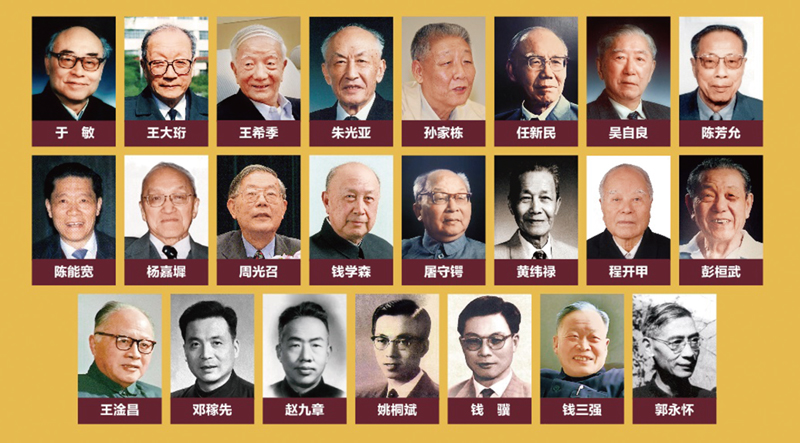
On September 18, 1999, the CPC Central Committee, the State Council and the Central Military Commission decided to commend 23 scientific and technological experts who made outstanding contributions to the development of "two bombs and one satellite" that year, and awarded them to Yu Min, Wang Daheng, Wang Xiji, Zhu Guangya, Sun Jiadong, Ren Xinmin, Wu Ziliang, Chen Fangyun, Chen Nengkuan, Yang Jiayuan, Zhou Guangzhao, Qian Xuesen and Tu Shouyun. Xinhua news agency
"Life is also a sand dune, and death is also a sand dune, and the life and death system of the elders is … … Being an official, benefiting one party, and flattening business. " A poem "Nian Nujiao Remembers Jiao Yulu" expresses the supreme leader’s sincere reverence for Jiao Yulu. The General Secretary said with deep affection, "For decades, the deeds of Comrade Jiao Yulu have been in my mind, and the image of Comrade Jiao Yulu has been in my heart", praising Jiao Yulu as "a good public servant of the people, an example for the county party secretary and the whole party". In this important article, the General Secretary pointed out that "the Jiao Yulu spirit of being close to the people and loving the people, working hard, being scientific and realistic, facing difficulties and making selfless contributions was, is and will remain the precious spiritual wealth of our party, and will never be out of date". To learn and carry forward the spirit of Jiao Yulu, we should learn from Comrade Jiao Yulu’s public servant feelings of "all the people are in his heart but not himself", the realistic style of "eating steamed buns chewed by others is tasteless", the struggle spirit of "daring to teach the sun and the moon to change the sky" and "revolutionaries should be brave in the face of difficulties", and the moral sentiments of being hard-working, simple, honest and dedicated to public service and "never engaging in specialization".
— — Wang Jie spirit: "One is not afraid of hardship, and the other is not afraid of death".
"For the sake of the party, I am not afraid to go into the flames; For the sake of the party, even if I am shattered, I am willing. "This is the diary written by Wang Jie, the squad leader of an armored corps. In July, 1965, when Wang Jie was organizing militia training, he was caught in an accidental explosion of explosives. At a critical juncture, he threw himself at the explosive charge, protecting the safety of 12 militiamen and people’s armed cadres present, but his life was fixed at the age of 23. In this important article, the General Secretary of the Supreme Leader pointed out that "one is not afraid of hardship, and the other is not afraid of death, which is a vivid portrayal of blood and courage, and should be the motto of revolutionary soldiers", emphasizing that "we should learn to practice Wang Jie spirit and let Wang Jie spirit shine in a new era".
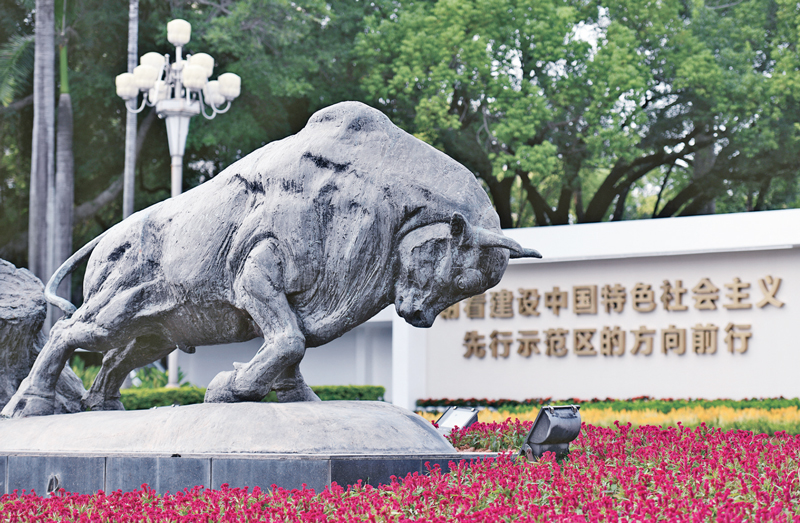
The establishment of special economic zones is a great pioneering work carried out by the party and the state to promote reform, opening up and socialist modernization. The picture shows the statue of "Pioneer Cow" on Shennan Avenue in Shenzhen (photo taken on October 12, 2020). Xinhua News Agency reporter Liang Xu/photo
— — The spirit of "two bombs and one satellite": "Do earth-shattering things and be an anonymous person".
On October 16, 1964, China’s first atomic bomb exploded successfully; On October 27, 1966, China’s first surface-to-surface missile with a nuclear warhead exploded successfully; On June 17, 1967, China’s first hydrogen bomb air explosion test was successful; On April 24th, 1970, China’s first artificial satellite was successfully launched … … In the process of developing "two bombs and one satellite", a large number of scientists, such as Qian Xuesen, Qian Sanqiang and Deng Jiaxian, have closely linked their personal ideals with the destiny of the motherland and their personal aspirations with the rejuvenation of the nation. They are willing to be unsung heroes and sprinkle their youth and blood on the Gobi Desert, and will also "love the motherland, selfless dedication, self-reliance, hard struggle, great cooperation and courage to climb". In this important article, General Secretary of the Supreme Leader encouraged space workers in the new era to "vigorously carry forward ‘ Two bombs and one satellite ’ Spirit, dare to overcome all difficulties and obstacles, dare to climb the peak of space science and technology, make Chinese’s pace of exploring space more stable and farther, and realize the great dream of building a space power at an early date. "
Emancipate the mind and forge ahead
In the mighty wave of reform and opening-up, our party united and led the people to break the shackles of ideas, sweep away barriers that hinder development, and overcome challenges from all sides, which made China earth-shaking in the "moment of history" and made great strides to catch up with the times, and also nurtured and created a series of great spirits in the process.
"Fight our way out", "The flood is merciless", "The starry sky is vast and endless" … … In this important article, General Secretary of the Supreme Leader led us to review a series of great spirits formed by the Party during the period of reform, opening up and socialist modernization, and profoundly expounded its connotation, essence and practical requirements.
— — Spirit of the SAR: "Fight our way out".
From Shenzhen, Zhuhai, Shantou and Xiamen in 1980 to Hainan in 1988, special economic zones were established one after another, and the spring tide of reform surged across the land of China. Generations of SEZ builders have worked hard to build a prosperous modern city from backward border towns and wasteland fishing villages. In the great process of building Socialism with Chinese characteristics, they have written a magnificent chapter of standing on the forefront and pioneering, and created the spirit of the SEZ of "daring to try, being the first, and working hard".
In leading the new era to deepen reform and opening up in an all-round way, the General Secretary of the Supreme Leader has repeatedly stressed the need to carry forward the spirit of the SAR, encourage cadres and the masses to be pioneers in the new era, keep the spirit of "pioneering", "creative" and "dry" style, and strive to write more "spring stories" and create new and greater miracles that will impress the world. In this important article, the General Secretary explicitly asked the special economic zones to "always stand at the forefront of reform and opening up, try first and explore boldly in all aspects of institutional mechanism reform, and provide more replicable and scalable experiences for the whole country".
— — The spirit of fighting floods: "The flood is merciless and people have feelings".
In the summer of 1998, an unprecedented catastrophic flood ravaged most of China. At the critical moment, the party and state leaders came to the front line to direct the flood fighting. More than 300,000 officers and men of the People’s Liberation Army and the Armed Police Force fought with the flood. The people in the disaster-stricken areas gave up their small families to protect everyone and the small ones to take care of the overall situation. The people of the whole country strongly supported the front-line military and civilians, won the all-round victory in the flood fighting and rescue struggle, and forged the great flood fighting spirit of "United as one, United as one, not afraid of difficulties, tenacious struggle, perseverance and daring to win".
On February 20, 2021, General Secretary of the Supreme Leader stressed at the mobilization meeting of Party history study and education that we should further carry forward a series of great spirits, including "the spirit of fighting floods". This summer, many parts of the country continued to experience extremely heavy rainfall, and the flood control situation was very severe. Under the strong leadership of the CPC Central Committee with the Supreme Leader as the core, the cadres and the masses in the disaster-stricken areas are United as one, and the people of the whole country watch and help each other, writing a new chapter in the great spirit of fighting floods.
— — Manned space spirit: "The starry sky is vast, and the exploration is endless".
In 2003, the "Shenzhou 5" spacecraft achieved manned space flight for the first time, and the Chinese dream of flying for a thousand years became a reality! Since the manned spaceflight project was officially implemented in 1992, China astronauts have repeatedly attacked scientific problems and challenged physiological limits. They have successfully sent manned spacecraft condensed with national spirit and dreams into space again and again, which has promoted China’s manned spaceflight cause from scratch, from weak to strong, and has also engraved in the vast universe the manned spaceflight spirit of "especially being able to endure hardship, fight, tackle key problems and contribute".
In this important article, the Supreme Leader General Secretary pointed out that the spirit of manned space flight "has added a powerful spiritual force to uphold and develop Socialism with Chinese characteristics". On April 29, 2021, the space station of China and the core module were launched, which marked that the construction of China’s space station entered the stage of full implementation. In his congratulatory message, the General Secretary once again sent a message to the astronauts to vigorously carry forward the spirit of manned space flight, "self-reliance, innovation and transcendence, win a comprehensive victory in the task of building a space station, and make new and greater contributions to building a socialist modern country in an all-round way."
— — The spirit of earthquake relief: "The earth shakes the mountains and cannot disperse the Chinese soul".
At 14: 28 on May 12, 2008, the Wenchuan earthquake that shocked the world occurred in China. The unexpected disaster destroyed the homeland, but it could not destroy the spirit of Chinese. Under the leadership of the CPC Central Committee, China quickly organized earthquake relief activities with the fastest rescue speed, the widest mobilization scope and the largest investment in history. Life-and-death rescue of the magnificent mountains and rivers and unprecedented support from all directions have written heroic songs with a sense of the earth and the earth on the ruins of the earthquake, fully demonstrating the great spirit of earthquake relief, which is "United as one, United as one, fearless, indomitable, people-oriented and respectful of science".
Shortly after the Wenchuan earthquake, the Supreme Leader braved the aftershocks and came to Yingxiu Town, Wenchuan County, the epicenter to inspect the earthquake relief situation. Ten years later, on February 12, 2018, General Secretary of the Supreme Leader made a special trip to come here again during his investigation and investigation in Sichuan to present flower baskets to the compatriots killed in the Wenchuan earthquake and the heroes who died in the earthquake relief, and vowed to protect the earthquake site and make it an important patriotic education base. The general secretary has repeatedly stressed that "fighting against natural disasters is an eternal topic for human survival and development" and "vigorously carry forward the great spirit of earthquake relief".
Self-confidence, self-improvement, integrity and innovation
Since the 18th National Congress of the Communist Party of China, Socialism with Chinese characteristics has entered a new era. Under the strong leadership of the CPC Central Committee with the Supreme Leader as the core, and under the scientific guidance of Socialism with Chinese characteristics Thought in the new era of the Supreme Leader, the Chinese nation has made an unstoppable step towards great rejuvenation, and in this process, it has inherited, carried forward and forged a series of great spirits.
In this important article, the General Secretary of the Supreme Leader profoundly expounded the connotations of the spirit of model workers, labor, artisans, Saihanba, scientists, exploring the moon, fighting against epidemic diseases and tackling poverty, and deeply eulogized the noble qualities and lofty spirits of the winners of the July 1st Medal, such as "firm faith, practical purpose, hard work and dedication, honesty and dedication", which established the spiritual coordinates of a new era for us.
— — Model worker spirit, labor spirit and craftsman spirit: "Labor is the source of all happiness".
Socialism is done, and the new era is fought. Since the 18th National Congress of the Communist Party of China, General Secretary of the Supreme Leader has repeatedly praised labor creation, eulogized the spirit of model workers, labor spirit and craftsman spirit. In this important article, the general secretary brilliantly explained the scientific connotations of these three spirits, namely, "the model worker spirit of loving one’s post, striving for first-class, struggling hard, being brave in innovation, being indifferent to fame and fortune, and being willing to contribute", "the labor spirit of advocating labor, loving labor, hard work and honest labor" and "the craftsman spirit of persistent concentration, Excellence, meticulousness and pursuit of Excellence", emphasizing that they are "yes"
— — Saihanba spirit: "the miracle of changing wasteland into forest".
On August 23rd, 2021, when General Secretary of the Supreme Leader visited Chengde, Hebei Province, his first stop came to Saihanba Machinery Forest Farm. In Saihanba in August, the mountains are green and the forest is green. However, more than half a century ago, it was a desert sandy land with "yellow sand covering the sky and birds without trees". Several generations of Saihanba people listened to the call of the party, worked hard and were willing to contribute, creating the miracle of turning desert into oasis and wasteland into forest, and creating a typical example in the history of world ecological civilization construction.
In August, 2017, General Secretary of the Supreme Leader made important instructions, pointing out that the forest farm builders "interpreted Lucid waters and lush mountains are invaluable assets’s ideas with practical actions, and created the spirit of Saihanba with a mission in mind, hard work and green development", and asked the whole party and society to "adhere to the concept of green development and carry forward the spirit of Saihanba". During the inspection on August 23rd, 2021, the General Secretary once again emphasized that "the construction history of Saihanba Forest Farm is an epic history of hard struggle", and pointed out that the spirit of Saihanba "has important demonstration significance for the construction of national ecological civilization", demanding that "the spirit of Saihanba should be well inherited, and the concept of ecological civilization should be deeply understood and implemented".
— — Scientist spirit: "Scientific achievements cannot be separated from spiritual support".
Since the founding of New China, the vast number of scientific and technological workers in China have cherished the motherland and served the people, and set up monuments of scientific and technological innovation on the land of the motherland, casting a unique spiritual temperament. Since the 18th National Congress of the Communist Party of China, China’s scientific and technological undertakings have achieved historic changes and achievements, which are inseparable from the selfless struggle of scientists and the vigorous promotion of scientists’ spirit. In May 2019, the CPC Central Committee issued the Opinions on Further Carrying Forward the Spirit of Scientists and Strengthening the Construction of Style of Study, demanding that "the patriotic spirit of caring for the motherland and serving the people, the innovative spirit of courageously climbing the peak and being the first, the realistic spirit of pursuing truth and rigorous scholarship, the dedication of being indifferent to fame and fortune, concentrating on research, the collaborative spirit of gathering wisdom to tackle key problems, unity and cooperation, and the educational spirit of being willing to be a ladder and rewarding others for later study" be vigorously carried forward. On September 11th, 2020, at the symposium of scientists, General Secretary of the Supreme Leader pointed out that "the spirit of scientists is the precious spiritual wealth accumulated by scientific and technological workers in their long-term scientific practice", and emphatically expounded the spirit of patriotism and innovation, emphasizing that "science has no national boundaries, and scientists have the motherland". Scientific and technological workers should integrate their scientific pursuits into the great cause of building a socialist modern country, set up the ambition to dare to create, and strive to achieve more breakthroughs from 0 to 1.
— — The spirit of exploring the moon: "Dare to visit the moon for nine days".
In the early morning of December 17, 2020, the Chang ‘e-5 returner with lunar soil samples successfully returned to Earth, which marked the successful completion of the three-step plan of "winding, falling and returning" for China’s lunar exploration project after 44 years, and was an important milestone in the journey of building China into a space power. Since the official launch of the lunar exploration project in 2004, China astronauts have been reaching a more vast and far-reaching sea of stars with lofty aspirations of "flying to the moon", and have achieved their dreams through hard struggle and continuous struggle. On February 22, 2021, when meeting with the representatives of the participants in the No.5 mission of the lunar exploration project and visiting the exhibition of lunar samples and achievements of the lunar exploration project, General Secretary of the Supreme Leader spoke highly of the lunar exploration spirit of "pursuing dreams, being brave in exploration, working together to overcome difficulties and win-win cooperation", and stressed that "we should carry forward the lunar exploration spirit, give full play to the advantages of the new national system, bravely climb the scientific and technological peak, serve the overall situation of national development, and start a new journey of interstellar exploration step by step, and constantly advance."
— — Anti-epidemic spirit: "another heroic feat in the history of human struggle against disease"
COVID-19 epidemic is the most serious epidemic of infectious diseases in the world in the past century, and it is a major public health emergency with the fastest spread, the widest infection range and the most difficult prevention and control in China since the founding of New China. "Struggling with difficulties is both a material struggle and a spiritual confrontation." In the life-and-death struggle against the epidemic, the people of China and the Chinese nation, with their dauntless spirit of daring to struggle and win, interpreted the great love of the people and life first, and wrote an epic of fighting the epidemic with unity and perseverance. From angels in white to the people’s soldiers, from researchers to community workers, from volunteers to project builders, from the ancient and rare old people to the "post-90 s" and "post-00 s" young generation, countless people devoted their lives to the mission and protected the people with their love, and built an iron wall to protect their lives, vividly demonstrating the great anti-epidemic spirit.
In this important article, the General Secretary of the Supreme Leader profoundly expounded the great anti-epidemic spirit of "life first, national unity, giving up life and forgetting death, respecting science and sharing destiny". Life is supreme, which embodies the profound tradition of benevolence of China people and the people-centered value pursuit of the Communist Party of China (CPC) people. The unity of the whole country embodies the unity of the people of China through thick and thin. Forgetting one’s life and dying embodies the tenacious will of the people of China to dare to overwhelm all difficulties without being overwhelmed by any difficulties; Respect for science embodies the practical character of China people’s seeking truth and being pragmatic, pioneering and innovative. Fate and common destiny epitomize the moral responsibility of the people of China to work together and love peace. The General Secretary pointed out that "the great anti-epidemic spirit is in the same strain as the long-term idiosyncratic endowment and cultural genes of the Chinese nation, is the inheritance and development of patriotism, collectivism and socialist spirit, is a vivid interpretation of China spirit, and enriches the connotation of national spirit and the spirit of the times", and stressed that "the great anti-epidemic spirit should be vigorously carried forward in the whole society, so as to turn it into a powerful force for building a socialist modern country in an all-round way and realizing the great rejuvenation of the Chinese nation".
— — The spirit of getting rid of poverty: "a miracle on earth that shines in history."
Since the 18th National Congress of the Communist Party of China, a tough battle against poverty, with the largest scale, the strongest strength and the largest population in human history, has been launched in China. Under the strong leadership of the CPC Central Committee with the Supreme Leader as the core, and through the joint efforts of the whole party and people of all ethnic groups, China has won a comprehensive victory in the battle against poverty. Under the current standards, 98.99 million rural poor people have all been lifted out of poverty, 832 poverty-stricken counties have all taken off their hats, and 128,000 poverty-stricken villages have all been listed. The overall regional poverty has been solved and the arduous task of eliminating absolute poverty has been completed. The great struggle to get rid of poverty has created a miracle in history, and it has also played a spiritual hymn.
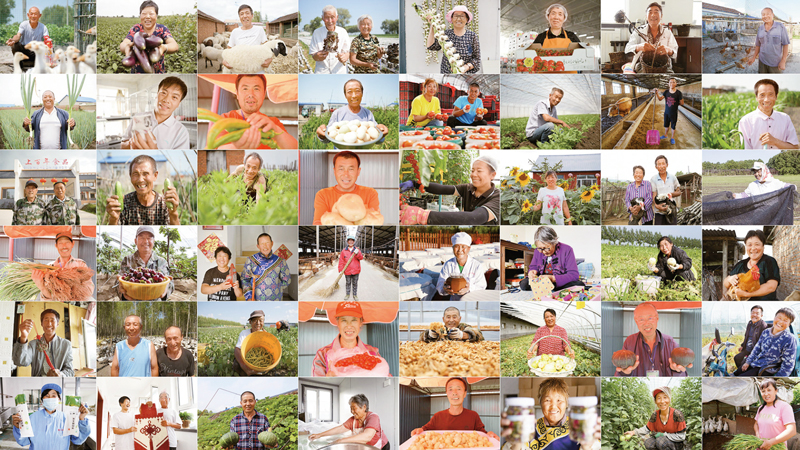
China’s overall victory in the fight against poverty has created a miracle in the history of human poverty reduction. The picture shows about 50 households in more than 20 cities and counties in Heilongjiang Province, smiling in the poverty alleviation industry they benefited from (imposition photo, taken from July to October 2020). Xinhua News Agency reporters Wang Jianwei, Zhang Tao, Xie Jianfei, Sun Xiaoyu, Tang Tiefu, Xu Kaixin, Yang Siqi/photo
In this important article, the Supreme Leader’s General Secretary profoundly explained the spirit of "fighting with one heart and one mind, fighting with all sincerity, being precise and pragmatic, pioneering and innovative, overcoming difficulties and living up to the people", pointing out that it "is a vivid portrayal of the nature and purpose of the Communist Party of China (CPC), the will and quality of the China people and the spirit of the Chinese nation, a concentrated expression of patriotism, collectivism and socialism, and a full manifestation of China spirit, China value and China’s strength. It has continuously inherited the great national spirit and the spirit of the times, and stressed that "the whole party, the whole country and the whole society should vigorously carry forward the spirit of tackling poverty, unite as one, fight bravely, resolutely overcome all difficulties and risks on the road ahead, and constantly win new and greater victories in upholding and developing Socialism with Chinese characteristics".
To realize the great rejuvenation of the Chinese nation, we must be strong not only materially, but also spiritually. From 1921 to 2021, under the guidance of the great spirit of party building, the Communist Party of China (CPC) people fully carried forward the great spirit of the party and United and led the people of China to move forward towards the goal of the great rejuvenation of the Chinese nation; On the new road to the exam, the whole party and the people of the whole country will continue to carry forward the great spirit of the party, make unremitting efforts and forge ahead, and will certainly be able to write a new chapter of the times with new spiritual strength and cast a new spiritual monument with new great victories!