Ye Ping, witness our first military parade and the birth of the title "Chairman Mao"!

Author: Gao Bin, Front Line Magazine of Beijing Municipal Committee of the Communist Party of China.


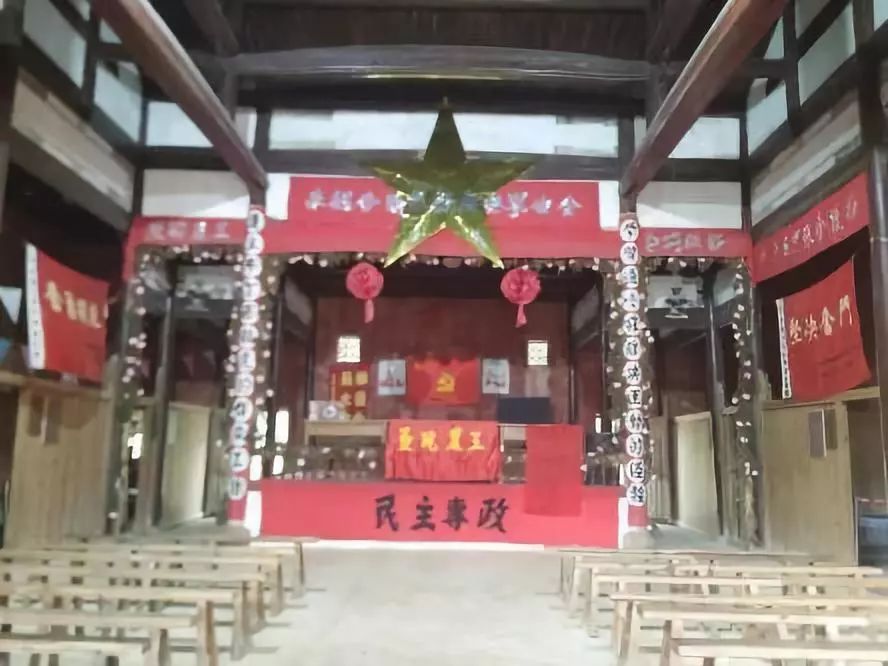
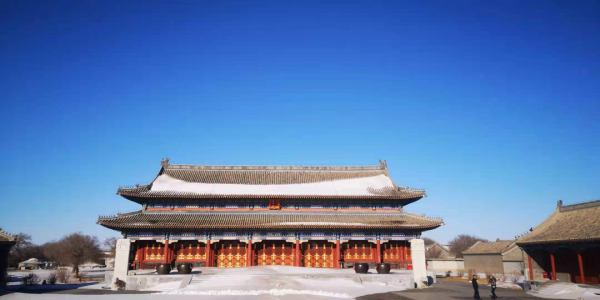
From November 7 to 20, 1931, the first national congress of the Soviet Union of Chinese workers, peasants and soldiers was held in Yeping Village, Ruijin. The congress announced the establishment of the provisional central government of chinese soviet republic. The picture shows the former site of the Central Bureau of the Central Soviet Area.


During the National Day holiday, the circle of friends was repeatedly screened by videos and photos of the National Day military parade in the 70th anniversary of the founding of New China.

The neat lineup, loud slogans, roaring locomotives and roaring planes of previous National Day military parades have made countless Chinese people proud and excited.

Before the founding of New China, there were several military parades in the history of our army, such as the "August 1st" military parade, the Xiyuan military parade and the Yan ‘an airport military parade. When and where was the earliest military parade? When did the title "Chairman Mao" begin?

In the former site group of Yeping Revolution in Ruijin, Jiangxi, the reporter found the answer.

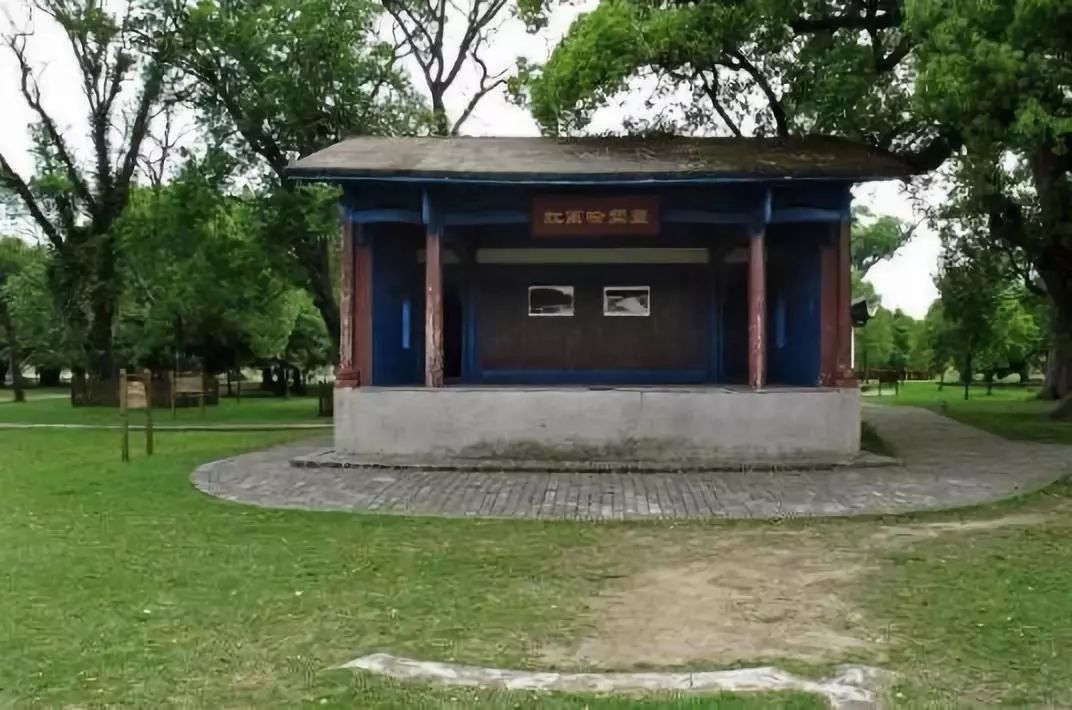
Yeping Red Army Review Platform —— Witness the first military parade in the history of our army

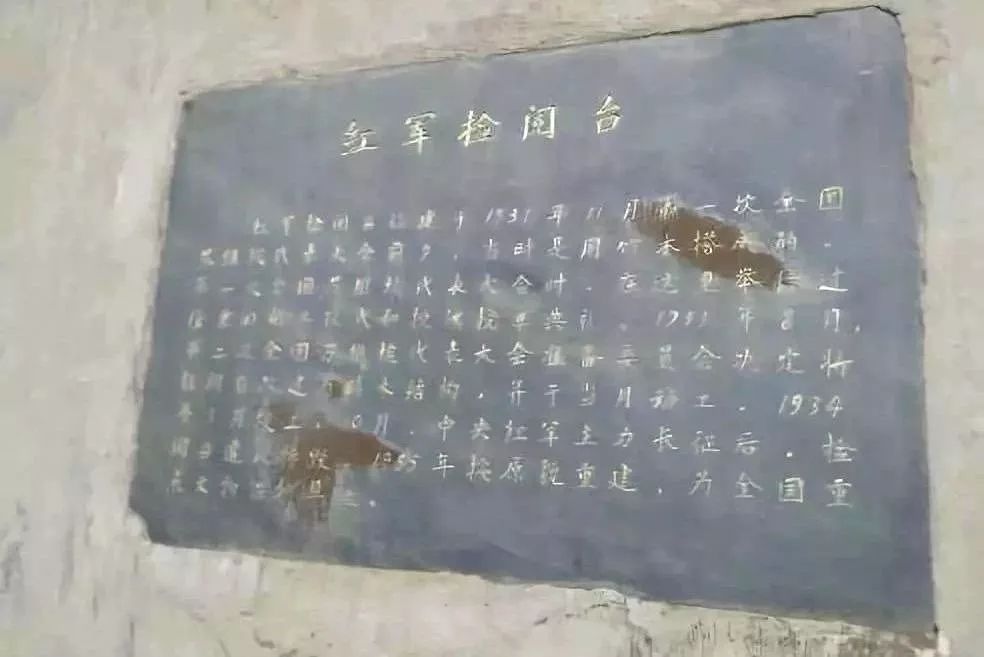
Yeping Revolutionary Site Group is located in Yeping Village, Yeping Township, Ruijin City, Jiangxi Province. It is the birthplace of chinese soviet republic and one of the best-preserved revolutionary site groups in China. The Yeping Revolutionary Site Group has reserved a site-the Red Army Review Desk.

In preparation for the first National Congress of the Chinese Soviet Union to review the Red Army, the Red Army Review Platform was a simple and convenient platform made of bamboo and wood. 

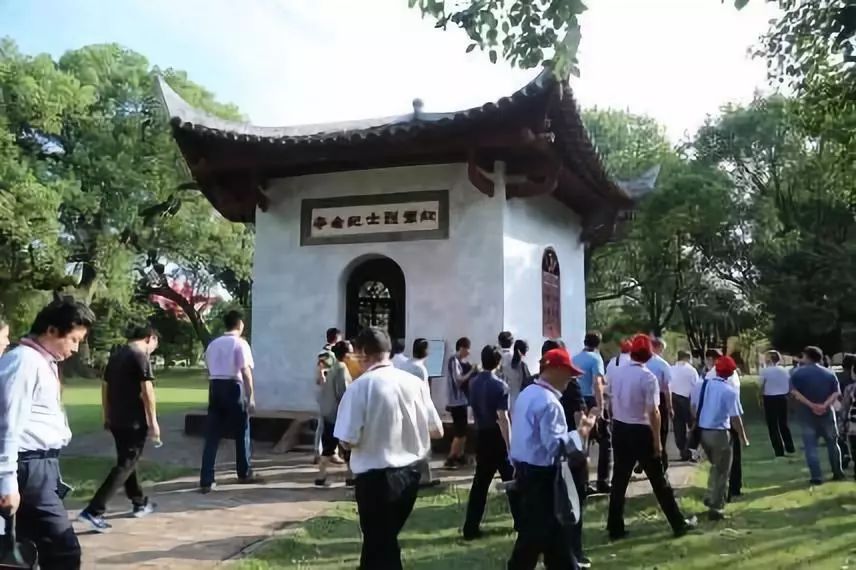
In front of the reviewing stand is the spacious Yeping Red Army Square. The ground is covered with lawns, and a line of big characters is highlighted on the ground-along the blood of the Red Army. There is also a towering Red Army Martyrs Memorial Tower and a solemn Red Army Martyrs Memorial Pavilion next to the square.

The 13-meter-high Red Army Martyrs Memorial Tower designed by Qian Zhuangfei has a pentagonal tower base and a shell-shaped tower body.


On November 7, 1931, it was the celebration day of the October Revolution in the Soviet Union. On this day, the first congress of workers, peasants and soldiers in chinese soviet republic was held at the Xie Ancestral Hall in Yeping Village, Ruijin, Soviet Union. A grand military parade was held before the opening of the conference, which was the first large-scale official military parade recorded in the history of our army.

In order to prepare for the parade, Ceng Shan, then chairman of Jiangxi Soviet, and Deng Xiaoping, then secretary of Ruijin County Party Committee, led Ruijin people to open a square that could accommodate more than 10,000 people in a forest in the northeast of Yeping Village, and built a Red Army reviewing platform with bamboo and stone. 

In the middle of the reviewing platform, there is a huge red cloth hanging across the reviewing platform of the Red Army of the First National Soviet Congress, with portraits of Marx and Lenin hanging behind it, and flags of the Chinese Red Army of Workers and Peasants on both sides. In order to prevent the invasion of enemy planes, this military parade was specially arranged at 7: 00 am on November 7.

The troops participating in the reading are mainly representatives of the Red Army’s various regiments and armies, the Red Army’s camp schools, and representatives of the security forces. More than 600 delegates, including the Red Army troops from various Soviet areas and the All-China Federation of Trade Unions located in the Kuomintang-ruled areas, attended the celebration together with the people from Soviet areas who came to watch the ceremony.

At 7 o’clock sharp, Mao Zedong, Zhu De, Xiang Ying, Ren Bishi, Wang Jiaxiang, Peng Dehuai, Chen Yi and Ceng Shan boarded the reviewing stand in turn, and the military parade officially began.

Mao Zedong, general political commissar of the Red Army, dressed in a Chinese tunic suit, presided over the military parade.

Teams of heroic Red Army soldiers, columns of Red Guards and Young Pioneers shouted "Long live the Red Army!" "Long live the Soviet Union!" "Long live the Communist Party of China (CPC)!" Slogan, neatly through the reviewing stand parallel attention.

Accompanied by Chief of Staff Ye Jianying, Zhu De, Executive Chairman of the General Assembly and Commander-in-Chief of the Red Army, rode to inspect the troops and personally led the troops under review to take the oath. The whole military parade lasted about an hour.

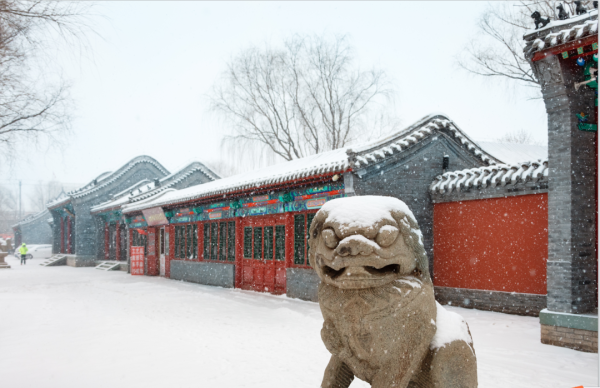
Memorial Pavilion of Red Army Martyrs in Yeping Revolutionary Site Group


Ran Ran, the Oriental Red Sun, rose, the military parade ended successfully, and people quickly evacuated according to the predetermined plan. At this time, several planes of the Kuomintang attacked, but no abnormalities were found. After dropping several bombs, they flew in the direction of Changting, Fujian, and bombed the fake venue where the Preparatory Committee for the Conference was arranged.

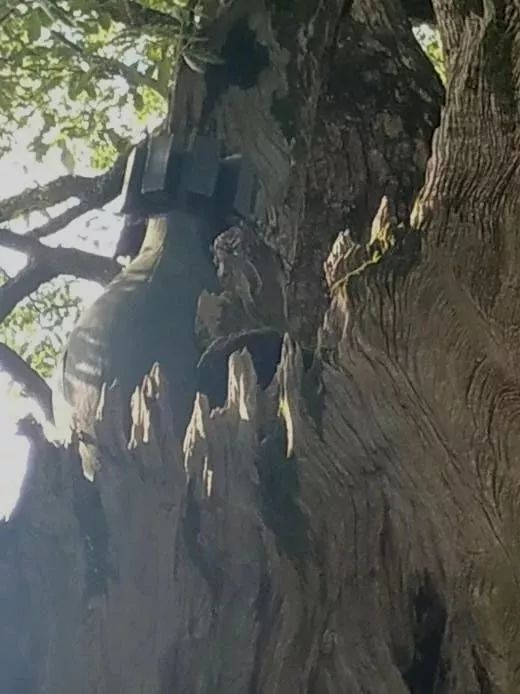
On an ancient tree next to Comrade Mao Zedong’s old residence in the former site of Yeping Revolution, there is still a bomb that the enemy dropped and failed to detonate embedded in the branch.


Mao Zedong said humorously at that time: "Chiang Kai-shek is really a friend, knowing that we set up the Soviet Union today, held a military parade, and sent a special plane to entertain us!"

Yeping Revolutionary Site Group —— Witness the birth of the title "Chairman Mao"

After the military parade, from November 7 to 20, 1931, the first national congress of the Chinese Soviet was held in Yeping, Ruijin. Attending the meeting were representatives from the Central Soviet Area, western Fujian, northeastern Jiangxi, Hunan and Jiangxi, Hunan, Hubei and Jiangxi, Qiongya and other Soviet areas, as well as representatives from the Red Army, the All-China Federation of Trade Unions and the All-China Seamen’s Trade Union, totaling 610 people. On behalf of the Soviet C.O., Mao Zedong made a Report on Political Issues to the General Assembly. The Congress adopted the Outline of the Constitution of chinese soviet republic, the Land Law of chinese soviet republic, the Labor Law of chinese soviet republic and chinese soviet republic’s Decision on Economic Policy. A Central Executive Committee composed of 63 members including Mao Zedong, Xiang Ying, Zhang Guotao, Zhou Enlai and Zhu De was elected.

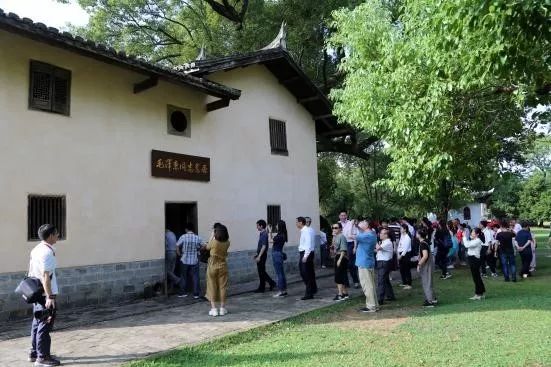
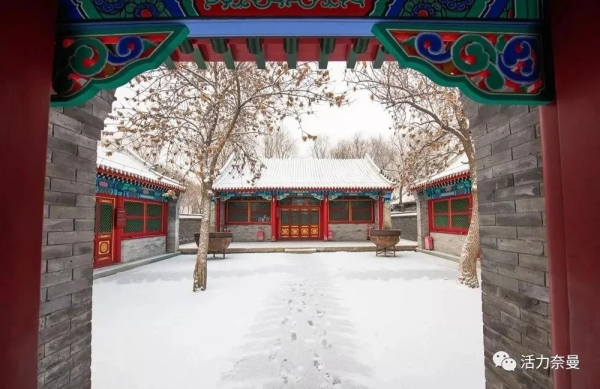
Former Residence of Comrade Mao Zedong in Yeping Revolutionary Site Group

After the conference, Ruijin was renamed as "Ruijing" and Ruijin County was designated as a county directly under the Soviet Provisional Central Government. Ruijin thus became the red capital of chinese soviet republic.

On November 27th, 1931, in the dense forest of Yeping Village, Mao Zedong presided over the first plenary meeting of the Central Executive Committee of chinese soviet republic. The meeting elected Mao Zedong as the chairman of the Central Executive Committee and the chairman of the Central People’s Committee according to the procedure stipulated in the Soviet Organic Law.

Chinese soviet republic temporary central government office former site


At that time, Ren Bishi, the host of the conference, stepped onto the rostrum and proposed on the spot: "Please ask Chairman Mao to speak!"

For a time, everyone didn’t react to who he called, and then everyone turned their attention to Mao Zedong. In the warm applause, everyone shouted "Chairman Mao!" The title of "Chairman Mao" is also called open.

The article was published on WeChat WeChat official account "Dongfanghong", please indicate the source.

The picture comes from "Grateful Endeavour, A New Chapter of the Cradle Spectrum of the Republic" —— All-media Jiangxi reporters of the National Party Journal Shen Jinxiang and Gao Bin.

Exclusive dialogue with Zhang Yi | After running for many years, the golden rooster turned positive, and he broke through his true colors.


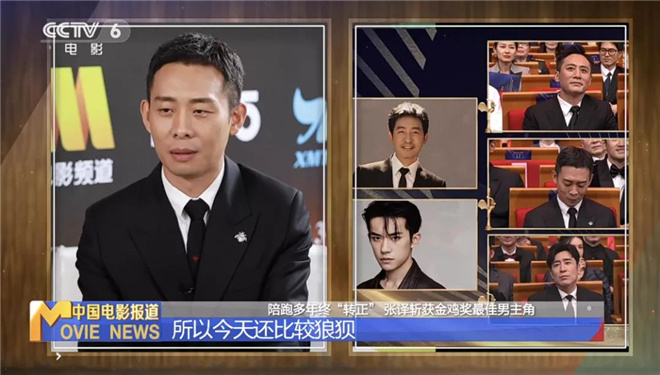
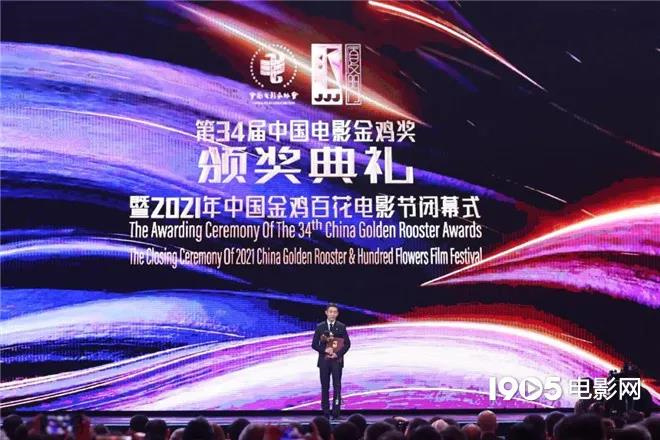
Special feature of 1905 film network The moment I won the Golden Rooster Award for Best Actor, my mind was blank — — Nominated with his partner in the same group, he was ready to "run with him" again early. And the sudden "becoming a full member" makes Zhang Yi, who has always been calm, look happy and somewhat "embarrassed" on the stage.


"I know I’m not the best, but I really love my career!" When I was a student, Zhang Yi used a "fake actor’s card" to show off that he had become an actor. Nowadays, the "genuine" award is not only recognition and praise for all his past efforts, but also will give actor Zhang Yixin new thoughts and answers.


01


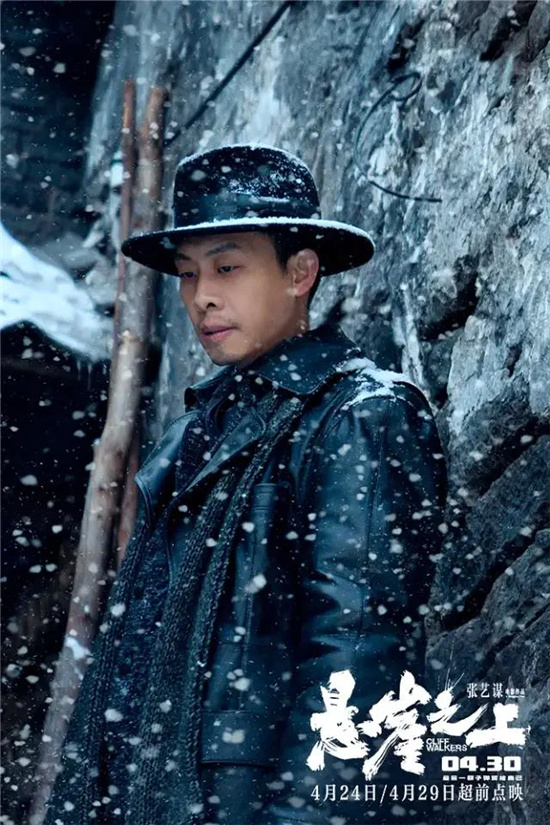
At the age of 10, Zhang Yi stood in front of the cinema on Harbin Central Street and saw the huge poster of the director’s works for the first time. Years later, at the age of 40, he finally walked into the lens of director Zhang Yimou. Behind this dreamlike experience, which now seems to be full of "cinematic feeling", is an actor’s rough years and namelessness through his love and persistence.


Ordinary appearance made Zhang Yi have no performance opportunities for a long time. The drama troupe has been a walk-on for ten years. He worked as a screenwriter and a reporter. When the group was busy, he made a guest appearance as a host, but he just couldn’t wait for the role that belonged to him.


Later, I went to the crew to audition and cast thousands of resumes, almost all of which sank into the sea. Some directors bluntly said, "We’re going to shoot an idol drama, and we’ll take your photos away quickly." Some even told him, "Zhang Yi, you should stop acting, and acting is a’ death’".


Depression, pain, but Zhang Yi convinced himself to take these as "polishing", just to keep the "lowest dignity of actors" in his heart.


If the appearance is not dominant, he will work harder than others in other aspects: in order to win a substitute role in the drama version of Soldier Assault, Zhang Yi memorized all the lines of everyone. At that time, he finally failed to get on the stage, but these accumulations became the "capital" for Zhang Yi to recommend himself to the director.


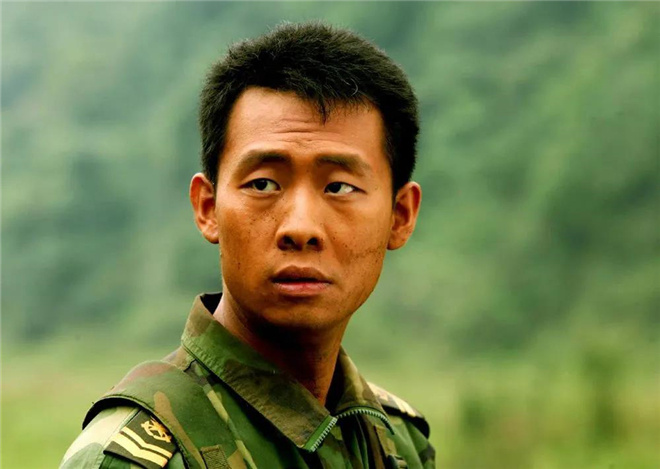
Zhang Yi plays Shi Jin in Soldier Assault.


Before the TV series "Soldier Assault" started shooting, Zhang Yi sent a 3000-word letter of recommendation. In this way, the "monitor Shi Jin", which has not many scenes, together with this work, has become an unforgettable classic in the minds of countless audiences, and this role has completely changed the fate of Zhang Yi.


02


It’s hard to wait for the first play, and it’s even harder to gain the first recognition.


"Monitor Shi" made Zhang Yi feel the satisfaction of being recognized by the audience when he went out on the street for the first time, but there are still voices in the industry questioning whether he can only rely on the "true colors" of his military career to support his role compared with acting.


When he joined the army at the age of 18, the lush years meant nothing to Zhang Yi. For this reason, from "Soldiers Assault", "My Head and My Regiment" to big-screen works, he has a deep military complex, and he is cautious about taking on such works because he "doesn’t want to waste precious opportunities on an unworthy work."


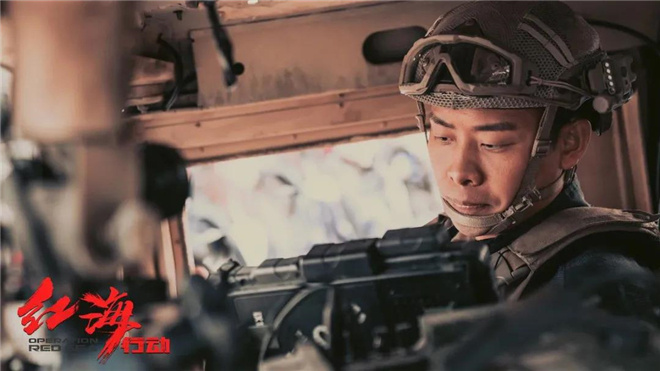
Zhang Yi plays Yang Rui, the captain of the "Dragon" in Operation Red Sea.


He was once rated as "the way of acting is not wide", but Zhang Yi never stopped there willingly. Outside the military theme, he began to make bold breakthroughs to prove that he had more possibilities in performance.


In Dear, Han Dezhong, a strong and painful father, a night security guard who is down and out, a wretched and treacherous "old abacus" in the movie, and a nameless ordinary hero … … No one tries to distinguish Zhang Yi’s "true colors" among these characters.


In order to complete these roles, Zhang Yi endured a broken leg injury and once lost 110 pounds; He learns all the scenes that need to use dialects word by word, even in the dubbing stage. Some people say that this person is like a "drama madman". Zhang Yi said with a smile that he just wants to compete with himself and the outside world. This "awkward" process has also achieved his continuous gains on the road of performance.


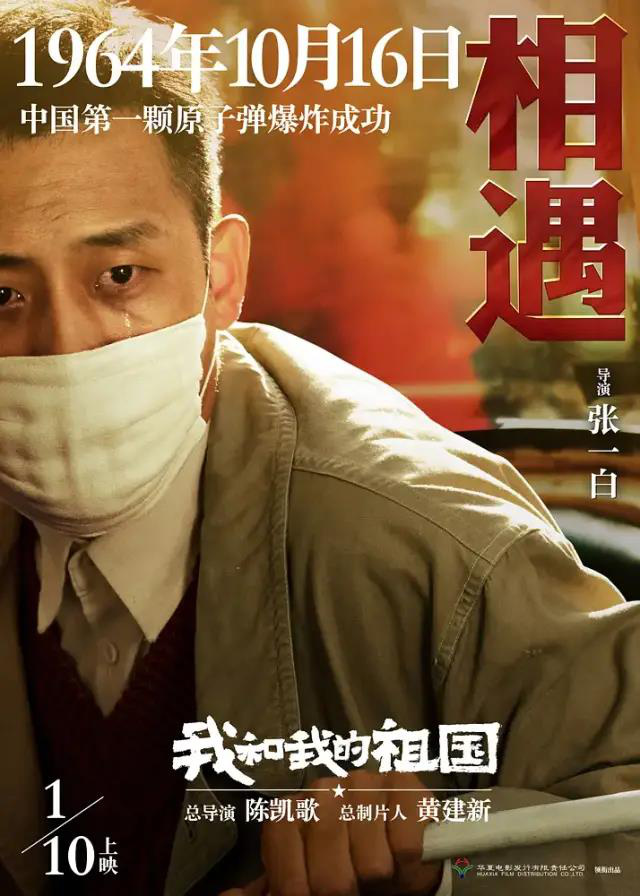
Zhang Yi plays Gao Yuan in My People,My Country.


03


Zhang Yi once spent four years writing a collection of essays entitled "An unreliable actor loves to say what if". The opening paragraph reads, "Actors, they walk on the road almost every day, stay in different hotels and listen to different dialects … … They usually have strong imagination and expressive power, and the stories they tell are interesting, rhythmic, suspenseful and burdened … … It’s just a pity that no one has recorded it. "


So he decided to take notes of the next actor’s work every day. "I have a work diary and a schedule. I have been planning to be 60 years old by 2038. " Through these diaries, Zhang Yi found that there were not many days when he really "rested", and filming in the crew became the normal state of life. Compared with being busy and tired, he felt that such days were practical.


During the months of filming, Zhang Yi found the lens of director Zhang Yimou on the central street in Harbin, which he was familiar with. The dream returned to the place where it started, and it took Zhang Yi 30 years to get here.


In the Golden Rooster Award acceptance speech, his voice trembled and he said that he was not the "best actor". From plain appearance and repeated missed opportunities to "the road to play is too narrow", from the rudeness of blindly "adding drama" on the stage to the resignation due to the pressure of the role, this once "unreliable actor" finally gained recognition in the industry and "turned positive" was the best actor.


The voice that once questioned has become the praise of "Zhang Yi products must be fine" — — In the upcoming Spring Festival, his new film with director Zhang Yimou will meet the audience again. "Pressure doesn’t exist (for me)." Faced with a lot of expectations, Zhang Yi was very calm. "The quality of a movie is by no means determined by one actor or several actors. The film is the art of the director first, and the second place is the book of a play."


At the age of 40, Zhang Yi participated in the works directed by Zhang Yimou for the first time; Forty years after the Golden Rooster Award, he won the first Golden Rooster Award for Best Actor trophy. "Forty is an important growth point, just like driving, it’s time to change gears. We will get better and better, and China movies will get better and better. "


The surging vitality of emerging industries highlights the background of high-quality economic development

Listed companies are not only the cornerstone and foundation of China’s economy, but also the leader and vanguard of high-quality economic development. Judging from the third quarterly report, the overall performance of listed companies in the first three quarters is marginal, and the industry recovery trend is obvious, reflecting the development trend of China’s economic operation.
At present, China’s economy is at a critical stage of transformation and upgrading. The main task is to promote the transformation of development mode and push the economy towards high-quality development. Therefore, the market not only pays attention to the development trend of traditional industries, but also pays attention to the growth momentum of emerging industries. Emerging industries are characterized by active innovation, intensive technology and broad development prospects, which are related to the overall situation of national economy, social development and industrial structure optimization and upgrading, covering a new generation of information technology, new energy, new materials and many other fields.
It is gratifying that in the first three quarters, the two core indicators of revenue and net profit of emerging industries generally performed well. The author believes that the surging vitality of emerging industries and the accelerated gathering of innovative kinetic energy highlight the resilience of China’s economic development and the background of high-quality development, which is reflected in three levels.
First, emerging industries are full of vitality and support reasonable economic growth.
The development momentum of emerging industries is remarkable, which strongly supports economic growth. According to the disclosure of China Association of Listed Companies, as of October 31st, in addition to the delayed disclosure of the announcement, a total of 5,368 listed companies in China’s domestic stock market disclosed the third quarter report of 2024. In the first three quarters, the auto parts and semiconductor industries were booming, with net profit increasing by 20.5% and 41.9% respectively, and the net profit of the electronics industry increased by over 35%. The revenue and net profit of listed companies in high-tech manufacturing industry increased by 6.1% and 3.2% respectively, which was significantly higher than the average level. Correspondingly, according to the National Bureau of Statistics, the added value of high-tech manufacturing industries above designated size increased by 9.1% year-on-year in the first three quarters, which was 3.3 percentage points higher than the average growth rate of industries above designated size.
At present, China’s economy is accelerating from a high-speed growth stage to a high-quality development stage. During the transition period, some traditional industries, especially those with huge upstream and downstream industrial chains, have weakened their pulling effect on economic growth. In order to maintain reasonable macroeconomic growth, emerging industries need to "make up the position" in time. The vitality of emerging industries is conducive to maintaining "reasonable growth in quantity" in the macro economy, promoting the upgrading of industrial structure, promoting full employment, enhancing the international competitiveness of entity enterprises, and establishing an innovation-driven development model.
Second, investment in R&D in emerging industries will be increased to enhance the stamina of economic development.
The continuous growth of R&D investment is also one of the dynamic performances of emerging industries. At present, emerging industrial companies are mainly concentrated in the Growth Enterprise Market, science and technology innovation board and the North Stock Exchange. According to the data of China Association of Listed Companies, the R&D investment of listed companies reached 1.10 trillion yuan in the first three quarters, a year-on-year increase of 3.9%. Among them, the R&D investment of GEM, science and technology innovation board and Beijing Stock Exchange has been increasing, and the R&D intensity in the first three quarters was 4.74%, 9.94% and 4.73% respectively, which were higher than the average level of listed companies.
At this stage, the R&D investment of emerging industrial companies has gradually become an important indicator of widespread concern of regulators, investors and peer companies. From a macro perspective, R&D investment is an important factor affecting economic growth, which can promote technological progress, improve production efficiency and ultimately promote the growth of the whole economy. From a micro perspective, sustained and high-intensity R&D investment can not only accelerate the transformation of scientific and technological achievements, but also help listed companies gain greater competitive advantages in the international market. The growth of R&D investment of emerging industrial companies is not only conducive to their own high-quality development, but also enhances the development potential of China’s economy.
Third, emerging industries become the main areas of mergers and acquisitions, and enhance the innovation ability of the real economy.
According to the China Association of Listed Companies, this year, traditional industries have been optimized, reorganized and upgraded, emerging industries have become the main areas of mergers and acquisitions, and industry consolidation has gradually become the mainstream. M&A is conducive to guiding more capital and resources to leading enterprises with forward-looking and strategic significance, promoting enterprises related to emerging industries to broaden the "moat" and forming a number of "unicorn" enterprises. This is conducive to enhancing China’s independent innovation ability in key areas and ensuring that it maintains its advantages in global competition.
To ask the water in the pond, why is it so clear? Because there is an inexhaustible source of constant flow of living water for it. In the long run, as one of the most important "living waters" to promote China’s economy, the prosperity and development of emerging industries will help promote China’s high-level scientific and technological self-reliance, enhance macroeconomic vitality, consolidate the economic recovery, improve social expectations, enhance people’s livelihood and well-being, and build a new development pattern.
Source: Securities Daily
Reporting/feedback

Toyota will introduce three new models this year, including the all-new RAV4 and 2.0L Avalon.

In the first half of this year, the cumulative sales volume of domestic passenger cars 9.954 million, down 9.3% year-on-year. Although the total sales volume increased by 4.9% year-on-year and 11.6% month-on-month due to the implementation of the National VI policy in June, the actual growth was the result of consumption overdraft in the second half of the year. The overall environment is not optimistic, but the performance of Japanese brands is eye-catching.

As one of the three major Japanese brands, in the first half of the year, it successfully topped the Japanese first with the sales of nearly 760,000 vehicles. In addition, with the launch of many new models such as Camry, New Leiling, and New Corolla, the brand vitality continues to improve. It is worth mentioning that in the second half of 2019, Toyota will also launch three blockbuster new cars in China.

The all-new Toyota RAV4

The all-new Toyota RAV4

The all-new Toyota RAV4 Hybrid

It has always had a good market performance in China, but the current model IPO time is longer, and the comprehensive product force is relatively weak compared with competitors at the same level. At this year’s Shanghai Auto Show, the domestic new Toyota RAV4 was unveiled, and the new car is expected to be launched in October this year.

The new domestic RAV4 is based on Toyota’s TNGA architecture and has been fully upgraded from the inside to the outside. Its appearance basically follows the design of the new RAV4 overseas version. The body has added a lot of tough lines, and the overall shape is more square and wild than the previous generation. The new car offers two appearance styles: "ordinary version" and "exploration version". The interior design of the new RAV4 has a new look, and the texture and technological sense have been significantly improved. In terms of body size, the length, width and height of the new car are 4600/1855/, and the wheelbase is 4600/1855/.

In terms of power, the new car will provide a 2.0L naturally aspirated engine with a maximum output of 171 horsepower and a 2.5L hybrid system, all of which meet the National VI emission standards. According to the declaration information, the fuel consumption of the hybrid version of the model is only 4.6L/100km. It is worth mentioning that the new Toyota RAV4 Rongfang Dual Engine will also become Toyota’s first hybrid SUV model in China.

Xiaozhi comments: In recent years, the domestic compact SUV market has become increasingly popular. Compared with direct competitors such as Honda CR-V and Nissan Qijun, the current Toyota RAV4 Rongfang is somewhat powerless. The upgrade of the new RAV4 Rongfang is quite large. If it can be sold at a reasonable price, it will definitely have a significant impact on the domestic joint venture compact SUV market.

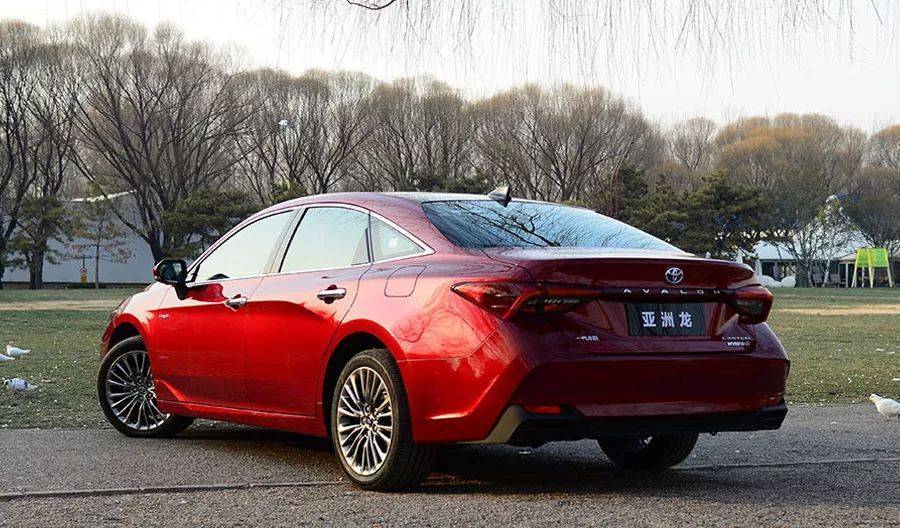
Toyota Asian Dragon 2.0L

2.0L Toyota Asian Dragon Application Illustration

In March this year, FAW Toyota Asian Dragon was officially launched in China, priced at 20.88-28 9,800 yuan. As a global flagship model under Toyota’s TNGA architecture, it is not only highly competitive in price, but also impressive in its dynamic and radical appearance. Recently, the Toyota Asian Dragon 2.0L model has appeared in the MIIT declaration information, and it is reported that the new car will be listed in October this year.

The current Toyota Asian Dragon offers 2.5L naturally aspirated and 2.5L hybrid systems, while the new car will be equipped with a 2.0L four-cylinder naturally aspirated engine codenamed M20A/M20D (imported and domestic respectively). Combined with the price of the current model, the lower-displacement 2.0L Toyota Asian Dragon may start at less than 200,000 yuan.

Toyota, for sale

According to the declaration information, the appearance of the 2.0L Toyota Asian Dragon is basically the same as that of the current model. The large-sized air intake grille with horizontal lines makes the entire front face look very tense, and the angular lower surround also enhances the sporty atmosphere of the front face. Compared with the radical front face, its rear is fuller and more three-dimensional, and the through taillights with English logos are even more elegant.

In terms of body size, the length, width and height of the new car are 4975/1850/, and the wheelbase is the same as the current model. In terms of power, the new car is equipped with a 2.0L engine with a maximum power of 178 horsepower and a peak torque of 210 Nm.

Xiao Zhi commented: The Asian Dragon has gained a lot of attention with its advantages such as the B + class sedan, the TNGA global flagship, a higher positioning than the Camry, and a body size similar to the Lexus ES. However, judging from the market performance in recent months, the monthly sales of 2,000 to 3,000 units are indeed a bit lackluster, which is far from the Camry’s monthly sales of 10,000 units.

At the beginning of the launch of the Asian Dragon, the production capacity was insufficient, resulting in a price increase at the end point. Coupled with the entry-level 2.5L advanced version priced at 208,800 yuan, it was almost out of stock at the end point, and the entry threshold directly increased by nearly 20,000 yuan. These situations have affected the car buying experience of the Asian Dragon. On the other hand, the Camry, with a starting price of about 180,000 yuan and a good reputation and mass base accumulated over the years, has an advantage. The launch of the 2.0L Asian Dragon is an attempt by FAW Toyota to make a breakthrough in sales by reducing prices.

The new Toyota YariS L

According to the declaration information released by MIIT some time ago, the new GAC Toyota YARiS L Dazzling will be launched within the year. This car is a mid-term facelift of the Toyota YARiS L Dazzling model on sale. From the declaration chart, the new car adopts a new appearance shape. The silver guards surrounding the front and rear, the black trim around the body and the luggage rack all make the new car quite crossover style. The "mustache" design characteristic of the front face of the current model has been cancelled and replaced by a new large-size air intake grille. The tail shape is full and fashionable, and the overall body line is more tough and sharp.

According to the declaration information, the length, width and height of the new car are 4160/1720/, and the wheelbase has not changed much compared with the current model. In terms of power, the new car is expected to continue to use the 1.5L naturally aspirated four-cylinder engine codenamed 7NR. The maximum output power of the National 5 version is 111 horsepower, and the maximum output power of the National 6 version is 110 horsepower. The transmission system is matched with a 5-speed manual and a CVT continuously variable transmission.

Xiao Zhi commented: Compared with competitors such as Honda Fit and Volkswagen Polo, the performance of Toyota Yaris L is not impressive, with an average monthly sales volume of around 6,000 units. However, as far as the product itself is concerned, the Yaris L also has its advantages, such as low starting price, worry-free driving, and low maintenance costs.

The current Honda Fit does not meet the National VI emission standards, which directly causes some troubles for potential car buyers. The new Volkswagen Polo Plus is also difficult to meet consumer expectations due to its slightly more expensive price. Therefore, if the new YARiS L can be priced as affordable as the current model, it will have a good chance to help Toyota grab more market share in the small car market.

Although more than half of 2019 has passed, Toyota will still have at least three new models to meet us. Among them, the new Toyota RAV4 is the most exciting and the market prospect is brighter; while the arrival of the 2.0L and the new YARiS L will further enhance the market performance of the current models. As a consumer, which one do you look forward to more?

When online classes replace classrooms, can college students still study hard?

First, the question: How has online class changed the study and life of college students?

In interviews with teaching deans, academic leaders, professional leaders, department heads, teaching teachers and students from different universities and disciplines, it is found that the teaching environment in colleges and universities has changed significantly. Respondents generally believe that since 2020, there have been "uncertainties" in the higher education environment in China, and the teaching quality is at risk of decline, all pointing to a hot issue-"the difficulty of online courses":

On the one hand, teachers are struggling to adapt to the changes in media technology, and the time and energy for preparing lessons are prolonged, and the teaching effect is not significant; On the other hand, students are good at using the function of media technology and find many "process loopholes", which makes it more and more obvious to avoid class.

The emergence of this phenomenon is obviously different from the "online class substitution theory" generally considered by the society.[1]That is, there is cognitive asymmetry among observers, managers, participants and practitioners. Around this problem, the author conducted a two-year field survey, and through in-depth participatory observation and interviews, from the dual dimensions of objective reflection and subjective experience, explored the "hidden problems" of online teaching and learning under the background of deep media. Based on this, this paper reflects on the potential defects of college students’ online learning and provides solutions from the practical level.

"it(online class)Like mobile games, it is easy for students to transfer from offline teaching space to online.But how difficult it is to’ ask them’ to return to the tropic of cancer and reach the original offline state of attending classes."(teacher ZYJ).

This view has almost become the consensus of college teachers in recent years, and it is often discussed in anger. Guo Jianbin and other communication scholars put forward that "online classes have become audio-visual education.(learning)A contemporary form of "[2]Modern science and technology have infiltrated people’s daily life, formed the basic elements of people’s daily life and transformed daily life from the inside.[3].

From a certain point of view, online classes have challenged the educational methods handed down for thousands of years in the era of Confucius and Plato, and have been widely recognized. The reason is directly related to the barrier problem of "time-space communication" that needs to be solved urgently in public health emergencies. However, when the pain dissipates, its "side effects" gradually begin to appear."Online classes are a dose of’ painkillers’, and it can’t completely replace offline classes after all."(teacher HH).

"Although I have graduated, I feel that I really haven’t learned anything in these two years of online classes."(student WD). Judging from the current macro trend of higher education teaching, although online classes have some disadvantages, online classes still become an important part of daily teaching methods and become the "sword of Damocles" in the daily practice of higher education.

In 2020, the Ministry of Education emphasized that "suspension of classes and non-stop learning" is not a simple online class "[4]. In 2022, "Several Opinions of the Ministry of Education and Other Five Departments on Strengthening the Teaching Management of Online Open Courses in Colleges and Universities" clearly put forward detailed opinions on strengthening the teaching management of online open courses used by colleges and universities to identify credits, among which special reference was made to irregular learning behaviors such as "brushing classes", "substituting classes" and "brushing exams".[5].

As early as 2013, online courses represented by massive open online course rose in China.Before 2020, it has always been used as an "auxiliary method" to improve the quality of teaching, and offline teaching has always occupied the mainstream.When the frequency of online classes is increasing, a very basic question is placed in front of us: what is the significance of universities as "physical spaces" for students? What’s the difference between full-time and part-time jobs? Is online class really a suitable teaching method for universities?

These questions come together to form the "dilemma of online courses" that higher education workers and college students have been discussing hotly in recent years, and they are all tied together on the "wheel of Vransky"-"accelerated driving system"(corresponding to the technical platform on which online courses rely)Not only does the function occur externally,It also enters the individual, and he(Teachers and students in online classes)Will be driven by the idea that they might miss something.The result is the feeling of being tied to a wheel that turns faster and faster. "[6].

The fundamental reason behind "the difficulty of online classes" is that the public ignores the life dimension of media technology and human subjectivity. "The audience is actually an actor embedded in the context of daily life.(actor), regardless of information acceptance or interpretation behavior is carried out in daily life practice "[7]. This urgently requires us to reflect deeply.In addition to providing convenience for college students, what else does online class bring?

Second, the research design

This study mainly uses the method of participatory observation and in-depth interview to conduct field research. From March 2021 to March 2023, on the one hand, the author gained the subjective experience of "online class" through five online courses and 40 online listening and evaluating classes, and sorted out the "intuitive problems" found during "online class"; On the other hand, around the topic of "how to treat online classes", 63 teachers and students in colleges and universities were interviewed one after another, and on the basis of confirming the objective existence of the above-mentioned "intuitive problems", the individual causes and solutions were explored.

In addition, the prerequisite for becoming the interviewee of this study must be the use of.(class or lecture)The "online class" time is not less than one semester. The basic information of 5 courses and 63 interviewees is shown in Table 1.

In addition to the online participation in course observation, all interviews are conducted in a "face-to-face" and semi-structured way. The interview scenes include daily communication, after-class interaction, teaching meetings, supervision and inspection, student discussions, inter-school exchanges and targeted interviews.

Through the experience of "online class" and course experience told by 63 college teachers and students, this paper tries to find the crux of "online class difficulty", and looks for ways and methods to solve "online class difficulty" from the multiple dimensions of interviewer’s individual psychological motivation, behavioral feedback, after-class feeling and habit formation. The naming method of interviewees refers to academic practice and is marked with "identity+initials", such as student DXY, teacher HH and supervisor CGS.

Third, the change of habit: the alienated learning style under the logic of technology

Media technology has completely realized Marx’s "good wish" of "destroying space with time" more than 100 years ago, but "fetishism is actually linked with" symbol-thing ",which has been evacuated from its substance and history and reduced to a symbol of difference and a microcosm of the whole difference system"[8]People are obviously ignored and alienated for years.

For college students, the manifestations of alienation are reflected in many aspects of learning style, such as:Material media such as mobile phones and tablets have become necessary stationery. Punching in and receiving words have become the core indicators of listening carefully, and the sense of ritual in the classroom as a public space no longer exists …For college students, this learning style is an instantaneous passive requirement, and it is also a continuous subtle influence. With the passage of time, a stable teaching habit has naturally formed, and the alienated learning style has also become a habit.

1. Internet and its hardware equipment as "necessary stationery"

Online classes are a socialization process, which is an important part of Elias’ explanation that "life is a’ networking phenomenon’".[9]. Then, from the perspective of functionalism, "social values can be passed on to the youngest members of society without any problem, and these members will then reproduce them."[10]. In the scene of online classes in colleges and universities, the socialization process is media, and its social value is the convenience of learning brought by the materiality and availability of media. Obviously, mobile phones, computers and Wi-Fi have become "necessary stationery" for college classes.

Mediating learning style is the trend of the times,Others have been mediated, and I have no reason not to be mediated. I can get my degree certificate, and I don’t care if media will affect my knowledge acquisition. "(student DXY).

Through various channels, the author found the "online teaching notices" issued by 11 universities in various periods.When the educational administration issues the online teaching notice, it does not give too much consideration to the students’ equipment conditions, and often acquiesces that students can meet the basic material foundation of online classes.Regard related equipment as an "existing" and "necessary stationery". The academic affairs departments of each school will focus on maintaining technical communication with several mainstream online class platforms to meet the adaptability of students’ different "stationery" in order to achieve everyone’s "online class" as much as possible.

What’s important is that in terms of course effect tracking,Most educational evaluation departments do not consider the problem that students’ teaching feedback is "difficult to judge intuitively".Obviously, both students and educational administration departments have failed to clarify the logical relationship among "going to class", "going to class" and "having a good class", and they only focus on the "technical service" of online classes, ignoring the question of whether online classes are sustainable.

At the same time,This kind of "technical service" also brings great challenges to the "auxiliary management" within the family.In the communication with some college counselors and teaching secretaries, it is known that some students’ parents are often "very concerned" about the compensation for the differences in hardware equipment between students, and even think that "if the online class equipment is worse than others, the children will lose at the’ starting line’ of the university"(counselor LBW)The formation of these ideas has brought a certain economic burden to the students’ families.

First, the economic conditions of students’ families are quite different, not all students.(especially freshmen)They all have the infrastructure needed for online classes, and students in remote areas need to meet their teaching needs by borrowing computers, surfing Wi-Fi and meeting Internet cafes. Second, students buy electronic products with "bootleg goods", and buy new, higher-equipped and more functional electronic products on the grounds of online classes, so as to meet the needs of future behaviors other than learning, such as comparison, drama chasing, games and live broadcast.

Students’ "wandering" maintains a "delicate balance relationship" between schools and parents, bridging the information gap between parents and schools, so as to achieve the purpose of students’ individual behaviors such as updating electronic products. It can be seen that the main power of "auxiliary management" within the family is gradually transferred to students, and it is becoming more and more difficult for both home and school to guide students’ behavior, consciousness and concept.

2. "On-line, punching in and receiving" have become the three major KPIs for students’ assessment.

"Roll call" is a necessary part of curriculum education, and its premise is the "presence" of the educated "body", which proves that the educated and the lecturer are in the same time and space at this moment through question and answer. In the context of online classes, "punching in" instead of "roll call" becomes a substitute index of learning participation, which is the "implosion" point of the course teaching structure.[11], opened a new wave of "simulacra order"[12]Among them, "online" as status and "received" as feedback become the main ways to maintain this order.

Starting from the concern of Baudrillard’s simulacra theory, the relationship between the virtual and the real in the online class environment has become blurred, and the most intuitive performance is obviously inIts "spatial attribute" has been greatly weakened.. Among them, the "space" is redefined, and the live broadcast software in hardware equipment provides students with a "virtual presence" of "digital flesh", which is indirectly displayed by the names or images in the live broadcast software "member list", forming an individual self-enclosed "subspace", while only the "member master list" composed of all the students attending the class and the instructor can form a complete "space" in the true sense.

Then, when "online, punching in and receiving" become the three KPI’s of students’ assessment, can the "presence" in the form of button symbols in "subspace" accurately reflect students’ listening state and classroom order? Obviously, this question needs a big question mark.

"Early eight.(Course at 8: 00 am)Many people will choose’ hang up’.Now who doesn’t answer a’ to’ in the QQ group and continue to sleep back? "(student SY)

On the one hand, for college students who have not developed fixed and good study habits, the assessment method of "on-line, punching in and receiving" has fetal defects, which can not cover the loophole of "sub-space" established by them to help them "be present in disguise" and give them the opportunity to sleep late or even skip classes.

On the other hand, through investigation,Most teachers are not aware of this problem,They even think that the symbol "received" in the platform can replace the actual "interaction" as a unified way to feedback the learning effect, and "online" can also replace "present" as a universal criterion. Even some teaching supervisors, educational directors and dean of teaching often pay special attention to the proportion of "online", the record of "punching in" and the frequency of "interaction".

In the long run, this form of "effect evaluation" has become one of the indicators to assess the quality of teaching, which has become a "punching task" for college students; For teachers, it seems that whether students have learned knowledge is no longer so important.

In view of the above problems, the online class platform has also blocked relevant loopholes at the technical level to prevent the occurrence of "disguised presence". howeverThe technical "patch" of the online course platform seems to never defeat the lazy "magic" output by college students in the "subspace".

"Many learning platforms.(e.g. learning skills, etc.)Later, there was a real-time punching function, and even you could accurately locate your geographical coordinates, frame the punching time and online time. No matter how precise the technology is, it’s useless. I can ask my brother to sign up for my account. My brother listens to me, so I don’t have to get up early at all. "(student LXY).

From the student’s point of view, the problem of "alienation" brought by media technology is not only as simple as "pretending to be present", but also provides convenience for students to implement "policies above and countermeasures below" in operation. As can be seen from this,The technical patch of the online class platform actually further intensifies the conflict between two different roles in the classroom.

Through interviews, it is not difficult to find that, fundamentally speaking, the "space" in college students’ cognition is not the same concept as the space that teachers think: for teachers, "space is the classroom, and students must be physically present".(teacher JH); For college students, "school"(space)In my heart, it is not just a classroom, it is a space for public life, not just learning. "(student HYY). As a result, when teachers constantly use "online, punching in and receiving" to restrain college students’ bodies, they are actually drifting away from Marx’s beautiful wish of "destroying space with time".

3. Pay attention to the concept of transmission of education and ignore the concept of ritual of communication.

The two habits of emphasizing materiality as "necessary stationery" and virtuality as "punching KPI" have gradually been accepted by all contemporary university teachers and students. However, from the root point of view, this alienated learning style is actually related to the change of educational values.

The interaction among materiality, virtuality and values forms a logical closed loop of the change of college students’ study habits, showing a spiral upward trend, which further consolidates the dependence of college students on online courses. Among them, the change of educational values is mainly reflected in the fact that the subject of education regards online teaching only as a kind of knowledge "transmission" rather than a kind of "ceremony".

Combined with the viewpoint of American communication scholar james w. carey on communication concept,Online classes should spread not only the "concept of transmission" as real knowledge, but also the "concept of ceremony" as educational environment.[13]. Therefore, from the perspective of sociology of education, we have to pay attention to a thorny issue, that is, the "controversial root point" of online courses is not in the teaching process, but that the difference between "linear model and field model" is ignored in teaching concepts.[14].

In the field of educational communication, media and ceremony can be understood as three relationships: the ceremony of class, the way of class ceremony itself being ritualized, and the scene that "the media may become a ceremony or a collective ceremony itself"[15].

At present, the so-called ritual view of online classes is a kind of "media’s own ritual" proposed by Kurdley.[16],This shift of ritual field has gradually moved away from the true concept of educational ritual and lost the pure pursuit of knowledge dissemination.Specific in the classroom, will focus on alienation into three forms:

First,The relationship between teachers and students becomes single,It is easy for college students to form the wrong cognition that they have a "knowledge employment relationship" with their teachers. Some students said, "The teacher at the other end of the screen is like an AI, giving people the illusion that they are listening to the paid broadcast of knowledge."(student ZNN).

Second,Instantaneous, frequent and intense teacher-student interaction in the classroom becomes rare.For example, "I have questions about what the teacher said in class. Because the system has set up a ban on all staff, I can only leave messages in the message area, but many teachers don’t have the habit of taking care of the message area, so they can’t get feedback in time."(student YC).

Third, the group relationship between students in each course is in a weak connection state.The emotional connection between them is weaker than offline.For example: "After taking public elective courses, we still don’t know each other, and we can’t recognize our classmates when we see them offline."(student KYQ).

Then, for students, Golding’s so-called "the ceremony of attending classes and the way of attending classes are ritualized" cannot be perceived. It was too late when some educators found that "the ceremony of media itself" and "the ceremony of teacher-student construction" were obviously separated, which not only indirectly explained why students proposed that "it is better to go directly to the knowledge-paying website for online classes".(student ZNN)Question, also found it.Conceptual factors leading to the decline of online teaching quality.

Fourth, the consequences of alienation: the reverse suspension of students’ learning power

Compared with the past, the relationship between college students and teaching teachers, thesis tutors and teaching assistants has not become closer because of the development of media technology. On the contrary,The relationship between teachers and students is more alienated.

As Raymond Henry Williams said, the essence of this relationship alienated by the media is "alienation", which means alienation and alienation, and it is manifested as "widely feeling that people are alienated from society"[17]. We need to treat this phenomenon as a "brand-new relationship". "Alienation is a relationship that lacks relationship … According to this view, alienation is not completely irrelevant, but it is a relationship in itself, but it is a flawed relationship."[18].

Therefore, the final result of learning alienation has gradually evolved into an "inversion" of teachers’ and students’ power, showing a suspended state, which is reflected in four aspects: first, technical empowerment has laid a material foundation for the alienation of teachers’ and students’ relationship; second, bad study habits have provided environmental soil for the breeding of lying consciousness; third, the deviation of online course evaluation standards has further contributed to the formalism of collusion between teachers and students; and fourth, the misplaced student-oriented concept has provided an excuse for the lack of curriculum management.

1. Technology empowerment makes it possible to alienate the relationship between teachers and students.

"Teacher-student relationship affects students’ classroom participation, academic performance and learning motivation"[19]It is also the premise of giving full play to the value of teaching and educating people.[20]. However, during the investigation, the author found that almost all the respondents mentioned a common point: "We are tired of using mobile phones now.And the teacher(student)The relationship is also very similar to the’ zombie friends’ in WeChat."(Teachers JCS, QSQ, LX; Students YR, ZYL, CQ, etc.).

This "abnormal" way of communication has laid a hidden danger for the maintenance of the relationship between teachers and students in the future. From the perspective of college students’ media use and their psychology, college students can fully feel it in their daily study."social media burnout"I don’t have much energy to keep effective communication with every teacher.

According to the author’s investigation, college students need to take 8.88 courses and take 19.8 credits each semester on average. Different courses have different QQ groups and WeChat groups, and different courses may also use different online course software. There are group assignments in each class, and it is necessary to form a "group group" when flipping the classroom. College students are tired of "building a group", "finding a group", "joining a group" and "grouping".whatIt is the phenomenon of "one class and many groups" and "one thing and one group" that occurs frequently.

Although media convenience gives college students full autonomy in class, they can decide whether to learn, with whom and how to learn, but "insufficient flow, insufficient electricity, insufficient screen and insufficient memory" constitute the new "four major problems" in the online class era, which has become the main reason for the current college students’ distraction.

When reflecting the above-mentioned situation of students’ scattered energy to many teachers, almost all the teachers interviewed were secretive about this phenomenon. They unanimously said: "I don’t have enough energy, and the situation is related to the electronic and trace teaching process, and I don’t have that much strength to solve this problem again. Perhaps the ability is not enough, and of course’ energy’ is not enough. "(Teachers LY, WHF, FQ, etc.).

From the perspective of media motivation and behavior, college teachers are eager to carry out "teaching reform" through the online class platform, trying to give students sufficient power in the teaching process.Its purpose is not for teaching effect, but to highlight "trace characteristics".This indirectly establishes the conditions for the alienation of students’ learning style and the alienation of teacher-student relationship.

The root cause of this phenomenon lies in the fact that the evaluation standard of teaching begins to focus on the construction of online platform courses, including the collation and evaluation of daily teaching ledgers, such as the list of course names, the filing of classroom assignments, the flipping of classroom videos, and the records of group discussions. These assessment indicators have prompted the teachers to constantly increase the "daily records" of the course through various technical methods in the online course platform, while the opportunities for "direct communication" between students and the teachers are gradually squeezed when students continue to complete various records.

"I don’t know why I do so much homework, and I don’t have time to think about why. I really feel that there is nothing substantial to improve our profession. However, do what the teacher says, and it is important to complete the task. "(student HYY).

In this cycle, the relationship between college students and teaching teachersFrom an intimate teacher-student relationship to a blunt "task relationship",Students’ learning styles are getting farther and farther on the road of alienation, and the actual effect of online courses is even more imaginable.

2. The idealized "lying flat" has become a popular study habit.

In general,In the network environment, people’s attention is in a state of suspension of concentration and dispersion.[21]In fact, this state is not conducive to students learning knowledge. Previous studies have shown that "in social relations, it is a kind of confrontational leveling to pursue low social interaction in reality and relative activity on the internet"[22]. When attention suspension and lying parallel are related, the media provides full convenience for college students to promote the "lying-down learning habit".

On the one hand, college students are infiltrated by the culture of lying flat, and subconsciously long for the comfort brought by lying flat; On the other hand, the online class platform provides a "convenient environment" for college students to lie flat, which has been influenced for a long time.It is difficult for students to return to the "real teaching environment".

"I forgot what the classroom looks like. Now Teacher J often draws me up to answer questions. I’m actually bored. I have already formed the habit of watching NBA live broadcast while opening the double screen in the morning class, and I can organize a group to watch the game in the dormitory. "(student GY).

"Because I like to be in a daze, I really enjoy online classes. I stare at the screen for a long time and the teacher can’t find it at all."(student HYY).

The above problems and phenomena have already become a kind of "daily life" among college students, and spread among college students like a plague.This further strengthens the college students’ perception of "powerlessness, meaninglessness and self-alienation" in campus life.[23].

In addition, some young teachers also have a "lying-flat mentality" towards online classes, which is easily discovered by students, thus indirectly weakening the enthusiasm of college students for online classes and promoting the continuous consolidation of their lying-flat habits. For example:

"Young teachers have a very strict KPI for evaluating professional titles and talent assessment. The micro-course competition is a shortcut, so it is not so voluminous. It is difficult to highlight the level of practical teaching. Young teachers can get a teaching award with a little effort in micro-courses, and the assessment will be passed. In addition, online classes are also convenient to be lazy, for example, it is difficult for students to find out if they don’t open the screen to read the manuscript; Sometimes you can record it yourself and send the video to the class group. I don’t need to care if the students watch it or not. "(Young teacher HX).

It can be seen that under the atmosphere of "you lie flat, he lies flat and everyone lies flat", the teaching quality of online courses can be imagined. However, lying flat is a "bad habit" that broke out in the online class era, but it is difficult for students, teachers and teaching supervisors as participants to detect each other, which further breeds "learning deception", "teaching deception" and "assessment deception".

The key to the problem lies in the fact that the teaching ledger can’t directly display the teaching effect under the technical empowerment, and the harm caused by lying flat is unknown to the "players" who are deeply involved in it and can’t be supervised. In the long run,Teachers’ lying flat and the defects of supervision further aggravate the "trend" of students’ lying flat.It is becoming more and more difficult to guide students to return to the road of "studying hard".

3. "Strive for strength" is not as good as "fooling around" to become a group consensus.

Under the dual influence of the alienation between teachers and students and the principle of lying flat, more and more college students realize that teachers’ evaluation criteria for students during online classes cannot be directly linked to the learning habit of "striving for strength". Offline, teachers can intuitively see who is sitting in the first row, who is taking notes and who is listening carefully. The realistic space can not only give motivated students the opportunity to show their learning attitude,It can also give students with poor self-control ability a sense of oppression in the environmental atmosphere and promote the formation of a benign teaching ecology in offline classrooms.

However, in the online class platform, students’ usual performance is difficult to observe and measure, and the learning atmosphere is more relaxed than that in the offline class. "Students like online classes, and the atmosphere is very relaxed. You can be at home, in the dormitory, and no one knows when you are lying down. Because we don’t show our faces, we girls can also avoid the time of makeup. It feels similar to offline classes, and online assignments can be found online, which makes it very easy to fool teachers. "(student XWW).

In the long run, the "bad mentality" inherent in a college student group will become more and more serious: students no longer pay attention to the performance in the usual classroom,And put almost all the focus on the final surprise review preparation,It has become the consensus of some college students that "striving for strength" is not as good as "fooling around".

After a long period of classroom investigation and course experiment, it is found that some students and teachers have gradually formed an organic "fishing group", and the two tacitly maintain the existing online teaching relationship, which is embodied in a subtle "collusion": as long as teachers do not fail students, students do not give teachers low marks in teaching evaluation, and the relationship between them can last and be stable for a long time. For the above purposes, teachers also make full use of the convenience of online course resources, reducing the input of lesson preparation energy.Transfer the right to "control quality" to students.

"A teacher’s classroom work is actually copied from others, and it is easy to find it online. We like this kind of learning to’ not embarrass’ our teacher."(student ZYF).

"Teacher S of Zhejiang University has a set of mature classroom assignments, so it’s no trouble to lead them in, otherwise I will spend a lot of time setting various topics."(teacher ZSJ).

Although this problem will also occur when teaching offline, due to the fact that many teachers constantly enrich the resource library of online class platform in the online class era, it becomes easier and more common to copy courseware, and the problem of "fooling and crossing jobs" at the teaching end becomes more and more serious. When the syllabus, teaching plan and courseware all come from the same channel, the characteristics, adaptability and richness of the course will be greatly reduced, and the enthusiasm of students will also be greatly affected. Under the subtle "collusion" relationship, teachers and students are well aware that "online classes are just a fool’s job", but no one comes to the point. For college students, the feeling of attending classes is just like what they say:"I feel that I went to a TV university."(Students ZYQ, CC, etc.).

4. Students’ selfish departmentalism is constantly misinterpreted.

With the continuous deepening of higher education reform and the continuous expansion of teachers in colleges and universities, the concept of teacher education can not keep up with the pace of reform in time, and teachers’ understanding of student-oriented is lagging behind and biased. On this basis, the concept of hysteresis has affected its teaching practice and gradually penetrated into students’ daily study and life.

Generally speaking, "the academic standard is transferred to the contemporary university practice of students’ subject development" is a generally recognized trend of higher education reform.[24]That is, "to meet people’s needs as the starting point, to develop people’s personality and improve their quality in an all-round way, and to realize people’s all-round sustainable development as the destination"[25]. Student-oriented should be carefully planned on the macro educational curriculum system.[26]However, in the specific online teaching practice,Teachers often only serve, satisfy and cater to students’ needs in the way of education, which further consolidates the inversion of students’ power and the recognition of different chemical habits.

Through investigation, it is found that more and more college teachers’ cognitive deviation from student-oriented is more common, especially in the process of online classes. For example, lecture courses are often not fixed in time. In order to facilitate students, teachers arrange lectures at Tencent meetings, and the interactive atmosphere of students’ lectures is not enthusiastic compared with offline; For various reasons, graduating students forced their tutors to have online tutoring, but the tutors, because of their feelings, agreed to online tutoring even though they knew that the online tutoring was not effective.

"In recent years, many young doctors have been recruited by college teachers. They are inexperienced.Students tend to bargain only with young teachers.Many teachers have just changed from student status, and they are easy to empathize, so they began to reduce the frequency of roll call, reduce the amount of classroom work, and lower the examination standards. "(supervising CGS).

In the long run, students gradually lower their self-standards, from "masters" to "grandfathers", and the control of classroom power is almost out of control.

"The training program requires graduate students to attend more than 6 lectures in the hospital to get corresponding academic credits, but there are many lectures in the college every year. When the seventh session is held, there are not many students coming. Informing students to attend lectures is often very uncooperative, and they all say that they can attend six full lectures and don’t want to listen to one more. They think that the lectures are not attended by them, but the lecturers and teachers are embarrassed, and it is impossible for the college to give them credits. Some students even said,’ I’d like to see if Mr. C won’t give me credit or graduate because we won’t attend our later lectures.’ "(teachers CZW, LCF).

This shows that,Student-oriented doctrine has gradually evolved into a kind of "indulgence" at present.The daily teaching work composed of a series of elements, such as teacher-student relationship, teaching management and curriculum evaluation, has been subverted, and students’ attitude and enthusiasm towards learning has quickly faded. As a college teacher said: "The’ beautiful’ feeling of offline teaching can never be returned."(teacher ZYJ).

V. Discussion and Enlightenment: Ways and means to solve the "difficulty of online courses"

Although there are many students who actively seek learning communities and strictly maintain "good time management and self-monitoring ability" in the Internet age, the proportion of groups is not in the majority, and they have also had a crisis of trust in online learning methods.[27]. Most people can feel that the development of media technology represented by online classes ignores the pursuit of college students’ life dimension and the observation of human subjectivity, and it is difficult to ensure the learning effect and quality of students. This is the crux of the current "online class dilemma" and an indisputable fact.

To solve the "difficulty of online courses", we need to solve it in the following three key dimensions: first, in policy, we should insist on taking teaching content as the foundation, methods as the core and technology as the supplement; Second, in concept, cultivate students’ pursuit of real life dimensions and open up the space-time cognition of campus life; Third, measures should be taken to correct students’ study habits and concepts and correctly integrate into university life.

1. Use media technology as a supplementary means to serve daily teaching.

To solve the problem of alienation of college students’ group learning, the most basic link lies in the further standardization of management dimension.Reverse "technology worship" at the level of educational administrators and teaching practitioners.The solution of this problem is the prerequisite to solve the "difficulty of online courses".

The survey found that many front-line teachers have long realized that the fundamental way to solve the problem of online courses must be through "management mechanism reform".But for ordinary front-line teachers, this "bottom-up" reform road is often full of thorns.

"As a teacher of journalism and communication, I know that the alienation brought by this media technology is subtle, and we are always on the alert for’ technical acculturation’. However, students and colleagues have been internalized, and teaching managers have also been internalized. Then there is nothing we can do. We must adapt to this set of standards and actively seek internalization. "(teacher ZSJ).

Obviously, the chain of acculturation is formed from top to bottom, that is, "educational administrators" influence "teaching practitioners" and then "educated people", and students as educated people have almost no right to "resist acculturation". Therefore, the first condition of "breaking the game" is to break the worship of online classes "from top to bottom" at the conceptual level. Take technology as a supplementary means of daily teaching, solve the "material problem" brought by electronic products as a necessary learning tool and the "virtual KPI puzzle" of "online, punching in and receiving" as an assessment standard, change "teaching from technology to" technology serving people ",and strengthen college students’ perception of daily life and integration with the real society.

In addition, taking technology as an auxiliary teaching method indirectly solves the problem that teachers spend too much energy on learning online course software, expanding online course functions and enriching online course resources, which is helpful to reshape teachers’ professional instinct of cultivating and pecking at course content. When teachers focus on the optimization and perfection of teaching content, and always insist on taking teaching content as the foundation and improving quality and efficiency in connotation construction, the learning style, learning consciousness and learning state of college students will change accordingly, and the teaching effect will return to the original state.

2. Strengthen students’ awareness and perception of the real space.

During the online class,College students’ perception of the real world is reduced,It is easy to form the illusion that "online classes are universities". Therefore, actively remolding college students’ "sense of reality" and "sense of space" has become the core and key to solve the "difficulty of online classes".

"Spatial alienation in the digital media era is mainly manifested in two aspects: First, remote presence not only damages the ability of digital media subjects to feel and understand real scenes, but also weakens people’s ability to empathize with space. Second, remote presence can neither completely replace face-to-face interpersonal communication, nor eliminate loneliness. "[28].

This needs to guide the space consciousness of college students from two aspects. First, cognitively, highlight the consciousness of "classroom". It should be a three-dimensional "house", all the "people" and "things" associated with the curriculum.(including desks, platforms, blackboards, projections, and even air conditioners, monitors, clocks, etc.)Together is an inseparable organic unit in the classroom, and both are indispensable. At the same time, as an extended space connecting the dormitory and the classroom, such as canteens, lakes, grasslands, avenues, shuttle buses, bike-sharing, etc., which pass by after class, are also important components of the course content. As an intermediary between the course and the world, they construct the college students’ ability to perceive and empathize with the real space.

Second, in action,Cultivate the awareness of face-to-face communication between "students and students" and "students and teachers" in the course.In face-to-face communication, people can get a lot of interpersonal information by observing what a person says and does, so as to reduce uncertainty.[29]Compared with CMC mode which relies on the media intermediary of online course platform, it greatly reduces the cost of communication. On the premise of online class as an auxiliary teaching tool, we should adopt the usual assignments such as group Presentation and online topic debate to stimulate communication and dialogue among students, so as to optimize the communication mode. Supplementary training in this way can gradually improve the classroom learning atmosphere, efficiency and effect of college students.

3. Reshape positive and healthy values and benign teacher-student relationship.

It is found that online classes not only increase the hardware cost of using technology and the energy consumption of making virtual accounts for college students, but also provide convenience for college students to lie flat and develop a foolish learning attitude. This further hinders the formation of college students’ positive and healthy values and the maintenance of a benign teacher-student relationship. The key link to solve the "difficulty of online courses" lies in solving these two problems.

Positive and healthy values and benign teacher-student relationship complement each other, and their interaction is the foundation for college students to build mature learning consciousness and cultivate good study habits.

On the one hand, the inversion of teachers’ and students’ power in the online class environment needs to be reversed, and the relationship between teachers and students in the university classroom should return to a two-way dialectical relationship: "This two-way dialectical relationship arises from teachers’ restrictions on students’ action boundaries and students’ resistance, and teachers restrict students’ action boundaries with institutional control."[30]. By regaining the command of classroom discipline, teachers can completely solve the problems of students’ reluctance to open videos, using signal difference as an excuse, copying and pasting homework and so on.

On the other hand, make full use of internet technology as an auxiliary platform to provide sufficient guarantee for supplementary counseling, exercise communication and emotional exchange after class. In this context, technology is no longer an excuse to be lazy and a reason to let go of water, but a "technical supplement" to improve the quality of courses and educational methods, which is conducive to reshaping active and healthy learning concepts and providing full possibilities for the paradigm iteration of college students’ learning methods. The effective solution of the consciousness of lying flat, fooling and crossing jobs in the technical side, the teacher side and the student side can not only alleviate the alienation of the relationship between teachers and students, but also guide students’ learning concepts to return to the track of healthy competition.

More importantly, the positive and healthy values and the benign relationship between teachers and students have always been the "invisible soil" for China’s higher education. The "tree of college students" can grow in fertile soil, which is extremely important and precious for every college student who is full of expectations for the future.
references

[1] Ma Shuang. Restoration and reconstruction of daily life order by virtual reality [J]. People’s Forum, 2020 (26): 48-49.

[2] Guo Jianbin, Gao Ruoyue. How many days is always a person facing the screen "lectures"-the communication interpretation of "doing nothing" behavior in online classes [J]. Journalist, 2023 (3): 71-81.

[3] Natural. Daily life and digital media: the emergence of a practical analysis orientation [J]. Press, 2019 (6): 77-86.

[4] Yao Xiaodan. Ministry of Education: "Stop studying" is not a simple online class [N]. Guangming Daily, 2020-02-12(9).

[5] Opinions of the Ministry of Education and other five departments on strengthening the teaching management of online open courses in colleges and universities [EB/OL] .2022-02-11.http://www.moe.gov.cn/srcsite/A08/S7056/202204/T20220401 _ 612700.html.

[6][ Germany] Lu Diegel Sa Vransky. Time-what it does to us and what we do with it [M]. Wei Maoping, translated. Beijing: Social Science Academic Press, 2018: 127-128.

[7]Drotner K. Ethnographic Enigmas:“The Everyday” in Recent Media Studies[J]. Culture Studies,1994,8(2):341-357.

[8]Baudrillard J.For a Critique of the Political Economy of the Sign[M]. Candor,NY:Telos Press Publishing,1981:93.

[9]Elias N. The Society of Individuals[M]. London:Continuum International Publishing,1991:26-27.

[10][ English] Nick Kurdley, [Germany] Andreas Hepp. The Mediated Construction of Reality [M]. Liu Yuyu, translated. Shanghai: Fudan University Press, 2023: 182.

[11]Baudrillard J. Simulacra and Simulation[M]. Ann Arbor:University of Michigan Press,1994:79.

[12] Zhou Jiteng. From virtual socialization to social virtualization-the change of simulacral order in network society triggered by "meta-universe" [J]. hebei academic journal, 2022,42 (5): 188-195.

[13][ America] James W. Kerry. Communication as Culture: Essays on Media and Society [M]. Ding Wei, translated. Beijing: Renmin University of China Press, 1989: 14.

[14] Guo Jianbin. Understanding and expression: an interpretation of Kelly’s concept of communication ceremony [J]. China Media Report, 2006 (3): 50-59.

[15]Chaney D. The Symbolic Form of Ritual in Mass Communication[M]// Golding P,et al.,eds., Communicating Politics:Mass Communications and the Political Process. New York:Holmes & Meier Publishers,1986:117.

[16]Couldry N. Media Rituals:A Critical Approach[M]. London and New York:Routledge,2003:29.

[17][ English] Raymond Henry Williams. Keywords: vocabulary of culture and society [M]. Liu Jianji, translated. Beijing: Life, Reading and Knowledge Joint Publishing, 2005: 9.

[18]Jaeggi R. Alienation[M]. Neuhouser F,Smith A E,trans. New York:Columbia University Press,2014:3.

[19]Pianta R C,Hamre B K,Allen J P. Teacher-Student Relationships and Engagement:Conceptualizing,Measuring, and Improving the Capacity of Classroom Interactions[M]// Christenson S L,Reschly A L,Wylie C,eds.,Handbook of Research on Student Engagement. MA:Springer,2012:365-386.

[20] Ding Yuting, ZhangChang, Li Ranran, et al. The mechanism of positive common experience to promote the relationship between teachers and students: the intermediary role of emotional connection [J]. Journal of Psychology, 2023,55 (5): 726-739.

[21] Cao Zhiwei, Zhu Yun. Perceptual suspension: emotional generation, participation logic and communication mechanism of Olympic network audience [J]. journal of shanghai university of sport, 2023,47 (3): 12-25.

[22] Lu Wenting, Zhang Lin, Mou Yi. The construction of flat culture in the digital age: based on the perspective of youth subculture [J]. Journalist, 2023 (6): 70-85.

[23]Seeman M. Alienation Motifs in Contemporary Theorizing:The Hidden Continuity of the Classic Themes[J]. Social Psychology Quarterly,1983,46(3):171-184.

[24] Wang Yijun. The proposition and significance construction of "freedom of development" in contemporary universities [J]. higher education development and evaluation, 2021,37 (1): 6-19+113.

[25] Liu Xianjun, Li Peigen. Innovation of educational ideas and building a powerful country in higher education [M]. Beijing: Higher Education Press, 2016: 124.

[26] Wan Ailian. Changes in China’s undergraduate teacher education curriculum system in the 40 years of reform and opening up [J]. Journal of Hebei Normal University (Education Science Edition), 2018,20 (3): 27-32.

[27] Zhang Jiefan. Collective discourse and disclosure space of online learning community [J]. China Youth Studies, 2022 (1): 111-119.

[28] Ye Hu. Cultural Criticism on the Alienation of Digital Media Subject from the Perspective of Accelerating Society [J]. Nanjing Social Sciences, 2023 (5): 155-166.

[29] Hu Chunyang. Super interpersonal communication: the future form of interpersonal relationship development [J]. People’s Forum Academic Frontier, 2017,135 (23): 21-31.

[30] Li Ge, Xi Yuan, Zhu Zhiyong. Teacher-student relationship in undergraduate class from the perspective of micro-power [J]. Journal of Education, 2022,18 (2): 36-50.

This article comes from WeChat WeChat official account:ID:china-youth-study (ID: China-youth-study), Author: Cao Zhiwei (Lecturer, School of Journalism, Nanjing University of Finance and Economics)

What enlightenment did "China Rural Tourism Super IP" bring to Chongqing to share its experience in rural revitalization?

  Core tips

  On June 12th, 2021 Chongqing Rural Revitalization and Cultural Tourism Industry Development Summit Forum was held in Chongqing International Expo Center. Experts from all over the country and practitioners of rural revitalization shared cutting-edge observation and practical experience. Among them, located in Guanzhong Plain, yuanjiacun, Liquan County, Shaanxi Province, which is known as the "super IP of rural tourism in China", is worth dissecting. In this forum, Zaijianwei, the leader of China Rural Revitalization yuanjiacun Research Group, brought a case study of yuanjiacun’s "Rural Life Complex Boosting Rural Revitalization".

  Rural revitalization, Chongqing has great development potential. How to do a good job of rejuvenating the countryside and draw a magnificent picture of the countryside? In this issue of Weekly, we will take yuanjiacun as a case, interpret its key to success, analyze its development experience, and explore what enlightenment Chongqing rural revitalization can get from it.

  Yuanjiacun’s Three Keys to Development

  Yuanjiacun, Yanxia Town, Liquan County, Xianyang City, Shaanxi Province, is a small village with only 62 households and 286 people. It used to be a "rotten village" with "no oil for lighting, no cattle for farming, and no success in work", and almost no young people were seen.

  There is a street in the east and west of the village, with two rows of houses in the north and south. There is neither the beauty of green mountains nor the style of the old town. Since 2007, yuanjiacun, with villagers as the main body and villages as the carrier, has devoted itself to urbanization, scenic spots and commercialization, fully restored Guanzhong folk customs and rebuilt rural life. Tourists experience rural life in all directions, from zero distance and from multiple angles, and truly realize the "integration of village and scenery", thus forming a unique super IP and well-known brand of rural tourism. The total number of tourists exceeds hundreds of millions, and the annual per capita of farmers purely exceeds 100,000 yuan. "yuanjiacun Model" provides vivid samples and examples for rural construction, development and revitalization in other places, and has become a rare phenomenon in rural areas of China in recent decades.

  The first key—

  Build a complex of rural life and show the original ecological lifestyle and traditional customs.

  Yuanjiacun has successfully built a complex of rural life, which is one of the secrets of its success.

  "Can you show and reflect the traditional customs of the countryside and the daily life of the villagers? This is an invisible but real-time resource among us. Yuanjiacun succeeded. We didn’t rely on natural resources or artificial resources, and we didn’t spend a lot of money to build a garden. Instead, we took the villagers as the main body to restore rural life. " Zhai Jianwei said that rural tourism in yuanjiacun includes villages and villages, but mainly farmers, so it can give different experiences to urban people. "You can’t move villagers out for tourism, which is a big discount on the tourism experience."

  Yuanjiacun takes the traditional customs of the countryside and the daily life of the villagers as resources, and makes tourism out of nothing. The village is the scenic spot, and the home is the scenic spot. The village and the landscape are integrated, and the whole people participate. We will resolutely put an end to fancy sculptures and landscapes. The simple, sincere and lively faces of the villagers are the most unique resources.

  It is worth mentioning that by implementing the strategy of "going into the city and going out of the province", yuanjiacun has implanted the rural lifestyle of yuanjiacun into the city, so that urban residents can experience rural life at their doorsteps. At the same time, through "going out", yuanjiacun has built a rural life complex project with local folk culture and historical characteristics. At present, more than 10 provinces and cities, including Shanxi, Henan, Beijing, Hubei, Qingdao and Jiangsu, are under construction.

  The second key—

  The third industry brings the second industry to promote the first industry, so that everyone can make money if they have business.

  Zai Jianwei said that the second secret of yuanjiacun’s success lies in two local initiatives: first, it has engaged in an innovative model of rural tourism, integration of three industries; The second is to innovate the organizational model and let all villagers participate, thus putting an end to disorderly and vicious competition in the industry.

  In addition, yuanjiacun has built a platform for farmers’ entrepreneurship, training villagers to become the main body of management and entrepreneurship, making them the bosses and shareholders, so that every family can have business and everyone can earn money. At the same time, market-oriented, reverse development, promote one production with three industries and two industries, and realize the integrated development of three industries.

  For example, yuanjiacun has a historical tradition of making spicy seeds. Guo Zhanwu, secretary of the village party branch, restored the folk scene in this pass through creative design: under a dirt slope in Kangzhuang Old Street, yuanjiacun, an old ox, a stone millstone and a peasant woman splashed the ground chili pepper with boiled rapeseed oil, and the street was full of fragrance. This kind of experience is not only delicious food and beautiful scenery, but also memories and homesickness. Tourists buy while watching, and the products are in short supply.

  The village then guided the villagers to build workshops to expand the production capacity of oil-pungent seeds and gradually industrialize them. Transforming an experience scene of tertiary industry into a processing project of secondary industry, a bottle of oily pepper, from the initial annual turnover of less than 100 thousand yuan, to the operating income of more than 8 million yuan in 2018.

  The third key—

  Give full play to the advantages of the village collective, so that the interests of all villagers are shared.

  Yuanjiacun adjusts income distribution by means of joint-stock cooperation, avoids polarization, successfully solves the problem of increasing the income of all villagers, and fundamentally ensures the sustainable development and rural revitalization of yuanjiacun, which is also the third secret of the success of "yuanjiacun Model".

  Take the pepper professional cooperative led by the village collective as an example. At first, a farmer in yuanjiacun used yellow cattle to grind peppers, which was very popular with tourists and promoted the sales of peppers. According to the past practice, when villagers see which industry is profitable, many industries will emerge overnight, which will lead to similar industries and homogeneous competition of products. However, in order to protect this industry, we should explore ways to build cooperatives through villagers’ shareholding, realize the healthy development of the industry and drive the villagers’ income. Today, through this model, the sales of pepper industry has exceeded 15 million yuan.

  To put it simply, yuanjiacun’s success has solved three problems: first, how to get people to come; second, how to make money; and third, how to divide the money.

  Learning from yuanjiacun, Chongqing can exert its strength in these aspects.

  Dialogue guests > > >

  Researcher, Chongqing Academy of Social Sciences, Ding Zhongbing

  Director of Rural Industry Division, Agricultural and Rural Committee of Aifeng City

  Wu Wencong, Party Secretary of Dashi Township, Dianjiang County

  Secretary of the branch of Hejiayan Village, Huatian Township, Taotao Youyang

  The development of rural industries should pay attention to exploring the multiple functions of agriculture and rural areas.

  Chongqing Daily: yuanjiacun first sold a kind of homesickness, a way of life, and then developed a variety of industries. So how can we jump out of the industry to develop industries when developing rural industries?

  Ding Zhongbing: The development of rural industries should pay attention to exploring the multiple functions of agriculture and rural areas. In China, the countryside is not only a production space for agricultural products, but also a living space full of homesickness and returning to nature. It is an activated display space for Chinese traditional excellent culture and a long-standing farming civilization, and an ecological space for people to live in harmony with nature. Especially in the background of increasing urban population and people’s income level, the functions of production, life, ecology and culture in agriculture and rural areas increasingly show their scarcity of resources and unique value.

  At the same time, although many mountainous villages in Chongqing do not have comparative advantages in grain production and bulk agricultural products production, their natural ecological environment is generally good, their folk customs are simple, and their traditional production and life forms are well preserved. We can learn from the experience of industrial development in yuanjiacun, Shaanxi Province, and strive to build a rural life complex to attract people from the city to experience life in the countryside, so as to build rural tourism into a leading industry and leading industry for the revitalization of rural industries.

  Ai Feng: Chongqing also has a similar local rural industry of "integration of three industries". For example, Fuling mustard tuber, Jiangjin pepper, Tongnan lemon, etc., all of which have a good industrial base, have developed a whole industrial chain from seedling raising to planting, processing, cold storage, sales and transportation, and integration of agriculture and tourism. The biggest common point in the cultivation and development of these industries is to jump out of the industry itself to develop.

  Compared with industrial development, in fact, we should learn from yuanjiacun’s ability to develop, cultivate and make a name for itself through village collective stock cooperation. Combined with the actual situation, Chongqing put forward the idea of building industrial clusters in different levels for the development of rural industries. Based on the extension of industrial chain and the expansion of industrial functions, a number of rural advantageous industrial clusters with hundreds of millions of towns and villages, tens of billions of districts and counties, and hundreds of billions of modern mountainous high-efficiency agriculture were built. At the same time, according to different business entities, we should create corresponding industrial alliances and industrial consortia to solve various problems in the development of the whole industrial chain of rural industries, and then promote the high-quality and efficient development of rural industries.

  Wu Wencong: Dashi Township and yuanjiacun have similar historical and folk cultural resources. We can learn from yuanjiacun’s practice of showing local people’s original ecological life and traditional customs to develop rural tourism. As a national intangible cultural heritage, Dashi bamboo weaving has been included in the rural revitalization plan. Dashi Township has a historical tradition of bamboo weaving, and some villagers still have the skills of weaving Dashi bamboo weaving. We can learn from yuanjiacun to show the living conditions of these people to tourists, and at the same time, we will force the scale and industrialization of the secondary production of Dashi bamboo weaving through tertiary tourism. In addition, with the help of the planning of agricultural cultural tourism, Dashi bamboo weaving will "go out" and become a national-renowned cultural tourism product.

  Tao Tao: Hejiayan Village has become a well-known "online celebrity Village" with terraced fields and Gong Mi. We must also learn from yuanjiacun how to create unique homesickness symbols, such as how to attract tourists to spend deeply with the original ecological Tujia diaojiao building and original traditional farming culture.

  The development of rural industries needs to be transformed and upgraded from product economy to experience economy.

  Chongqing Daily: In the process of development, yuanjiacun’s industry has undergone transformation and upgrading. What enlightenment does this have for the development of rural industries in Chongqing?

  Ding Zhongbing: The development of rural industries should strive to realize the transformation and upgrading from product economy to experience economy. Experience economy is an economic type that relies on service and makes consumers leave a deep impression or rich feelings on something or phenomenon through feeling and memory.

  At the same time, in the process of developing rural tourism, yuanjiacun does not simply provide tourists with sightseeing products, agricultural special products and tourist souvenirs, but focuses on providing rural life experience, farming experience and holiday and leisure experience for urban people, leaving a good feeling for people to go and want to go, thus realizing the sustainable development of rural tourism. Many villages in Chongqing can learn from yuanjiacun’s industrial development experience, vigorously develop in-depth experience-based rural tourism, expand the profit space, and enhance the ability of sustainable development.

  Tao Tao: At present, with the help of the municipal rural revitalization and assistance team, Hejiayan Village has realized the integrated development of agriculture, literature and tourism with the resources of terraced fields, traditional farming culture and ancient villages, and has transferred more than 50 sets of idle farmhouses through the village collective to build rural villagers’ houses. At the same time, through land transfer, the village collectively built 10,000 mu of terraced fields, which promoted the villagers to increase their income through multiple channels while expanding their industries.

  The village also signed an agreement with Youyang Tourism Investment Company on the overall development and construction of Hejiayan rural tourism, preparing to build a camping base and a landscape glass plank road to create a boutique rural tourism product. At the same time, the Huatian terraced fields and the Cangpugai prairie backed by them will be bundled and planned to build a demonstration zone for leisure and cool. We will also build a 26-kilometer-long rural tourism loop, where tourists can not only taste the Gong Mi and local honey, but also visit the alpine grassland, enjoy the scenery and enjoy the cool, and have a leisure holiday.

"Troika", Huawei released three major car networking cloud services: OTA, VHR and Sandian cloud services.

On December 22nd, 2021, Huawei Smart Car Solution Ecological Forum was grandly held online, with the theme of "Enjoying Ecology and Creating the Future Together".

In the afternoon’s "Dialogue with Che Yun" topic, three experts from Huawei Smart Che Yun shared the "Troika" that drives the development of intelligent networked vehicles in Huawei’s vehicle networking field-OTA, VHR, and three-power cloud services.

Now Huawei has officially released the full text of the speech. Let’s take a look at it here.

With the rapid development of new energy vehicles, under the trend of intelligence and networking, software-defined vehicles have become the industry consensus, and OTA has become the core power of software-defined vehicles. Huawei released the OTA 3.0 vehicle-level upgrade scheme, which can provide a vehicle-level upgrade experience with zero bricks and good experience.

According to reports, the development of OTA will go through three stages. From the market point of view, most of the new forces ICV have taken the lead in entering the OTA 3.0 stage, and maintained a high iterative speed in ADAS/ADS, vehicle control domain, cockpit domain and power domain.

Three core issues that OTA3.0 needs to pay attention to: vehicle version management and quality care, OTA security and reliability, and user experience.

picture

Three core issues that OTA3.0 needs to pay attention to:

Vehicle version management is a systematic problem, how to ensure the compatibility and consistency of vehicle parts versions. At present, the number of lines of vehicle software code reaches 100 million, and the complexity of multi-component collaboration is high. After-sale vehicles have a variety of parts version combinations, which lead to thousands of vehicles. How to ensure the compatibility and consistency of all parts versions of the whole vehicle, how to ensure the quality of versions and prevent bugs, especially those that affect driving safety, is a huge project. Taking 20 parts combinations as an example, the number of versions produced by changes caused by functions and problems may reach thousands in the life cycle of the whole vehicle. In the era of vehicle intelligent experience, OTA is becoming more and more popular, and efficient version management has become a key challenge. The OTA platform that can provide effective software version management capabilities has more advantages.

Intelligent driving, vehicle control and power domain upgrade have become the norm, and how to ensure the safety and reliability of the whole vehicle under OTA is extremely critical. OTA upgrade will lead to brick-changing, which will touch the red line of users’ experience, and there are endless cases of complaints and even public opinion caused by brick-changing in the industry.

Huawei systematically analyzed the brick change caused by OTA. The control loopholes, unavailability of core components, lack of remote repair and software bugs in the whole vehicle upgrade process became the biggest incentives for brick change. How to predict all faults that may lead to brick upgrading in the design stage is a systematic problem. It is necessary to analyze and simulate the potential faults in all scenarios and formulate attenuation measures to prevent them.

Huawei mobile phones supported OTA many years ago, and systematically analyzed the failure modes of mobile phone OTA failures, which also ensured billions of reliable upgrades. The experience is worth learning. Similar to mobile phone upgrade, it also faces user experience problems such as traffic consumption, upgrade time and operation interaction in OTA process.

Based on this, Huawei proposes OTA as a core service, which requires three capabilities in the OTA3.0 era:

picture

Open up the whole process from R&D to commercialization (including management actions and upgrade execution). Covers full upgrade scenarios, provides flexible scenario combinations, and can be upgraded in any actual scenario.

Huawei’s OTA solution is a vehicle-level remote upgrade service for Huawei HI automotive solutions. Natural adaptation HI solution upgrade can cover 45+components such as intelligent driving, intelligent cockpit, intelligent electric, intelligent network connection and intelligent vehicle control; At the same time, Huawei’s open car-end upgrade service architecture supports the upgrade of car enterprises’ own parts and three-party parts, and can support the brush writing specifications of car enterprises’ standard parts; At the application level, it supports the upgrade capability of ADAS/ADS applications, algorithms, OS and HarmonyOS native applications.

picture

At the same time, Huawei has built a user upgrade experience that pays equal attention to security, performance and interaction:

Based on many years of experience in ICT software management, this paper provides a One-Track vehicle-level version management system, which realizes the single-line evolution of versions in the OTA era and greatly reduces the management efficiency of complex software combinations.

Based on DFEMA system, which is an excellent practice in safety and reliability design, 2000+faults are identified and analyzed, and fault attenuation measures are taken comprehensively, so as to achieve the goal of safety and reliability of car-gauge OTA and zero brick change.

Relying on Huawei Cloud 2000+ CDN, dynamic scheduling and source station diversion can realize safe and reliable high-speed download capability. Support parallel differential installation and multi-domain parallel upgrade capability, and shorten the vehicle-level upgrade to less than 25 minutes.

Relying on many years of consumer business experience, Huawei provides multi-terminal friendly cooperative interactive operation interfaces for cars and mobile phones, which is convenient for users to upgrade in different scenarios.

In the era of smart cars, various car companies have continuously developed software ecology, constructed and optimized software management processes, and have professional opinions and thoughts on vehicle upgrade reliability, and also accumulated rich experience.

Huawei provides an OTA service platform, and hopes to continue to explore OTA software ecology, management process, reliability, operation and maintenance with various car companies and ecological partners to build a competitive OTA service.

The rapid development of intelligent networked cars has brought two changes to the connection and experience between people and cars;

In the past, when a car broke down or was in an abnormal state, consumers had to go to the maintenance center for inspection. Now, with this large amount of data, the OEM can give early warning and take the initiative to care for customers in real time, even when the fault is still in its infancy. It is also possible to build a plan for some common problems in advance, and make a more accurate ratio model prediction for spare parts, which greatly improves the efficiency of vehicle operation and maintenance.

By mining the value of data, we can provide better services for users and bring more benefits to car companies.

At the same time, with the development of vehicle intelligence, the digital proportion of each body part is constantly improving: the magnitude of vehicle software code is constantly improving, and now the amount of software code is 10 times that of ten years ago, and the amount of software code in the future will be further improved to 300-500 million lines. Every system and component of the vehicle reports various status signals, logs and alarms every day. At present, the data volume of a single vehicle is on the order of 150-200M per day, and it will be further improved with the increase of sampling frequency and the increase of component complexity in the future.

IT House learned that Huawei put forward the concept of VHR with reference to the experience of ICT industry.

VHR stands for Vehicle History Record, which is a data-driven concept based on the whole life cycle. Its purpose is to realize the visibility, maintainability, user care and efficient operation of vehicles on the basis of a large amount of data. These works will greatly enhance the car owners’ experience and user stickiness in the future, and also bring important values and benefits to car companies.

VHR covers many links, such as data collection, data management, data analysis, vehicle state visualization, vehicle fault diagnosis, trend analysis, prediction, improvement, etc. It is a closed-loop system from vehicle arrival to vehicle departure.
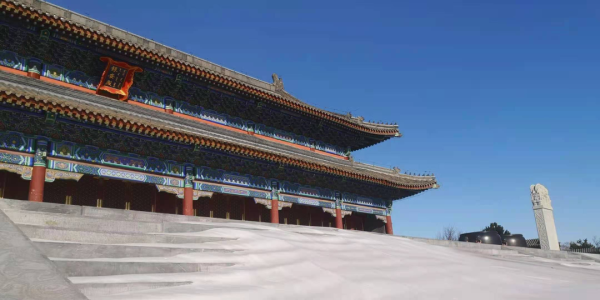
picture

Four common application directions:

Huawei said that in order to improve the efficiency and timeliness of detection, it is very important to build a fault detection method based on federated self-learning. At present, many ECU controllers and devices are added to smart cars, and the amount of data is very large. If the cloud-based model is monitored only by the cloud, there will be problems of untimely monitoring in some scenarios, such as poor network, high delay or even no network. Therefore, end-cloud collaboration is a very important choice.

Cloud-side heterogeneous computing resources support model training calculation, fully integrate the capabilities of NPU, GPU and CPU, realize the application scheduling of heterogeneous computing resources integration at the bottom, and improve the efficiency of model training and execution.

Sensitive personal data end-side training (privacy protection), multi-user feature parameter cloud sharing support joint learning (model accuracy), and increase noise data through differential privacy to improve security.

Using high computing power components such as VDC, CDC and MDC on the end side, the anomaly detection model is gathered on the end side for anomaly detection, rapid reasoning, combined with cloud big data model and data supplement provided by suppliers, fault labels are improved, and the accuracy and real-time performance of problem identification are improved.

picture

Huawei also said that the data-based VHR system needs to be built by the whole industry, including car-side capabilities, cloud capabilities, upper-level scenarios and so on.

Driven by national policies and other factors, today’s car electrification is unstoppable. From 2021 to July, the national sales of new energy vehicles exceeded 1.229 million, up by 210.2% year-on-year. New energy vehicles have developed rapidly, but at present, the spontaneous combustion of new energy vehicles has not been effectively controlled. In 2020, a total of 124 accidents were reported. By September 2021, there were 224 car burning accidents exposed by the media, and consumers began to shift from mileage anxiety to safety concerns.

There are many and complicated reasons for thermal runaway accidents of electric vehicles: local heat generation caused by internal short circuit caused by battery cell process defects, electrical abuse, thermal abuse and mechanical abuse, and thermal stability reduction caused by a large amount of lithium precipitation caused by overcharge, low-temperature charging and fast charging, all of which may lead to thermal runaway. Among them, the safety boundary of thermal runaway caused by internal short circuit is dynamic, and whether internal short circuit leads to thermal runaway needs more judging factors, such as short circuit type, short circuit internal resistance, SOC and so on. Therefore, based on electrochemical mechanism and combined with machine learning technology, Huawei has built a more complex relationship model to realize accurate early warning of power battery safety of new energy vehicles.

Based on Huawei VHR data service base and battery pack simulation system, eight applications for power batteries are constructed, including power battery thermal runaway warning, battery fault detection, battery health SOH evaluation, battery remaining life RUL prediction and other applications, to escort new energy vehicles.

picture

In the aspect of battery safety warning, the recall rate of power battery fault detection and thermal runaway warning can reach more than 80%, and the false alarm rate is guaranteed to be in a low range. In the aspect of battery health assessment (SOH), Huawei’s SOH prediction model based on cloud can achieve the life Cycle estimation error of less than 3% and the remaining cycle prediction error of less than 10%, and can achieve 100% traceability of battery problems based on cloud battery life cycle data.

picture

Huawei said that it is necessary to construct massive sample data through the power battery hardware-in-the-loop simulation system and analyze the real vehicle sample data to effectively overcome the problem of small sample data. At present, Huawei has built fault sample data covering ternary lithium batteries and lithium iron phosphate batteries, and built an engineering library of thermal runaway characteristics of 15+ power batteries.

In addition, Huawei also adopted the domain adaptive algorithm to migrate the algorithm model. When the algorithm model is migrated from the simulation environment to the real vehicle, or in different material systems and formulas, the accuracy of the algorithm remains stable.

Winter has come to Tongliao to play with snow and have fun.

It’s winter again, and I’m still squatting at home doing nothing. It’s really a waste of this beautiful snowy season. Let the winter be full of flavor, let life say goodbye to boredom, then come out and have fun, which will surely make you change your mood and better enter the new year. Let’s walk into the winter in Tongliao today and see where it is more fun!

First, Xiao Zhuang’s former residence, Dalhan’s Prince’s Palace

In winter, the most unforgettable thing is a snowy event. Snow, so that winter is no longer dead. Snow falls on the palace, wrapped in white, and all the temples seem to haunt a wonderful rhythm, emitting a graceful and elegant distance, like a fairyland on earth.

After the snow, the Yin ‘an Temple seems to have the bright color of life with bricks, tiles, columns and rafters.

The palace is wrapped in silver, as if the elves were flapping their wings, sprinkling a string of crystal ice and hanging it on the eaves, making the palace more dreamy.

Second, Naiman Palace

Photography/Wang Zijiang

Naiman Palace was built in 1863 (the second year of Tongzhi in Qing Dynasty), with a history of more than 150 years. National key cultural relics protection units, national AAAA-level tourist attractions, patriotic education base in Inner Mongolia Autonomous Region, China overseas Chinese international cultural exchange base, and national third-class museum.

This palace was built by Dechuk Zab, the 11th prince of Genghis Khan’s 28th Sun Naiman Banner. He is the son-in-law of An Gongzhu, the fourth princess of Niukolu’s family, the Queen of Daoguang Emperor, and the highest status in Gulun. He served in Daoguang, Xianfeng and Tongzhi dynasties and was favored by many people.

Photography/Wang Zijiang

Naiman Palace is exquisitely laid out, magnificent and magnificent. It integrates the customs of Saibei, Tibetan Buddhism and Mongolian national architecture, and is a typical Qing Dynasty terrace-cloister architectural style.

Photography/Wang Zijiang

Naiman Wangfu Museum, which is based on the ancient building of Wangfu, covers a total area of 31,000 square meters, including 12 sets of courtyards, 211 houses, 15 theme pavilions and nearly 2,000 cultural relics.

III. Baogutu Desert

At the beginning, after the first heavy snow fell in winter, the vast desert was covered with snow, and a camel came slowly from a distance at a leisurely pace, like a boat cutting through the calm lake, and the whole desert was full of excitement … The encounter between snow and desert and the collision between ice and fire added a new color to the winter Baogutu desert, attracting many tourists and photographers!

Baogutu Desert Tourist Area is located in the core area of Baogutu Desert, which is the best choice for photographing the winter desert. There are beautiful scenery, accommodation and delicious food here. In order to meet the needs of tourists and photographers, the Baogutu Desert Tourist Area is normally opened in winter, providing you with the most thoughtful service with the most full enthusiasm!
At present, Baogutu Desert Photography Base has completed the creation of folk culture scenes, desert ice and snow scenes, camel racing scenes, natural scenery scenes, praying for the holy land and other scenes, making the cultural theme products of "Photography Nadam" mature day by day, giving full play to the comprehensive pulling role of tourism, cultivating new tourism formats, creating new values and creating new growth points.

Fourth, Hamin Ruins Park

When winter comes, the snow is fluttering, and the Hamin Ruins Park is particularly enchanting under the decoration of snow. The Woods in the park are covered with a layer of crystal feathers, and the houses and the park trails are covered with white clothes, and the winter rhyme and snow scene are particularly beautiful.

Perhaps it is a distant visual illusion that adds a bit of mystery to the lonely and cold forest.

The museum as far as you can see also has its own white clothes. It records the life of the Hami people more than 5,000 years ago and is a beautiful Eden for the Hami people.
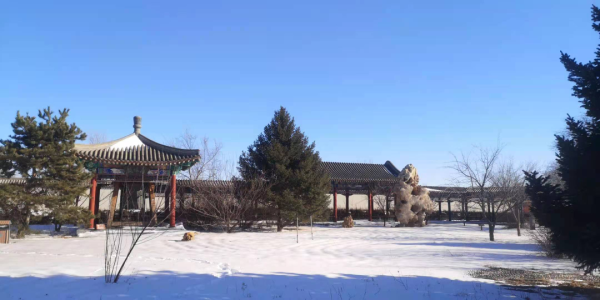
V. Xinya Sports Park
Xinya Sports Park Project is located in the south of the west section of Xinggong Street in Tongliao Economic and Technological Development Zone, south of Tongliao Jinma Boron Technology Co., Ltd. The project covers an area of 48,811.74 ㎡, including 27,000 ㎡ indoor venues in the sports park. At present, 25,000 ㎡ indoor venues have been completed and put into operation, and officially opened to the public on December 25, 2019.

Xinya Sports Park is positioned as a cultural and sports complex project, focusing on cultural and sports life and leisure, including urban functions such as cultural and sports life, leisure and entertainment, physical exercise, undertaking sports competitions, themed catering and cultural and sports training. It is the first cultural and sports complex project in Tongliao city that integrates sports, leisure and entertainment, catering, cultural and sports training and other functions. The main project consists of indoor gymnasium, indoor youth hall and outdoor field, and it is planned to be built in stages and put into operation in batches. By the end of 2019, indoor football, basketball, badminton, volleyball and other ball games and leisure sports such as trampoline, children’s naughty castle and rock climbing have been officially put into operation. In addition, indoor swimming gymnasium, table tennis hall, squash hall, rain shower and other related supporting facilities are under intense construction.

6. Ouxiang jiujiu Ski Resort

Ouxiang jiujiu Ski Resort is located in the east of 304 National Road, north of Ganqika Town, Kezuohou Banner, 8 kilometers away from Ganqika Town and 60 kilometers away from Tongliao City. Ouxiang jiujiu Ski Resort has enriched the contents of "Horqin 500km Landscape Avenue" to meet the needs of tourists for four seasons. The ski resort covers a total area of 200 mu, and can provide tourists with eco-tourism services such as skiing in winter, grass skiing in summer, leisure, vacation, catering and entertainment.

At present, a ski resort has been built, including reception hall, lounge, ski rental, cafe and restaurant. Set up a junior and middle-level ski trail, the intermediate ski trail is 50 meters wide and 260 meters long, and the primary ski trail is 50 meters wide and 150 meters long. Children’s snow amusement park covers an area of 30 mu, equipped with snow circle road, snowmobile, snow yo-yo and other amusement equipment. The skating rink covers an area of 80 mu and is equipped with single/double ice carts, skating, ice gyro and other amusement facilities.

Seven, Shiyuan Hot Springs

Shiyuan Hot Spring Resort Rehabilitation Center is located in the north of 303 National Road, 3 kilometers east of Molimiao, 28 kilometers from Tongkai Line. It is a comprehensive hot spring resort with the theme of hot spring recuperation and hot spring swimming, as well as nano-steaming, catering, accommodation, tourism reception and entertainment.

Shiyuan Hot Spring Resort and Rehabilitation Center is a comprehensive hot spring resort with the theme of hot spring recuperation and hot spring swimming, which integrates nano-steaming, catering, accommodation, tourism reception and entertainment. It grandly launches a romantic and warm luxury suite with independent soaking pool, medicinal bath, rose bath and milk bath. Muxiangju rural family-style suite, comfortable rest hall, multi-functional banquet hall for more than 400 people, complete audio equipment, super-large restaurant for more than 50 people, undertaking all kinds of banquet tables, pure green diet, spa treatment, elegant environment, fresh air and other experience ways to achieve the artistic conception of returning to nature, unique decoration style, all of which are carefully designed, luxurious but not vulgar, revealing in the classical, exquisite but not noble.

Eight, Zhanlu Hot Spring Resort City

Zhanlu Hot Spring Resort is located in Hexi Development Zone, Tongliao City, Inner Mongolia, on the south side of National Highway 303, 7 kilometers away from the urban area. Zhanlu Hot Spring Resort City is a large-scale tourist resort with hot springs as the main body, including tourism, leisure, vacation, conference, catering and accommodation. Formerly known as Zhanlu Water Park, underground hot springs were successfully exploited in early 2018.

Zhanlu Hot Spring Resort has a large wave-making pool, a children’s paddling area and a number of hot spring pools in the entertainment area. In addition, there are many entertainment facilities such as large slides, rafting, musical fountains, fish therapy and special soup baths. Many indoor and outdoor areas are available for tourists to play and watch. The indoor environment of the park is beautiful, and the green coverage rate reaches more than 50%, which simulates the biological and ecological environment of Hainan as a whole.

There are more than 40 holiday villas around the park, with different decoration styles, which are suitable for families, enterprises and teams to travel and stay. A variety of entertainment facilities in the villa can meet the needs of different tourists, including karaoke, barbecue, bonfire, chess and card entertainment and other facilities for tourists to use.

There is a restaurant in the park. All the ingredients in the restaurant come from farms and vegetable greenhouses in the park. Animals and plants are cultivated by organic planting and breeding methods. All kinds of ingredients are certified as green food. Among them, black pork, wild duck eggs, asparagus, okra and other ingredients are deeply loved by tourists.

From Humanism to Ecology

From indoor to outdoor

Winter ice and snow tourism projects in Tongliao

Does it make you feel excited?

If you are excited, act quickly

Go out of the house and have a good time

Believe this winter

Tongliao will never let you down ~

Damei Tongliao is waiting for you!

Wuling Hongguang MINIEV and the truck refused to give in to each other. Netizen: Who is behind and who eats ash?

I’m sure you’ve all seen this video recently.A Wuling Hongguang MINIEV and a single-row pickup truckOn the rural road, the fighting spirit accelerated and refused to give way to each other. It quickly caused a heated discussion on the Internet. Let’s watch an original video first.

(Video source: @123 haha)

It seems that both cars are there"Fighting spirit."Without slowing down at all, passers-by quickly dodged after seeing this tense situation, and the result can be imagined.Ultimately, both cars fell into the fieldThis incident not only caused damage to the vehicle, but also may have caused varying degrees of injury to drivers and passengers, as well as adverse effects on the surrounding traffic and environment

I have to say that this Wuling Hongguang MINIEV can actually do the same"Stubborn."Really confirmed"If it is strong, it will be strong. The power is unknown."This meme of. The ridicule of netizens reflects the reaction to Wuling MINIEV’s performance in this incident"Stubborn."Surprised. Usually Wuling Hongguang MINIEV gives the impression of being small and flexible, but in this incident it showed a tough side.

And for netizens"See the beginning and guess the ending series"This sentence reflects the netizens’ concern that this mutually exclusive behavior may lead to adverse consequencesAnticipateDriving a bucket car on the road is often prone to accidents, so when seeing two cars not giving way to each other, many people may have predicted that there will be bad results

Open around"Fighting car."There are many cases, it is an extremely dangerous behavior. It has many serious hazards and poses a huge threat to the safety of drivers and passengers.

(Video source: @Baotou News Network)

In the process of fighting, drivers often lose their minds and make dangerous driving movements.Such as speeding, sudden braking, forced lane change, etcThese behaviors can easily lead to vehicles losing control, causing serious accidents such as collisions and rollovers, which can take the lives of drivers and passengers.

(Video source: @French Live)

In a word, when driving on the road, we should keep calm and rational and obey the traffic rules. Make comity to each other and avoid driving "Fighting car."We shall jointly create a safe, orderly and harmonious transportation environment.

Three earthquakes of magnitude 4.0 or above occurred in Xingwen, Sichuan in two days, and the earthquakes were felt in Yunnan, Guizhou, Sichuan and Chongqing.

  China News Service, Chengdu, May 4 (He Yuqing, Wu Pinghua) The China Seismological Network officially determined that at 10: 15 on May 4, a magnitude 4.9 earthquake occurred in Xingwen County, Yibin City, Sichuan Province (28.14 degrees north latitude and 105.12 degrees east longitude) with a focal depth of 10 kilometers. As of press time, the local authorities have not received any reports of casualties and property losses.

  This is the third earthquake of magnitude 4.0 or above in Xingwen County in two days. At 12: 08 on May 3, an earthquake of magnitude 4.0 occurred in Xingwen County with a focal depth of 10 kilometers. At 13: 04 on May 3, an earthquake of magnitude 4.5 occurred in Xingwen County with a focal depth of 8 kilometers.

  It is understood that an earthquake of magnitude 4.9 occurred in Xingwen County, and it was felt in Yunnan, Guizhou, Chongqing, Luzhou and Leshan in Sichuan. "I was lying in bed, and the bed was shaking." Some netizens in Guizhou said on social platforms.

  According to the catalogue of China Seismic Network Express, there have been 286 earthquakes of magnitude 3.0 or above within 200 kilometers around the epicentre of Xingwen earthquake with magnitude 4.9 in recent five years. The largest earthquakes were the magnitude 6.0 earthquake in Luxian County, Luzhou City, Sichuan Province on September 16, 2021 and the magnitude 6.0 earthquake in Changning County, Yibin City, Sichuan Province on June 17, 2019.