Ye Ping, witness our first military parade and the birth of the title "Chairman Mao"!

Author: Gao Bin, Front Line Magazine of Beijing Municipal Committee of the Communist Party of China.
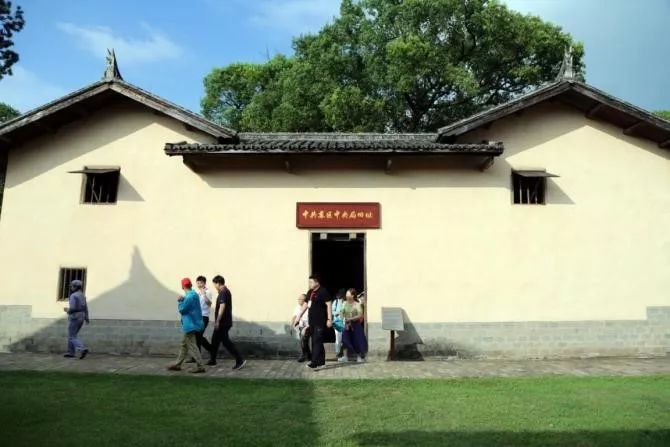
 

From November 7 to 20, 1931, the first national congress of the Soviet Union of Chinese workers, peasants and soldiers was held in Yeping Village, Ruijin. The congress announced the establishment of the provisional central government of chinese soviet republic. The picture shows the former site of the Central Bureau of the Central Soviet Area.


During the National Day holiday, the circle of friends was repeatedly screened by videos and photos of the National Day military parade in the 70th anniversary of the founding of New China.

The neat lineup, loud slogans, roaring locomotives and roaring planes of previous National Day military parades have made countless Chinese people proud and excited.

Before the founding of New China, there were several military parades in the history of our army, such as the "August 1st" military parade, the Xiyuan military parade and the Yan ‘an airport military parade. When and where was the earliest military parade? When did the title "Chairman Mao" begin?

In the former site group of Yeping Revolution in Ruijin, Jiangxi, the reporter found the answer.

Yeping Red Army Review Platform —— Witness the first military parade in the history of our army

Yeping Revolutionary Site Group is located in Yeping Village, Yeping Township, Ruijin City, Jiangxi Province. It is the birthplace of chinese soviet republic and one of the best-preserved revolutionary site groups in China. The Yeping Revolutionary Site Group has reserved a site-the Red Army Review Desk.
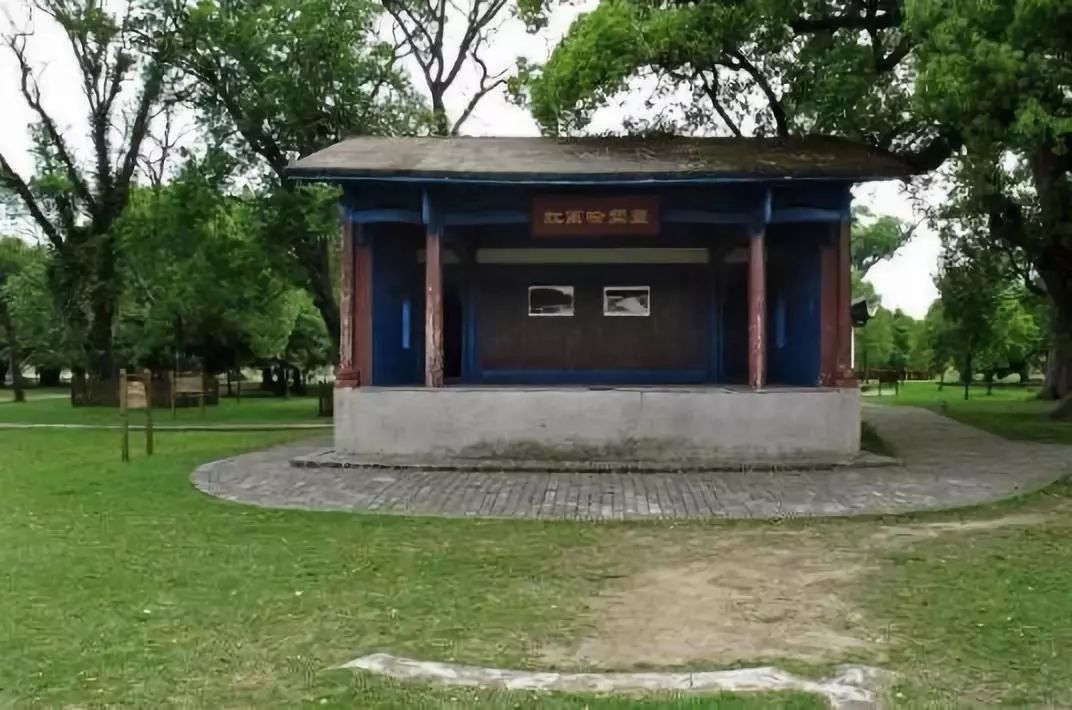
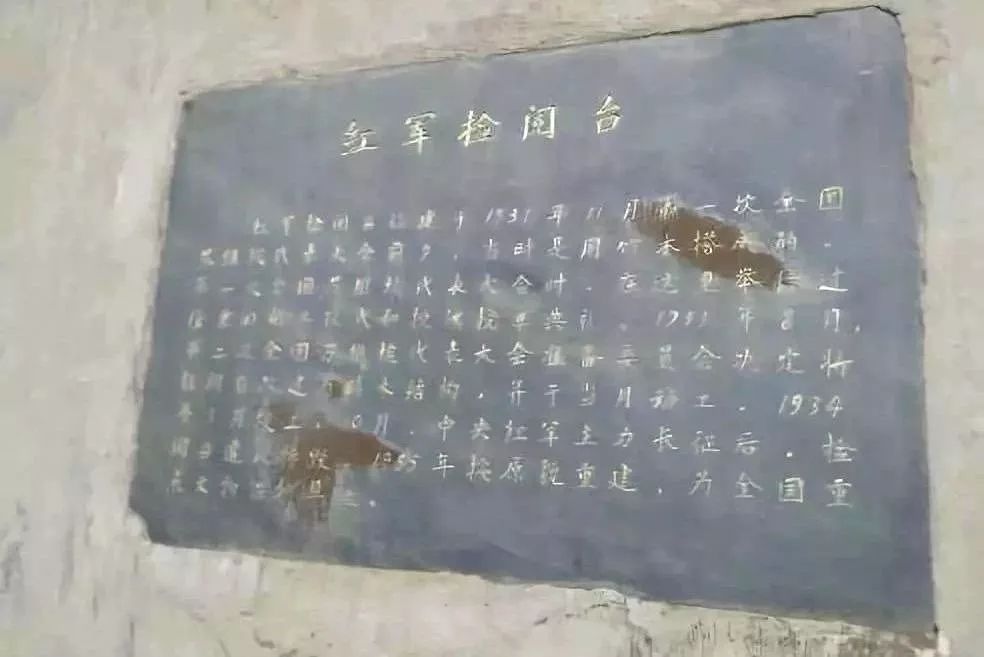
In preparation for the first National Congress of the Chinese Soviet Union to review the Red Army, the Red Army Review Platform was a simple and convenient platform made of bamboo and wood. 

In front of the reviewing stand is the spacious Yeping Red Army Square. The ground is covered with lawns, and a line of big characters is highlighted on the ground-along the blood of the Red Army. There is also a towering Red Army Martyrs Memorial Tower and a solemn Red Army Martyrs Memorial Pavilion next to the square.
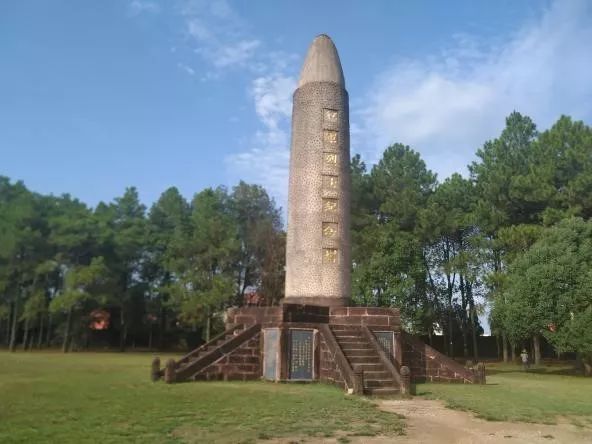
The 13-meter-high Red Army Martyrs Memorial Tower designed by Qian Zhuangfei has a pentagonal tower base and a shell-shaped tower body.


On November 7, 1931, it was the celebration day of the October Revolution in the Soviet Union. On this day, the first congress of workers, peasants and soldiers in chinese soviet republic was held at the Xie Ancestral Hall in Yeping Village, Ruijin, Soviet Union. A grand military parade was held before the opening of the conference, which was the first large-scale official military parade recorded in the history of our army.

In order to prepare for the parade, Ceng Shan, then chairman of Jiangxi Soviet, and Deng Xiaoping, then secretary of Ruijin County Party Committee, led Ruijin people to open a square that could accommodate more than 10,000 people in a forest in the northeast of Yeping Village, and built a Red Army reviewing platform with bamboo and stone. 

In the middle of the reviewing platform, there is a huge red cloth hanging across the reviewing platform of the Red Army of the First National Soviet Congress, with portraits of Marx and Lenin hanging behind it, and flags of the Chinese Red Army of Workers and Peasants on both sides. In order to prevent the invasion of enemy planes, this military parade was specially arranged at 7: 00 am on November 7.

The troops participating in the reading are mainly representatives of the Red Army’s various regiments and armies, the Red Army’s camp schools, and representatives of the security forces. More than 600 delegates, including the Red Army troops from various Soviet areas and the All-China Federation of Trade Unions located in the Kuomintang-ruled areas, attended the celebration together with the people from Soviet areas who came to watch the ceremony.

At 7 o’clock sharp, Mao Zedong, Zhu De, Xiang Ying, Ren Bishi, Wang Jiaxiang, Peng Dehuai, Chen Yi and Ceng Shan boarded the reviewing stand in turn, and the military parade officially began.

Mao Zedong, general political commissar of the Red Army, dressed in a Chinese tunic suit, presided over the military parade.

Teams of heroic Red Army soldiers, columns of Red Guards and Young Pioneers shouted "Long live the Red Army!" "Long live the Soviet Union!" "Long live the Communist Party of China (CPC)!" Slogan, neatly through the reviewing stand parallel attention.

Accompanied by Chief of Staff Ye Jianying, Zhu De, Executive Chairman of the General Assembly and Commander-in-Chief of the Red Army, rode to inspect the troops and personally led the troops under review to take the oath. The whole military parade lasted about an hour.
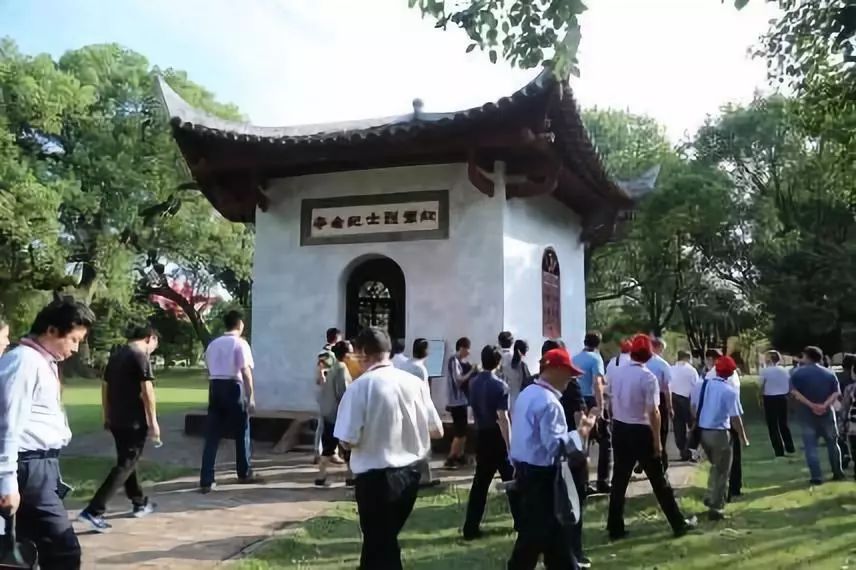
Memorial Pavilion of Red Army Martyrs in Yeping Revolutionary Site Group


Ran Ran, the Oriental Red Sun, rose, the military parade ended successfully, and people quickly evacuated according to the predetermined plan. At this time, several planes of the Kuomintang attacked, but no abnormalities were found. After dropping several bombs, they flew in the direction of Changting, Fujian, and bombed the fake venue where the Preparatory Committee for the Conference was arranged.
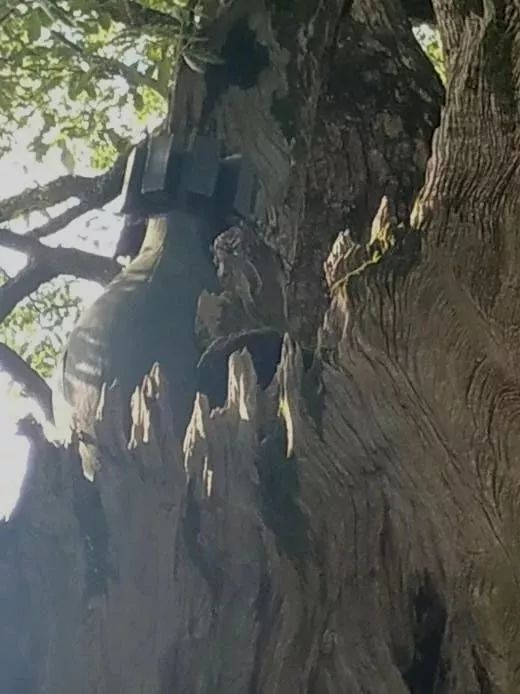
On an ancient tree next to Comrade Mao Zedong’s old residence in the former site of Yeping Revolution, there is still a bomb that the enemy dropped and failed to detonate embedded in the branch.


Mao Zedong said humorously at that time: "Chiang Kai-shek is really a friend, knowing that we set up the Soviet Union today, held a military parade, and sent a special plane to entertain us!"

Yeping Revolutionary Site Group —— Witness the birth of the title "Chairman Mao"

After the military parade, from November 7 to 20, 1931, the first national congress of the Chinese Soviet was held in Yeping, Ruijin. Attending the meeting were representatives from the Central Soviet Area, western Fujian, northeastern Jiangxi, Hunan and Jiangxi, Hunan, Hubei and Jiangxi, Qiongya and other Soviet areas, as well as representatives from the Red Army, the All-China Federation of Trade Unions and the All-China Seamen’s Trade Union, totaling 610 people. On behalf of the Soviet C.O., Mao Zedong made a Report on Political Issues to the General Assembly. The Congress adopted the Outline of the Constitution of chinese soviet republic, the Land Law of chinese soviet republic, the Labor Law of chinese soviet republic and chinese soviet republic’s Decision on Economic Policy. A Central Executive Committee composed of 63 members including Mao Zedong, Xiang Ying, Zhang Guotao, Zhou Enlai and Zhu De was elected.
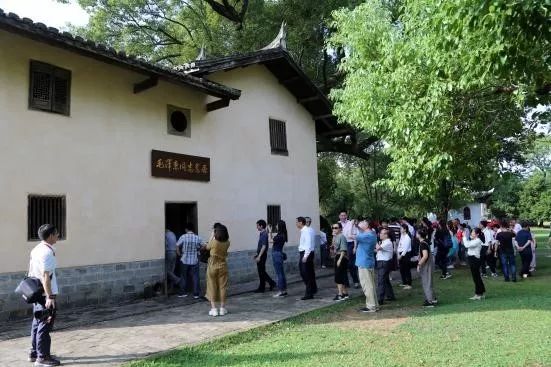
Former Residence of Comrade Mao Zedong in Yeping Revolutionary Site Group

After the conference, Ruijin was renamed as "Ruijing" and Ruijin County was designated as a county directly under the Soviet Provisional Central Government. Ruijin thus became the red capital of chinese soviet republic.

On November 27th, 1931, in the dense forest of Yeping Village, Mao Zedong presided over the first plenary meeting of the Central Executive Committee of chinese soviet republic. The meeting elected Mao Zedong as the chairman of the Central Executive Committee and the chairman of the Central People’s Committee according to the procedure stipulated in the Soviet Organic Law.
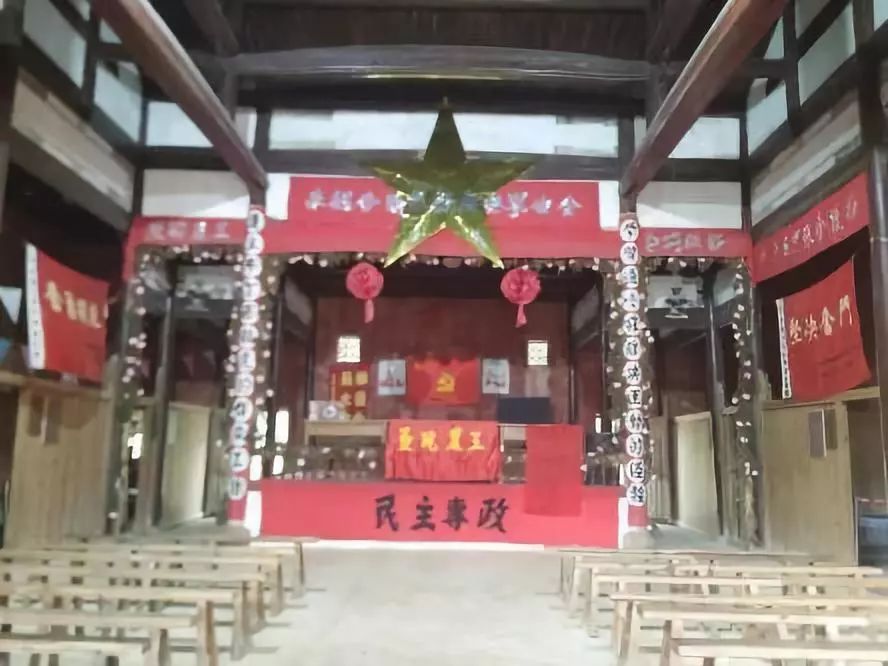
Chinese soviet republic temporary central government office former site


At that time, Ren Bishi, the host of the conference, stepped onto the rostrum and proposed on the spot: "Please ask Chairman Mao to speak!"

For a time, everyone didn’t react to who he called, and then everyone turned their attention to Mao Zedong. In the warm applause, everyone shouted "Chairman Mao!" The title of "Chairman Mao" is also called open.

The article was published on WeChat WeChat official account "Dongfanghong", please indicate the source.

The picture comes from "Grateful Endeavour, A New Chapter of the Cradle Spectrum of the Republic" —— All-media Jiangxi reporters of the National Party Journal Shen Jinxiang and Gao Bin.

"Troika", Huawei released three major car networking cloud services: OTA, VHR and Sandian cloud services.

On December 22nd, 2021, Huawei Smart Car Solution Ecological Forum was grandly held online, with the theme of "Enjoying Ecology and Creating the Future Together".

In the afternoon’s "Dialogue with Che Yun" topic, three experts from Huawei Smart Che Yun shared the "Troika" that drives the development of intelligent networked vehicles in Huawei’s vehicle networking field-OTA, VHR, and three-power cloud services.

Now Huawei has officially released the full text of the speech. Let’s take a look at it here.

With the rapid development of new energy vehicles, under the trend of intelligence and networking, software-defined vehicles have become the industry consensus, and OTA has become the core power of software-defined vehicles. Huawei released the OTA 3.0 vehicle-level upgrade scheme, which can provide a vehicle-level upgrade experience with zero bricks and good experience.

According to reports, the development of OTA will go through three stages. From the market point of view, most of the new forces ICV have taken the lead in entering the OTA 3.0 stage, and maintained a high iterative speed in ADAS/ADS, vehicle control domain, cockpit domain and power domain.

Three core issues that OTA3.0 needs to pay attention to: vehicle version management and quality care, OTA security and reliability, and user experience.

picture

Three core issues that OTA3.0 needs to pay attention to:

Vehicle version management is a systematic problem, how to ensure the compatibility and consistency of vehicle parts versions. At present, the number of lines of vehicle software code reaches 100 million, and the complexity of multi-component collaboration is high. After-sale vehicles have a variety of parts version combinations, which lead to thousands of vehicles. How to ensure the compatibility and consistency of all parts versions of the whole vehicle, how to ensure the quality of versions and prevent bugs, especially those that affect driving safety, is a huge project. Taking 20 parts combinations as an example, the number of versions produced by changes caused by functions and problems may reach thousands in the life cycle of the whole vehicle. In the era of vehicle intelligent experience, OTA is becoming more and more popular, and efficient version management has become a key challenge. The OTA platform that can provide effective software version management capabilities has more advantages.

Intelligent driving, vehicle control and power domain upgrade have become the norm, and how to ensure the safety and reliability of the whole vehicle under OTA is extremely critical. OTA upgrade will lead to brick-changing, which will touch the red line of users’ experience, and there are endless cases of complaints and even public opinion caused by brick-changing in the industry.

Huawei systematically analyzed the brick change caused by OTA. The control loopholes, unavailability of core components, lack of remote repair and software bugs in the whole vehicle upgrade process became the biggest incentives for brick change. How to predict all faults that may lead to brick upgrading in the design stage is a systematic problem. It is necessary to analyze and simulate the potential faults in all scenarios and formulate attenuation measures to prevent them.

Huawei mobile phones supported OTA many years ago, and systematically analyzed the failure modes of mobile phone OTA failures, which also ensured billions of reliable upgrades. The experience is worth learning. Similar to mobile phone upgrade, it also faces user experience problems such as traffic consumption, upgrade time and operation interaction in OTA process.

Based on this, Huawei proposes OTA as a core service, which requires three capabilities in the OTA3.0 era:

picture

Open up the whole process from R&D to commercialization (including management actions and upgrade execution). Covers full upgrade scenarios, provides flexible scenario combinations, and can be upgraded in any actual scenario.

Huawei’s OTA solution is a vehicle-level remote upgrade service for Huawei HI automotive solutions. Natural adaptation HI solution upgrade can cover 45+components such as intelligent driving, intelligent cockpit, intelligent electric, intelligent network connection and intelligent vehicle control; At the same time, Huawei’s open car-end upgrade service architecture supports the upgrade of car enterprises’ own parts and three-party parts, and can support the brush writing specifications of car enterprises’ standard parts; At the application level, it supports the upgrade capability of ADAS/ADS applications, algorithms, OS and HarmonyOS native applications.

picture

At the same time, Huawei has built a user upgrade experience that pays equal attention to security, performance and interaction:

Based on many years of experience in ICT software management, this paper provides a One-Track vehicle-level version management system, which realizes the single-line evolution of versions in the OTA era and greatly reduces the management efficiency of complex software combinations.

Based on DFEMA system, which is an excellent practice in safety and reliability design, 2000+faults are identified and analyzed, and fault attenuation measures are taken comprehensively, so as to achieve the goal of safety and reliability of car-gauge OTA and zero brick change.

Relying on Huawei Cloud 2000+ CDN, dynamic scheduling and source station diversion can realize safe and reliable high-speed download capability. Support parallel differential installation and multi-domain parallel upgrade capability, and shorten the vehicle-level upgrade to less than 25 minutes.

Relying on many years of consumer business experience, Huawei provides multi-terminal friendly cooperative interactive operation interfaces for cars and mobile phones, which is convenient for users to upgrade in different scenarios.

In the era of smart cars, various car companies have continuously developed software ecology, constructed and optimized software management processes, and have professional opinions and thoughts on vehicle upgrade reliability, and also accumulated rich experience.

Huawei provides an OTA service platform, and hopes to continue to explore OTA software ecology, management process, reliability, operation and maintenance with various car companies and ecological partners to build a competitive OTA service.

The rapid development of intelligent networked cars has brought two changes to the connection and experience between people and cars;

In the past, when a car broke down or was in an abnormal state, consumers had to go to the maintenance center for inspection. Now, with this large amount of data, the OEM can give early warning and take the initiative to care for customers in real time, even when the fault is still in its infancy. It is also possible to build a plan for some common problems in advance, and make a more accurate ratio model prediction for spare parts, which greatly improves the efficiency of vehicle operation and maintenance.

By mining the value of data, we can provide better services for users and bring more benefits to car companies.

At the same time, with the development of vehicle intelligence, the digital proportion of each body part is constantly improving: the magnitude of vehicle software code is constantly improving, and now the amount of software code is 10 times that of ten years ago, and the amount of software code in the future will be further improved to 300-500 million lines. Every system and component of the vehicle reports various status signals, logs and alarms every day. At present, the data volume of a single vehicle is on the order of 150-200M per day, and it will be further improved with the increase of sampling frequency and the increase of component complexity in the future.

IT House learned that Huawei put forward the concept of VHR with reference to the experience of ICT industry.

VHR stands for Vehicle History Record, which is a data-driven concept based on the whole life cycle. Its purpose is to realize the visibility, maintainability, user care and efficient operation of vehicles on the basis of a large amount of data. These works will greatly enhance the car owners’ experience and user stickiness in the future, and also bring important values and benefits to car companies.

VHR covers many links, such as data collection, data management, data analysis, vehicle state visualization, vehicle fault diagnosis, trend analysis, prediction, improvement, etc. It is a closed-loop system from vehicle arrival to vehicle departure.

picture

Four common application directions:

Huawei said that in order to improve the efficiency and timeliness of detection, it is very important to build a fault detection method based on federated self-learning. At present, many ECU controllers and devices are added to smart cars, and the amount of data is very large. If the cloud-based model is monitored only by the cloud, there will be problems of untimely monitoring in some scenarios, such as poor network, high delay or even no network. Therefore, end-cloud collaboration is a very important choice.

Cloud-side heterogeneous computing resources support model training calculation, fully integrate the capabilities of NPU, GPU and CPU, realize the application scheduling of heterogeneous computing resources integration at the bottom, and improve the efficiency of model training and execution.

Sensitive personal data end-side training (privacy protection), multi-user feature parameter cloud sharing support joint learning (model accuracy), and increase noise data through differential privacy to improve security.

Using high computing power components such as VDC, CDC and MDC on the end side, the anomaly detection model is gathered on the end side for anomaly detection, rapid reasoning, combined with cloud big data model and data supplement provided by suppliers, fault labels are improved, and the accuracy and real-time performance of problem identification are improved.

picture

Huawei also said that the data-based VHR system needs to be built by the whole industry, including car-side capabilities, cloud capabilities, upper-level scenarios and so on.

Driven by national policies and other factors, today’s car electrification is unstoppable. From 2021 to July, the national sales of new energy vehicles exceeded 1.229 million, up by 210.2% year-on-year. New energy vehicles have developed rapidly, but at present, the spontaneous combustion of new energy vehicles has not been effectively controlled. In 2020, a total of 124 accidents were reported. By September 2021, there were 224 car burning accidents exposed by the media, and consumers began to shift from mileage anxiety to safety concerns.

There are many and complicated reasons for thermal runaway accidents of electric vehicles: local heat generation caused by internal short circuit caused by battery cell process defects, electrical abuse, thermal abuse and mechanical abuse, and thermal stability reduction caused by a large amount of lithium precipitation caused by overcharge, low-temperature charging and fast charging, all of which may lead to thermal runaway. Among them, the safety boundary of thermal runaway caused by internal short circuit is dynamic, and whether internal short circuit leads to thermal runaway needs more judging factors, such as short circuit type, short circuit internal resistance, SOC and so on. Therefore, based on electrochemical mechanism and combined with machine learning technology, Huawei has built a more complex relationship model to realize accurate early warning of power battery safety of new energy vehicles.

Based on Huawei VHR data service base and battery pack simulation system, eight applications for power batteries are constructed, including power battery thermal runaway warning, battery fault detection, battery health SOH evaluation, battery remaining life RUL prediction and other applications, to escort new energy vehicles.

picture

In the aspect of battery safety warning, the recall rate of power battery fault detection and thermal runaway warning can reach more than 80%, and the false alarm rate is guaranteed to be in a low range. In the aspect of battery health assessment (SOH), Huawei’s SOH prediction model based on cloud can achieve the life Cycle estimation error of less than 3% and the remaining cycle prediction error of less than 10%, and can achieve 100% traceability of battery problems based on cloud battery life cycle data.

picture

Huawei said that it is necessary to construct massive sample data through the power battery hardware-in-the-loop simulation system and analyze the real vehicle sample data to effectively overcome the problem of small sample data. At present, Huawei has built fault sample data covering ternary lithium batteries and lithium iron phosphate batteries, and built an engineering library of thermal runaway characteristics of 15+ power batteries.

In addition, Huawei also adopted the domain adaptive algorithm to migrate the algorithm model. When the algorithm model is migrated from the simulation environment to the real vehicle, or in different material systems and formulas, the accuracy of the algorithm remains stable.

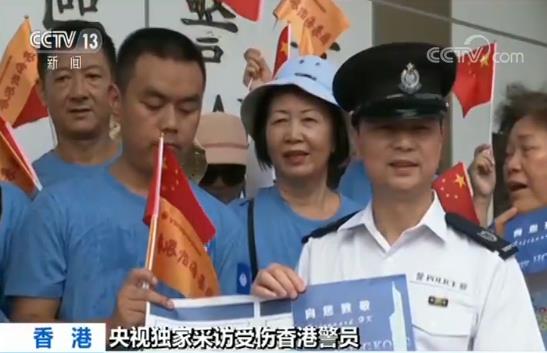
CCTV exclusively interviewed Hong Kong police officers injured by petrol bombs. More details of the scene were exposed.

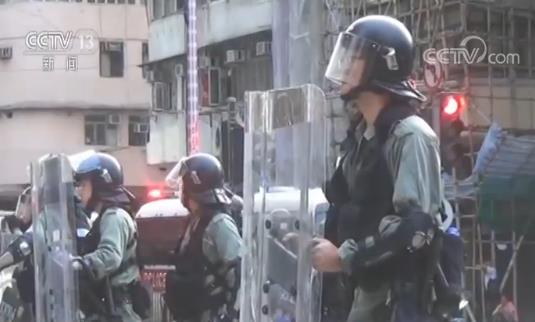
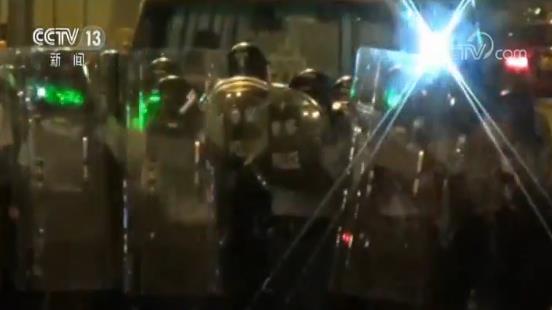
  CCTV News:On the 11th, despite the notice of objection issued by the Hong Kong police, there were still demonstrators marching in various parts of Hong Kong. Among them, mobs threw petrol bombs at police officers in Cheung Sha Wan Police Station, Tsim Sha Tsui Police Station and Wan Chai Police Headquarters, and attacked police officers, resulting in injuries to many police officers. CCTV reporters conducted an exclusive telephone interview with one of the injured police officers.

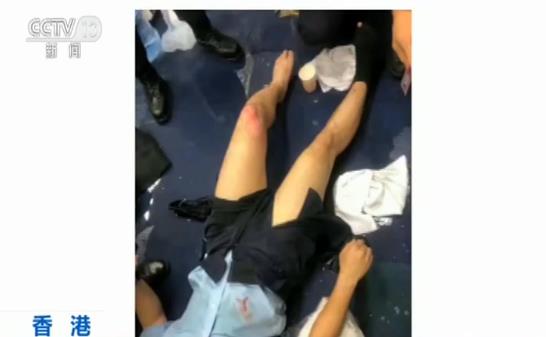
  That night, a police officer was burned on both legs by petrol bombs thrown by mobs while on duty in Tsim Sha Tsui police station. It was preliminarily diagnosed that 10% of the left leg suffered second-degree burns and 3% of the right leg suffered first-degree burns. In the vicinity of Cheung Sha Wan, another police officer on duty was also attacked by petrol bombs, and one police officer was injured in the process of arresting the mob.

  Injured hong kong police officerAt that time, we were dispersing demonstrators in Cheung Sha Wan District. During this period, demonstrators threw petrol bombs at us, but these petrol bombs didn’t hit the police. Then when we went forward to arrest, during my running, my right knee hit a hard object, which caused me to fall and get injured. "

  journalist: "For such a long time, how did you feel when you saw or heard that a colleague was injured?"

  Injured hong kong police officerOf course, I feel very weak and unhappy when I see my colleague injured. Because I don’t know if the next person to get hurt will be a colleague I know around me, or myself. We don’t want any colleagues, and any Hong Kong policeman is injured again. "

  "If demonstrations resort to violence, the police will resolutely enforce the law."

  The injured Hong Kong police officer said that as the most advanced law enforcement officer, what he recently saw in Hong Kong was "definitely not what some media with ulterior motives said ‘ Peaceful demonstration ’ " .

  Injured hong kong police officer: "If they demonstrate reasonably and peacefully, we absolutely respect them. But our frontline police, our law enforcement officers are definitely not seeing a peaceful and legal demonstration, nor a demonstration without violence. Every time, they used various methods to damage Hong Kong’s infrastructure and even attack our Hong Kong police. If your demonstrations are peaceful, we will definitely respect your demands, but if you use violence, or destroy facilities, causing inconvenience to other citizens or even attacking others, we Hong Kong police will definitely enforce the law decisively. "

  "Thank you so many people for supporting the Hong Kong police."

  The police officer also expressed the hope that their law enforcement would be understood by Hong Kong people, and he thanked so many people in Hong Kong and the Mainland for supporting the Hong Kong police.

  Injured hong kong police officer"We all hope that the people of Hong Kong can understand that we need to use minimum force in law enforcement. At the same time, we also hope that they will understand the difficulty of our work and try not to go to these dangerous places. We also don’t want any more citizens to be attacked by other demonstrators, resulting in unwarranted injuries. "

  journalist: "Yesterday (10th) ‘ National Police Support Day ’ Many mainland police officers and citizens have launched ‘ Do you say that you have no clothes and a robe with your son ’ Such an activity gives support to the police in Hong Kong. I don’t know if you have seen such news on the Internet? "

  Injured hong kong police officer: "Yes, we have all seen it. Thank you so many people for supporting our Hong Kong police."

The concept of "zero additive" that does not harm preservatives or is bigger is created by merchants.

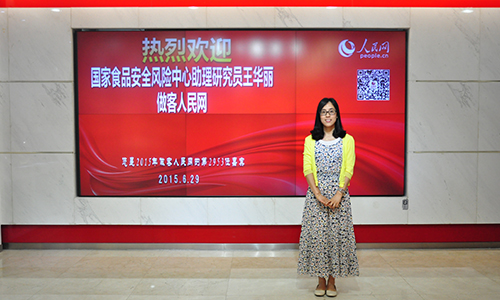
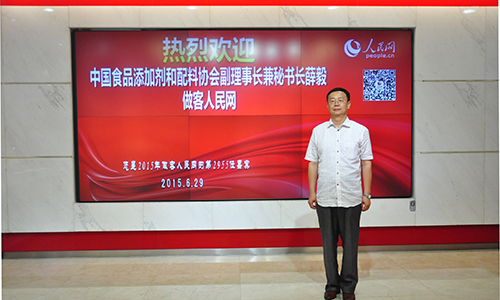
Beijing, July 1 ST (Wang Yupeng) "Eating pigment, we are still black-eyed and yellow; Eating preservatives, we can’t become mummies. " When talking about whether food additives are harmful, Huali Wang, an assistant researcher at the National Food Safety Risk Center, made an analogy. She stressed that as long as it is used within the limits and scope stipulated by the national food safety standards, food additives will not cause harm to the human body. Xue Yi, vice chairman and secretary general of China Food Additives and Ingredients Association, reminded that while eating with confidence, we should also pay attention to the concept of "zero additives". [Interview: Huali Wang and Xue Yi talk about food additives you don’t know]

The picture shows Huali Wang, assistant researcher of the National Food Safety Risk Center.

What is the use of food additives?

Food additives mainly play the role of preventing deterioration, improving taste and ensuring uniform quality.

"Foods have a certain shelf life. If preservatives are not used, microorganisms will grow and reproduce, but they will be harmful to health, such as the aflatoxin, which is more harmful than arsenic." Huali Wang also stressed that "the first condition for using preservatives is to comply with national food safety standards. At present, some unscrupulous traders use preservatives to cover up the defects in food raw materials, which should be severely cracked down. "

As for the thickener in ice cream, Huali Wang introduced that its main function is to make the food form a gel state, so as to make the food have a more suitable taste. Thickeners are starch and gum, and most of them come from natural foods, such as sodium alginate and agar. There is also a non-dairy creamer called "creamer", which is often used in coffee and other beverage products. The main purpose is to bring a smooth and thick taste.

In the large-scale processing process, food additives also help to ensure the uniformity of product quality. Xue Yi said: "Under the premise of huge processing volume, if there are no food additives, the ham sausages that consumers buy today are of this taste and color, and what they buy tomorrow may be different."

Xue Yi, Vice Chairman and Secretary General of China Food Additives and Ingredients Association

Are edible additives safe?

Since food additives are indispensable, how to ensure that they will not endanger health?

Xue Yi introduced that the use of food additives in food processing is restricted by clear national food safety standards, and there are strict regulations on what kind of food and how much each food additive is used. At present, there are 2334 kinds of food additives allowed by national standards, which are lower than those in the United States and Japan.

"When we evaluate the safety of food additives, we consider two aspects, one is long-term and the other is large." Xue Yi said, "A lot, that is, measured by the dosage of food additives as meals every day; Long-term, that is, measured by the length and intensity of daily consumption for life. Then take the safety factors of these two aspects as the scientific basis for us to formulate standards. "

Xue Yi emphasized that as long as food additives are used in accordance with the standards, safety is not a concern. But at the same time, we should be careful about the concept of "zero additive".

"’zero additive’ is often a concept made by merchants." Xue Yi said, "At present, food processing conditions and large-scale production methods have rarely required the use of additives. Even some canned foods sterilized at high temperature and high pressure or honey with high sugar content do not need additives themselves, and there is no need to gild the lily with’ zero additives’. Therefore,’ zero additive’ is mostly a concept put forward by merchants to sell products well or to meet some requirements of consumers. "