Touyue Xinrui 2024 is listed at the Chengdu Auto Show, which is fuel-efficient and durable. Welcome to experience the charm of German Seiko in person.

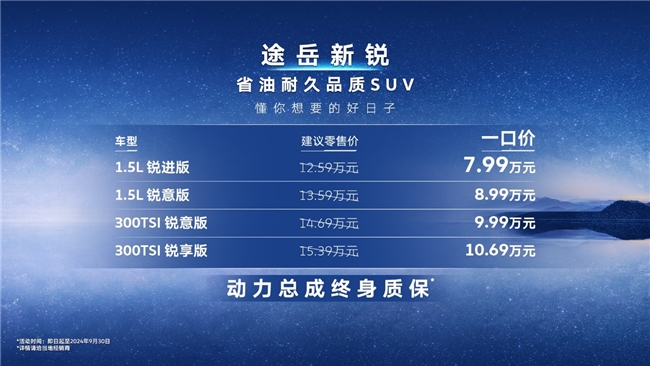
When autumn is getting stronger, the Chengdu Auto Show is in full swing. SAIC Volkswagen brought its new masterpiece, Tuyue Xinrui, to light up the night sky in Rongcheng in the name of stars. On August 30, 2024, Tuyue Xinrui was listed on the Chengdu Auto Show with a price range of 79,900 yuan to 106,900 yuan. SAIC Volkswagen also launched the lifetime quality assurance listing benefits of the powertrain, and redefined the new benchmark in the compact SUV market with its fuel-efficient and more durable German Seiko quality.

2024 Chengdu Auto Show Tuyue Xinrui Listed – Vibrant Colors, Leading the Trend

Tuyue Xinrui provides vibrant blue, energetic powder, breeze green, salt gray, moonlight white 5 colorful smart appearance color scheme, appearance kit contains two design languages of black bag and chrome plating, with through front grille design and wing type cross LED tail light, not only gives a strong visual impact, but also highlights the exquisite and elegant German craftsmanship in the details.

2024 Chengdu Auto Show Tuyue Xinrui Listed – Spacious Space, Comfortable Ride

Tuyue Xinrui’s body size is 4355mm, 1762mm, 1605mm, and the wheelbase is at the leading level of 2651mm. Under the consideration of "room acquisition rate", Tuyue Xinrui pays more attention to the efficient use of space when designing the vehicle, improves the internal space without significantly increasing the external size, and better balances the space demand and parking convenience. The trunk of Tuyue Xinrui can be changed between 445-1443L by putting the rear seats down in a 4/6 split, making it more convenient to store carry-on luggage, fishing tackle and other items. With its spacious driving space, Tuyue Xinrui meets the diverse needs of modern families for car space. Whether it is city shuttle or long-distance travel, it can provide a comfortable driving experience.

2024 Chengdu Auto Show Tuyue Xinrui Listed – Fuel-saving and Durable, Gold Power

Equipped with a 1.5T EVOII engine and a fifth-generation DQ200 gearbox, the Tuyue Xinrui has a faster and more agile gearshift time, only 200 milliseconds at the fastest, high transmission efficiency, reliable quality, and can minimize power loss. With its outstanding performance of 5.7L fuel consumption per 100 kilometers and the advantage of being able to use No. 92 gasoline, it has become "the most fuel-efficient SUV". At the same time, SAIC Volkswagen provides all Tuyue Xinrui owners with a lifetime quality assurance policy to ensure that every owner can enjoy a worry-free car experience, which also reflects SAIC Volkswagen’s confidence in its own products.

2024 Chengdu Auto Show Tuyue Xinrui Listed – All-round Safety, Protect Driving

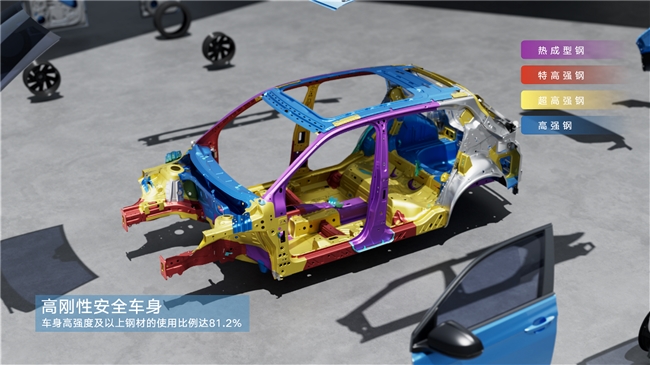
Tuyue Xinrui uses a high-rigidity safety body, with the use of high-strength and above steel reaching 81.2%. The use rate of hot-formed steel in the body reaches 19.8%. The number of hot-formed steel reaches 11 pieces, covering A-pillar, B-pillar, front foot space beam, central channel, rear stringer, rear beam, and German craftsman-level body assembly process. The complex and rigorous 360 ° German rigorous test ensures that the car is still of reliable quality in the face of severe road conditions and high-strength vehicles.

Tuyue Xinrui is also equipped with a full range of seven airbags, and for the first time in its class, it is equipped with a three-chamber central airbag to ensure the most comprehensive safety protection for drivers and passengers under any circumstances.

2024 Chengdu Auto Show Tuyue Xinrui Listed – Intelligent Technology, Driving the Future

Touyue Xinrui is equipped with 11 radars and 2 cameras, including 8 ultrasonic radars and 3 millimeter wave radars, and is also equipped with the brand’s iconic IQ.Drive smart driving housekeeper, including ACC advanced adaptive cruise, Stop & Go automatic follow-up start and stop, Lane Assist lane keeping system and Front Assist collision warning system (with automatic braking) and other advanced intelligent technologies, leading the driver into a new era of future driving. The standard reversing image of the whole system truly realizes the all-round protection of the owner’s driving safety.

2024 Chengdu Auto Show Tuyue Xinrui Listed – Join hands with Zhang Jie and go to Xingtu together

As the spokesperson of Tuyue’s cutting-edge singer Zhang Jie, as Zhang Jie said: "You have the moon to accompany you, and I have the stars to accompany you." And Tuyue has always used "the moon" as the theme, and hopes that "the moon has the stars to accompany you" for a long time. Tuyue’s cutting-edge will "walk with the stars" to provide consumers with better products and services.

2024 Chengdu Auto Show Tuyue Xinrui Listed – Conclusion

Before the launch of Tuyue Xinrui, with its excellent quality and excellent performance, the cumulative sales volume of Tuyue has exceeded 660,000, and it has achieved the best result in the automotive industry for user satisfaction for four consecutive years. This time, SAIC Volkswagen has once again led the trend with its consistent German Seiko quality and innovative design concept. The new masterpiece, Tuyue Xinrui (Tharu XR), has become the new favorite in the compact SUV market with the rigor and innovation of German Seiko, as well as unique charm and excellent performance. Welcome to the 2024 Chengdu Auto Show, experience the driving experience of a wave of Tuyue Xinrui, and start a new journey. (Promotion)

The national immunization program vaccine provided free of charge has been increased to "14 vaccines against 15 diseases", and the central government has invested more than 3 billion yuan each year.

  CCTV News:On November 1, the State Council held a press conference on "Promoting the high-quality development of health and protecting people’s health". At the meeting, Wang Hesheng, deputy director of the National Health and Wellness Commission and director of the National Bureau of Disease Control and Prevention, introduced that immunization planning is an important work with remarkable results and wide influence in the cause of disease control and prevention in China. The immunization coverage rate of school-age children in China has remained above 90%, and various vaccines can prevent the incidence of infectious diseases from falling to the lowest level in history. Conscientiously implement the Vaccine Management Law, continuously improve the policies of immunization planning, strengthen the construction of vaccination service system, and ensure the scientific, standardized and orderly development of immunization planning.

  Wang Hesheng said that the number of immunization programs provided by the state to residents free of charge has increased to "14 vaccines against 15 diseases", and the central government has invested more than 3 billion yuan annually. Many provinces have continuously expanded the types of immunization program vaccines in their own provinces in light of the actual situation. In addition, in some places, people such as the "one old and one young" are vaccinated with influenza and other vaccines free of charge, and a four-level immunization planning monitoring and management system covering the country, province, city and county and a three-level vaccination service network covering the county, township and village are established. It has realized the docking between the national and provincial immunization planning information system platforms, and between the provincial immunization planning information system and the national vaccine traceability collaborative platform, further improving the quality and efficiency of vaccination work.

  Wang Hesheng said that it will continue to strengthen the standardized management of vaccination, use information technology to promote cross-regional information interconnection and data sharing, launch a pilot program of electronic vaccination certificates, promote the realization of "letting data run more and people run less errands", and improve the accessibility and convenience of vaccination services.

Unbelievable! Disputes caused by beach subcontracting contract: two endings in the same case

  Cctv newsIt is basic legal knowledge that the court decides a case and serves the plaintiff and the defendant with the same judgment document. However, in a contract dispute case tried by Suizhong County People’s Court in Liaoning Province, the original defendant and the defendant actually got two completely different judgment documents.

  What is even more incredible is that the same group of judges tried this case, and the judgment documents with different results have exactly the same case number. How did such an absurd thing happen?

  In order to find out why this case happened, the reporter first found the plaintiff, Zhao Hongli. Zhao Hongli told the reporter that the cause of this case was a dispute between him and the defendant Li Guofa on the beach subcontracting contract.

  Judging from the beach subcontracting contract provided by Zhao Hongli, the 50 mu of land was indeed leased in the name of Zhao Hongli.

  Zhao Hongli told reporters that after he subcontracted 10 mu of beach land to Li Guofa, he found that Li Guofa had not fulfilled the promise between them, but subletted the 10 mu of beach land to a third party.

  In 2012, Zhao Hongli filed a lawsuit with Suizhong County People’s Court as the plaintiff, and took Li Guofa and other three defendants to court. In fact, the case of this beach subcontract dispute is not complicated, but Zhao Hongli said that he has not waited for the court’s trial result for more than a year since the case was filed. Therefore, Zhao Hongli decided to apply for withdrawing the prosecution.

  On July 16, 2013, Zhao Hongli filed an application to the Suizhong County People’s Court to withdraw the lawsuit. On the same day, Suizhong County People’s Court granted the request to withdraw the lawsuit and served him with a civil ruling granting the withdrawal of the lawsuit. Although the lawsuit was withdrawn, the contract dispute was not resolved. For this reason, two years after receiving the written decision to withdraw the lawsuit, Zhao Hongli once again brought Li Guofa and others to court for other reasons. Suizhong County People’s Court also filed a case again and held a hearing. However, in this trial, the defendant produced the judgment of that case in 2012.

  Zhao Hongli told reporters that it was the first time he knew that the defendant had a verdict. At this time, it has been more than two years since the first lawsuit was withdrawn and closed.

  These are the two judgment documents in this case, one for the defendant and the other for the plaintiff. The verdict in the judgment issued by the defendant Li Guofa is that the plaintiff Zhao Hongli knew that the land had been transferred, not that the plaintiff didn’t know it, so the court did not support the plaintiff Zhao Hongli’s request to return the right to use the beach land. The verdict is as follows: the plaintiff Zhao Hongli’s claim is rejected. Presiding judge: Li Lincheng, judges: Liu Yanshun and Gao Yunshan; Time: May 29th, 2013.

  On the other hand, it is written in the civil ruling issued by the plaintiff. On July 16th, 2013, the plaintiff filed an application to withdraw the lawsuit. The court thinks that the plaintiff’s application is in compliance with the law, and according to Article 145 of the Civil Procedure Law of People’s Republic of China (PRC), the ruling is as follows: Zhao Hongli, the plaintiff, is allowed to withdraw the lawsuit. The presiding judge and the judge are the same as those in the judgment, namely: Li Lincheng, Liu Yanshun and Gao Yunshan. Time: July 16th, 2013.

  It can be seen from these two judgment documents that not only the case number is the same, but also the undertaker of the case. It’s just that the time is different. The verdict comes first and the lawsuit is dropped last. So how did this judgment come from? To this end, the reporter dialed the telephone of the defendant Li Guofa.

  The phone couldn’t get through, and the reporter went to Li Guofa again, trying to find Li Guofa to understand the situation.

  Later, the reporter called Fu Jinling, the second defendant in the case, but the phone could not get through.

  Why are there two different judgment documents in the same case?

  In order to verify the authenticity of this judgment, the reporter followed Zhao Hongli to the Suizhong County People’s Court and retrieved the case file of the second prosecution in 2015.

  In the evidence of this case file, the reporter found this judgment. It seems that this judgment was indeed presented and submitted to the court as evidence. Then the question comes, why are there two completely different judgment documents in the same case?

  According to the president of Suizhong County People’s Court, the case in 2012 should have been closed by judgment, but why the case was closed by judgment was allowed to be withdrawn? The president’s answer was faltering. The judgment was not served on the plaintiff, and Li Guofa was the only one of the three defendants who had this judgment. If this judgment came into effect, then why was the plaintiff allowed to withdraw the lawsuit? Faced with these doubts, a vice president of Suizhong County People’s Court gave a new statement.

  In fact, if you want to judge which of the two ruling documents in this case in 2012 is effective, the key is to see whether the court finally closes the case by judgment or by withdrawing the lawsuit. Subsequently, Suizhong County People’s Court took out the case file of this case in 2012, from which it can be seen that this case was indeed closed by withdrawing the lawsuit.

  According to the provisions of the Civil Procedure Law, after the court makes a judgment on the case, the case should be closed by judgment, but it is strange that the Suizhong County People’s Court did not close the case by judgment, but closed the case by withdrawing the lawsuit. Why is this?

  From this point of view, the judgment was only served to one of the three defendants, and perhaps only the undertaker of the case at that time, the presiding judge Li Lincheng, knew the secrets best.

  When the reporter asked to see the undertaker of this case, that is, the presiding judge Li Lincheng, the Suizhong County People’s Court refused us for various reasons.

  The judgment document was obviously wrong and passed the examination.

  The president and vice president of Suizhong County People’s Court have successively admitted that these two completely different judgment documents were indeed issued by Suizhong County People’s Court. Let’s look at these two co-accused judgment documents. Both the judgment and the ruling on withdrawal of the case are stamped with the seal of Suizhong County People’s Court.

  In a case with the same case number, there are two completely different judgment documents. Did they go through the audit procedure before being sealed? How did the court seal it?

  Why hasn’t Suizhong County People’s Court handled such an obvious mistake since the case was closed in 2013?

  In fact, it can be seen from the trial transcript when Zhao Hongli sued again in 2015 that in the cross-examination of the defendant, the second evidence produced by the defendant was: a judgment of Sui Min Sha Chu Zi No.00363 in 2012. At that time, the plaintiff’s attorney pointed out: how can a judgment be issued? I provide the withdrawal ruling in this case to prove it. In court, the presiding judge responded: it is indeed a case number. And put this judgment as evidence in the case file.

  When the reporter asked how the Suizhong County People’s Court would solve the two judgment documents in this case, the president of the court replied to the reporter like this.

  However, on November 21, 2018, the plaintiff Zhao Hongli received a civil ruling from the Suizhong County People’s Court. This ruling reads: The civil ruling (2012) Sui Min Sha Chu Zi No.00363 made by our hospital on July 16, 2013 on the case of fishery contract dispute between Zhao Hongli, the plaintiff in the original trial, and Li Guofa, the defendant in the original trial, has taken legal effect. After the president of our hospital submitted it to the judicial Committee for discussion, it was considered that the ruling was indeed wrong and should be retried.

  It is puzzling that the case that was originally settled by withdrawing the lawsuit, according to the former vice president of Suizhong County People’s Court, the judgment in this case is invalid and should be withdrawn. Then why didn’t the Judicial Committee of Suizhong County People’s Court correct the previous judgment, but decided that the legally effective ruling on withdrawal of the lawsuit was wrong, and what was the purpose of doing so?

  Why did it go wrong? Why make mistakes again and again?

  Justice is first and foremost a procedure. To make people feel fair and just from the case, we must first ensure the procedural justice of the judiciary. In a civil case with obvious errors in trial procedure, Suizhong County People’s Court turned a blind eye for several years. Instead of actively correcting the errors, it misinterpreted the provisions of the law on trial procedure.

  A series of obvious questions, it seems that the court staff in the film can’t give an answer. In a big way, this not only affects everyone’s trust in the judiciary, but also affects everyone’s confidence in judicial justice. In daily work, handle cases strictly according to law; In the face of mistakes, we can take the initiative to correct them, so as to safeguard the legitimate rights and interests of the parties and defend the dignity of the law.

What can new foreign academicians such as Bill Gates do for China?

  China Academy of Engineering and China Academy of Sciences have announced the list of newly-appointed foreign academicians, which has aroused social concern. So, is a foreign academician just a title? What kind of foreign experts can be elected? What role will they play in the development of science and technology in China?

  How to be elected as a foreign academician

  What kind of foreign experts can be elected as foreign academicians of China Academy of Engineering? According to the Constitution of China Academy of Engineering, foreign experts and scholars who have a high level of engineering science and technology and enjoy a good reputation in the world, and who have contributed to the development of engineering science and technology in China or played an important role in promoting international exchanges in China’s engineering science and technology circles can be nominated and elected as foreign academicians of China Academy of Engineering.

  Among the 18 new foreign academicians of the Academy of Engineering, there are a number of international "big coffees" such as Bill Gates, former chairman of Microsoft, An Daolin, president of the Royal Academy of Engineering, Leo Raphael Leif, president of the Massachusetts Institute of Technology, and Sontsev Constantine Aleksandrovic, executive vice president of the Russian Academy of Sciences. It is reported that this year’s co-option for foreign academicians of China Academy of Engineering, the number of candidates nominated and the number of foreign academicians elected are the largest in all previous co-options for foreign academicians. The 18 foreign academicians elected are all academicians of their host countries, with high international prestige and influence.

  According to the requirements of improving and perfecting the academician system, the Presidium of China Academy of Sciences further strengthened the organization and guidance for the election of foreign academicians, and increased the number of official candidates for foreign academicians from 14 in 2015 to 20. After voting by all academicians, 16 foreign academicians of China Academy of Sciences were elected in 2017. Among them, Andre Geim and James Fraser Stoddart are Nobel Prize winners.

  In Poland, the Netherlands and Uzbekistan, scientists were elected as foreign academicians of the Chinese Academy of Sciences for the first time this year. It is understood that under the premise of adhering to the standards of foreign academicians, the Chinese Academy of Sciences has focused on national candidates along the "Belt and Road" this year, and the country distribution of foreign academicians of the Chinese Academy of Sciences has become more reasonable.

  It’s a great honor to be elected because of fierce competition.

  "The competition is fierce, and there are about 600 competitors," michael hoffman, a newly elected foreign academician of China Academy of Engineering and a famous American professor of environmental science and engineering, said in an interview with reporters at the California Institute of Technology where he works. "I was nominated by Professor Tsinghua University of China, and I feel very honored to be finally elected after screening at different levels."

  Andre Geim, a Russian-born Dutch and British physicist who won the Nobel Prize in Physics in 2010 and was elected as a foreign academician of China Academy of Sciences, said in an email interview, "In the past few decades, China Academy of Sciences has developed into a dynamic, relatively young club that gathers truly outstanding scientists … … It is an honor for me to be associated with this institution. " The professor who works for the British National Graphene Research Institute "looks forward to contributing to the further success of this institution".

  Leo Raphael Leif, a new foreign academician of China Institute of Engineering and president of Massachusetts Institute of Technology, said in a statement to reporters: "I am deeply honored to be elected with 17 other outstanding foreign academicians. I have admired China Institute of Engineering for many years … … I am not only grateful for the recognition of China Academy of Engineering, but also grateful that this opportunity has opened up new ways of cooperation with China Academy of Engineering and colleagues. "

  "It is a great honor for Chairman Bill Gates to be elected as a foreign academician of China Academy of Engineering." Lee Mai gentile, CEO of American Tara Energy Company, with Gates as the chairman, said. In a statement sent to reporters, the company said, "Gates’ achievements in the fields of commerce, science and technology have been recognized by the China Academy of Engineering. It’s great to see such diversified contributions of science and technology and commerce to innovation recognized by the China Academy of Engineering!"

  Heart is tied to China.

  Among the newly recruited foreign academicians, many have already integrated into the tide of China’s scientific and technological development, and are inextricably linked with the academic and industrial circles in China.

  In recent years, Gates has visited China for many times as the chairman of Tara Energy Company to cooperate with related enterprises. Tara is a nuclear energy company, mainly devoted to the research and development of the fourth generation nuclear energy technology traveling wave reactor. At present, it has cooperated with China National Nuclear Corporation to jointly develop and promote the landing of traveling wave reactor.

  Hoffman spends 60 to 70 days in China every year. Since 2012, he has been an overseas scholar in Tsinghua University. In addition, he has served as a visiting professor at Dalian University of Technology and a member of the Advisory Committee of South China University of Technology.

  Hoffman said, "I have many doctoral students and postdoctoral researchers in China, and there are also many China researchers in my team at California Institute of Technology." In addition, with the support of the Gates Foundation, the solar health system he developed landed in Yixing, China, and two manufacturing enterprises were established.

  "At MIT, we believe that knowledge-based service society can be promoted through collaboration and academic cooperation." Leif said. According to reports, the school has started a number of projects related to China, such as the establishment of China Future City Laboratory and the signing of "Urban Innovation Agreement" with Tsinghua University.

  Make suggestions and expect to contribute.

  Hoffman, who was elected as an academician of the American Academy of Engineering in 2011, talked about the different feelings of being elected as an academician of China and the United States. He pointed to the "Academician Certificate of the American Academy of Engineering" placed on his desk and said half-jokingly, "You see, I haven’t found a photo frame for it yet, but it is a great event to be elected as a foreign academician of the China Academy of Engineering. I feel very honored."

  When talking about the obligation as an academician, Hoffman said that in addition to promoting scientific and technological progress, discovering talents and nominating new academician candidates are the basic requirements of the American Academy of Engineering.

  However, "academician" does not necessarily represent authority. "At the California Institute of Technology, almost one third are academicians, and most scientists will not take the title of academician too seriously. No matter what you do, you always speak with the research results. Even the Nobel Prize winners have been criticized by California Institute of Technology ‘ Cut off ’ Laboratory. " He said.

  As a new foreign academician in China, Hoffman’s first suggestion is that more and more China scientists should carry out independent creative work, instead of forming a pyramid-shaped scientific research echelon centered on a few scientists. He said that some scientific research institutions such as Peking University are developing in this direction.

  "In the future, I will continue to promote advanced technology research and development, and transfer these technologies to China enterprises through the California Institute of Technology licensing agreement. I will continue to be a visiting professor in Tsinghua University and other schools to provide guidance for China students. " Hoffman said.

  Among the newly elected foreign academicians, there are also many Chinese scholars. Kuo-Nan Liou, a professor of atmospheric science at UCLA, has been building bridges between China and the United States in the field of atmospheric and meteorological science since 1980s. He said that China will continue to promote scientific and technological progress, scientific personnel training and scientific and technological knowledge dissemination.

  (This newspaper is comprehensive by Xinhua News Agency)

Rumors are falling apart! Warner announced that joss whedon will still direct Batgirl.

Joss whedon will still direct Batgirl.

1905 movie network news Recently, the rumored rumor that joss whedon will no longer direct has finally been terminated. Warner officially announced that joss whedon is not only involved in the adaptation of the script, but also will continue to be the director of the film. From this point of view, the failure of the box office and word of mouth did not affect Warner’s plan. More importantly, Warner and DC are quite determined to adapt the "dark style". However, changes are ever-present, and it is not excluded that Warner will change directors before and during filming.


Batgirl is one of the most popular superheroes, but she has never had her own personal film, and some other characters in Gotham will appear in this film. Batgirl made her debut in Batman No.139 (April 1961), which was jointly created by Bill Finger and Sheldon Murdov. The first batgirl was Betty Kane, but the most famous batgirl was Barbara Gordon who appeared in 1967. As such, she appeared in the DC cartoon in 1967. She was the daughter of Gotham police chief James Gordon. She is usually allied with Batman, Robin and nightwing/Dick Grayson. "Bat Girl" will also be the second solo film featuring women in DC movies, after Gal Gadot. The most famous actor in the role of "Batgirl" was played by the late Yvonne Craig in the 1967-68 American version of Batman. In the film directed by joel schumacher, alicia silverstone, as a Batgirl, also appeared with George Clooney’s version of Batman.


Wei Deng directed Batgirl, which was a big move for him to move from Marvel movie universe to DC movie universe. He has previously written and directed and for Disney-Marvel Comics, and as a pioneer producer with women as the leading role, he has created American TV series Buffy the Vampire Hunter, Angel, Firefly, Doll Agent and. Weiden participated in Wonder Woman’s screenplay creation in 2000, but that project was not put on the market. Warner Bros.’ DC movie universe was opened in 2013, and was taken over by last year’s and, in addition, it also included Wonder Woman, Justice League and Jason Momoa. The producer’s current projects include the sequel film of Task Force X, the derivative film Gotham City Sirens led by "Ugly Girl" played by margot robbie in Task Force X, the independent film Batman directed by matt reeves, the independent derivative film led by "Black Adam" played by Dwayne Douglas Johnson in Shazam and Shazam, and the films featuring Flash and Ganggu.


There is no specific shooting plan for the film at present, but after determining the director, I believe that Batgirl will not be delayed for too long.

Fishing bans will be implemented in key waters of the Yangtze River basin in stages: responsible for history, future and future generations.

       CCTV News:The Yangtze River is the mother river of the Chinese nation. Four years ago, General Secretary of the Supreme Leader pointed out at the symposium on promoting the development of the Yangtze River Economic Belt held in Chongqing that the Yangtze River has a unique ecosystem and is an important ecological treasure house in China. At present and for a long time to come, it is necessary to put the restoration of the ecological environment of the Yangtze River in an overwhelming position, work together for great protection and not engage in great development. How has the Yangtze River been managed since the Yangtze River Economic Belt was comprehensively promoted four years ago? How can we call back green mountains and green waters? Maanshan City, Anhui Province, was once a big polluter. What is the situation there now?

one

       In 2019, the Ministry of Ecology and Environment and Taiwan formed a joint investigation team to conduct unannounced visits to 11 provinces (cities) along the Yangtze River Economic Belt in eight months. The investigation found that the Yangtze River still faces three main problems: the total amount of pollution discharge is huge, the ecological damage is serious, and the risk of environmental pollution is still great.

one

       According to statistics, the total amount of wastewater received by the Yangtze River basin accounts for about one-third of the whole country every year, and the pollutant discharge per unit area is about twice the national average. The biological integrity index has reached the worst fish-free level; More than 400,000 chemical enterprises are densely distributed along the river, and a large number of solid wastes are piled up on the shore, which poses a greater risk of environmental pollution. In a word, the Yangtze River is still a river with high load, high pollution and high risk, and the environmental protection situation is still grim.

       Xing Changcheng, deputy director of the Second Inspector Department of the Central Eco-environmental Protection Inspector Office, said: "In some localities and departments, the ideological understanding of protecting the Yangtze River and the great protection of the Yangtze River is still not in place, and the implementation of the new development concept is still not in place, especially in some places, the phenomenon of seeking temporary economic development at the expense of eco-environmental protection still exists, and many similar problems have been found during our inspection."

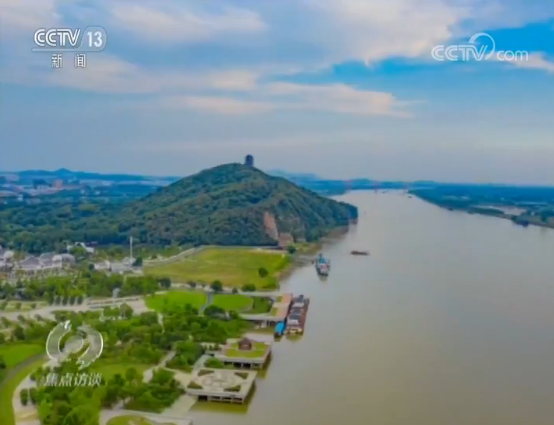
       So how to deal with the relationship between economic development and environmental protection? Maanshan City, Anhui Province has made some explorations. Speaking of Ma ‘anshan, Maanshan and pollution may be the first thing that many people think of. In 1956, Ma ‘anshan was set up for steel, and changed from a small fishing village into a city of steel. Since then, it has been in the situation of "one steel dominates" and "one Mara city" for a long time. Later, many related industries were derived along the Yangtze River, which made Ma ‘anshan long-term "riverside not see the river, water is not hydrophilic".

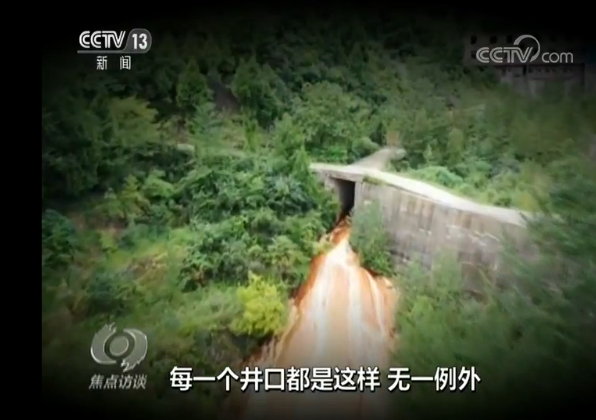
       Xuejiawa is a depression near the Yangtze River. Two years ago, it was devastated, and it was the most prominent and typical place for environmental protection in Maanshan.

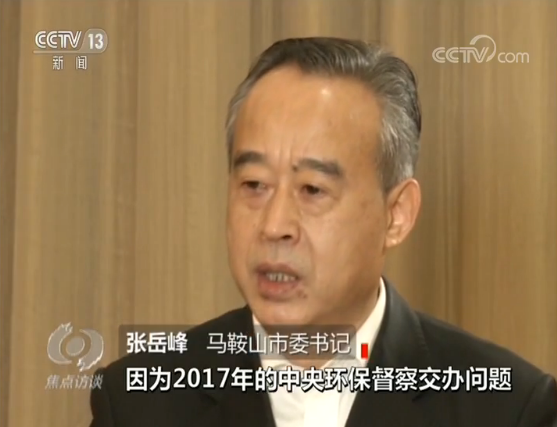
       At the end of 2017, Zhang Yuefeng, secretary of the municipal party committee, was interviewed by his superiors as soon as he took office because of pollution.

one

       Although I have no bottom in my heart, I have no way out. In Zhang Yuefeng’s view, the key to whether this thing can be done is to make up your mind. To solve the environmental problems in Ma ‘anshan, we must not only use environmental protection means, but also adjust the economic structure, upgrade backward industries and treat them from the source. Xuejiawa was regarded as a breakthrough. The pollution sources in Maanshan can be roughly divided into water, shore and city. On the shore where the problem is most concentrated, there are 153 illegal docks, 684 scattered pollution enterprises, 62 solid waste dumps and 497 farms. This was a stumbling block that was placed in front of the local government two years ago and must be dismantled or shut down according to law, but the resistance is great. Wanjiang Cement Plant located in Xuejiawa wants to stay on the riverside by completing the formalities.

       Zhang Yuefeng, secretary of Ma ‘anshan Municipal Party Committee, said: "I told him (the business owner) that it was impossible. I said that now not only I but also you must follow the general secretary’s requirements for the great protection of the Yangtze River. At that time, we said ‘ Four zeros ’ It is called zero tolerance in attitude, zero luck in thought, zero slack in action and zero tolerance in punishment. "

       Although some enterprises can’t shut down, they can greatly reduce pollution through upgrading. The refractory factory under Masteel is near Xuejiawa, only 2 kilometers away from the Yangtze River. Although it has made great contributions to Masteel, it is also a highly polluting enterprise and needs rectification.

one

       When Maanshan began to renovate along the Yangtze River, the refractory factory set up a new company with a listed company, invested 200 million yuan, moved into the industrial park, built new factories and used new equipment, and the pollution problem was completely solved.

       Maanshan Iron & Steel Refractory Factory did not close down because of environmental improvement, but took the opportunity of Yangtze River improvement to upgrade. According to this idea, Maanshan will either completely shut down other polluting enterprises along the Yangtze River, upgrade or transform into other low-pollution industries.

       In addition to polluting enterprises along the coast, water pollution sources are also one of the key points of remediation. Before the regulation, there were both past transport ships and more than 11,000 fishermen on the river. There were four or five hundred people and more than 200 boats in Xuejiawa alone. These fishermen have lived by fishing for generations, and as a result, they have almost no fish to catch because of pollution and overfishing. If we want to cure it, we must let these fishermen go ashore to retreat and change their production. But in the face of going ashore, the fishermen are on tenterhooks.

       In view of the fishermen’s greatest concern, the Maanshan government has put forward a "four haves and one free ride" scheme with jobs, housing, schooling, social security and a good mood, so as to reassure the fishermen.

       Due to proper measures, it only took more than two months, and Maanshan took the lead in completing the ban on fishing in the main stream and main tributaries of the Yangtze River and the fishermen’s retreat and conversion, one and a half years ahead of the national requirements. More than 5,100 fishing boats were dismantled and all 11,000 fishermen landed.

one

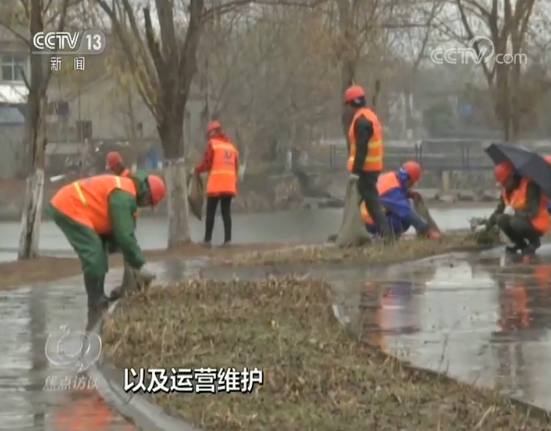
       Besides water and coastline, the third pollution source is urban domestic sewage. In the past, due to the backward urban planning and weak environmental awareness, rainwater and sewage in many old communities were mixed and discharged, which led to the pollution of the Yangtze River. This is a long-standing problem that has accumulated for decades. To achieve a radical cure, it is necessary to transform the city’s pipe network, which is equivalent to a major operation for the city. There are many difficulties. First of all, money is a hard bone.

       In order to solve the problems of capital, technology and management, Maanshan hired top domestic scientific research institutes to make plans, and also launched an "environmental butler" to seek breakthroughs by using third parties.

one

       After finding a way, Maanshan began to treat the rain and sewage pipe network and the rivers in the city from the source.

       After the rain and sewage are separated, the sewage is sent to the treatment plant for treatment, and the black and smelly sewage immediately turns into clear water and flows into the river. Therefore, the water quality of rivers in the city has improved significantly. Cihu River is the mother river of Maanshan. In the past, there were many black and odorous water bodies, but now it has changed a lot.

       In this way, Maanshan solved the pollution problems on water, coastline and city. Only when the environment is well managed can we introduce low-pollution high-tech industries, thus solving the problems of environmental protection and development from a higher level of adjusting the economic structure. Ma ‘anshan Zhengpugang Modern Industrial Park is a new park to develop high-end industries. When the reporter met the director Wu Xiaodong, the person in charge of the park, he had just returned from Shenzhen with Zhang Yuefeng, secretary of the municipal party committee.

one

       Wu Xiaodong, secretary and director of the Party Working Committee of Zhengpugang Modern Industrial Park in Maanshan, said: "All highly polluting enterprises will not enter, and all industries will be oriented, mainly high-end manufacturing, electronic information industry and green food, as well as port logistics relying on ports."

       After years of construction, a number of advanced high-end manufacturing enterprises and research institutes have settled in the modern industrial park of Zhengpugang New District.

       Environmental protection and economic development are no longer a pair of contradictions in Maanshan, but partners that promote each other. In the first three quarters of 2019, the city’s GDP reached more than 150 billion yuan, an increase of more than 20% over the same period in 2017. In 2018, Maanshan City was re-recognized as a national health city. Xuejiawa has become a good place for people to relax.

one

       Xue Mingfei, deputy head of Yushan District, Maanshan City, Anhui Province, said: "There are more biodiversity than before, especially we can see finless porpoises here. In the past, we could not see finless porpoises on the river."

       It is urgent to control pollution and restore ecology. In the process of promoting the development of the Yangtze River Economic Belt, what we want to "break" is not the environment, but the thinking and practice of barbaric and disorderly development, and what we want to "establish" is "ecological priority and green development". "Pollution before treatment" is not a law of development, but a lesson of blood. From January 1, 2020, the fishing ban will be implemented in key waters of the Yangtze River basin by classification and stages, and at the latest from 0: 00 on January 1, 2021, the fishing ban will be implemented for a tentative period of 10 years in the natural waters of the main stream and important tributaries of the Yangtze River except for aquatic nature reserves and aquatic germplasm conservation zone. This is a responsible attitude and action towards history, the future and future generations.

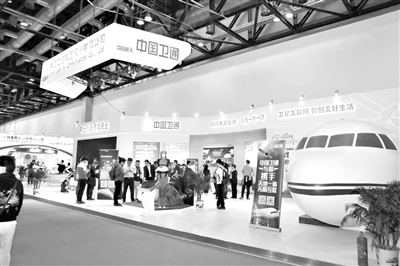
China Weitong: 11-year live broadcast mode innovation helps high-quality development

Photo courtesy of China Weitong

  On June 9, 2008, Zhongxing-9 was lifted by the Long March-3 B rocket and became the first real dedicated TV direct broadcast satellite in China. It has been more than 11 years since this flight. In the past 11 years, China’s first generation direct broadcast satellite space segment system has grown from scratch, serving 140 million users, effectively bridging the digital divide and enabling sustainable development.

  Constructing the Space Segment System of the First Generation Direct Broadcasting Satellite in China

  In the 1980s and 1990s, the demand for radio and television services increased sharply in all walks of life, and the demonstration of direct broadcast satellite system was accelerated in China. In 2000, the project of direct broadcast of radio and television satellite was included in the high-tech project in the tenth five-year plan of the country. In January, 2005, with the support of the former State Administration of Radio, Film and Television, the scheme of the same orbit, the same frequency band, the same capacity and the same coverage for Xinnuo-2 and Zhongxing-9 satellites was adopted. At the same time, the space segment system of China’s first-generation satellite live broadcast was approved by the National Development and Reform Commission and started to be implemented, and China Weitong was responsible for the specific management and operation.

  Looking back 11 years ago, Jiang Longcheng, who was then in charge of the payload of China Satcom Zhongxing No.9, was filled with emotion: "I have been with it from preliminary design, key design to supervision." Zhongxing 9 is like a daughter in her own boudoir.

  According to Jiang Longcheng, the live broadcast satellite system has the advantages of wide coverage, high transmission quality, low receiving cost and convenient maintenance. China has a vast territory, complex terrain and a large population. Direct broadcast satellite is the most effective means to realize the listening and watching of radio and television in the old, young, marginal, poor and vast rural areas.

  Different from other satellites, the direct broadcast satellite needs repeated coverage optimization design to effectively cover the whole territory of China. However, for the first time, a high-power amplifier was used in Zhongxing No.9, and its effective radiation power met the requirements of China direct broadcast satellite system, which enabled more than 97% of the residents in China to directly receive satellite radio and television programs from China using a 0.45-meter small-aperture antenna.

  As the confident Jiang Longcheng expected, less than one month after the launch, on July 5, Zhongxing 9 opened four transponders to transmit 45 sets of TVs and 43 broadcasts, and entered the trial operation stage; On August 6th, nearly 7,000 satellite TV receivers in Xizang were transferred from Asia-Pacific IIR to Zhongxing 9, marking the official opening of the direct broadcast satellite service in China. In the same month, the coverage of Zhongxing 9 was tested on the spot, and 27 test sites including Altay, Xisha, Mohe and Pulan were selected. The results showed that Zhongxing 9 had good performance.

  In 2013, in order to ensure the safe broadcast of the live satellite service, avoid the systematic risk of the operation of Zhongxing 9 Lone Star and ensure the safe broadcast of radio and television programs watched by hundreds of millions of people, China Satellite Communication restarted the construction of Zhongxing 9A (Xinnuo 2 replacement star). Zhongxing 9A also added the South China Sea beam, which solved the problem that it is difficult for military and civilians in the South China Sea to watch TV. On June 19, 2017, the domestic broadcast live star Zhongxing 9A was launched, and then it undertook the task of safe backup of Zhongxing 9 live star.

  Serving 140 million users to bridge the digital divide

  A few hundred meters away from xichang satellite launch center, in the depths of Daliangshan Mountain, is Mayelin Village where Yi people live together. Although it is only a few hundred meters away, the members of the Zhongxing No.9 test team stationed at the launch site and the villagers in Mayelin Village have very different information acquisition. The experimental team members from big cities know radio, television and internet like the back of their hands, but many villagers who have lived in the deep mountains for generations have only been to Mianning County as far as possible, and there are almost no channels to understand the outside world.

  In this way, an invisible digital divide lies in the Great Liangshan Mountain, and the broadcast satellite Zhongxing 9/Zhongxing 9A launched from here provides an effective technical means for narrowing the gap between urban and rural areas, eliminating the digital divide and building information fairness and justice.

  Through the live satellite of Zhongxing-9 and Zhongxing-9A, a "pot" for receiving satellite signals to the outside world was set up on the roofs of remote villages in Daliangshan. The people in rural Xizang witnessed the grand occasion of the Beijing Olympic Games that year, and more compatriots in remote areas were able to hear and see the care and voice of the CPC Central Committee for the first time.

  The direct broadcast satellite "every village is connected" and "every household is connected" projects have effectively covered 595,000 administrative villages, meeting the needs of 140 million users to listen to and watch radio and television programs, exceeding one third of the total number of radio and television users in China. The problem of "difficult, expensive and poor" coverage of rural radio and television in China has been fundamentally solved, and the quality, level and viewing effect of rural radio and television coverage have been greatly improved.

  Up to now, rural users in China can listen to and watch 17 sets of central radio programs, 17 sets of central TV programs, 27 sets of provincial radio programs and 41 sets of provincial TV programs through Zhongxing 9 satellite, and Xinjiang, Xizang, Ningxia, Inner Mongolia, Guizhou and Hainan have achieved satellite transmission and directional coverage of programs in their own provinces (regions) or cities.

  Beginning in 2018, the dual-star backup of central radio and television programs and minority language programs will be gradually realized through China Satellite 9A. At the same time, the South China Sea beam on the satellite will be used to provide radio and television programs of the central and some coastal provinces to the people in the South China Sea.

  Promote model innovation and empower sustainable development.

  In recent years, the direct broadcast satellite system has explored new focal points and ways to achieve radio and television services to the overall national work and meet the people’s beautiful spiritual and cultural needs, focusing on the positive actions of building a well-off society in an all-round way, accurately helping the poor, revitalizing the countryside and enriching the people, and has also played a very good role in helping the poor and helping the wisdom and improving the level of rural civilization.

  Facing the first generation live broadcast satellite system that has been in operation for 11 years, starting the replacement satellite project is the next task of China Satcom. In addition, the innovative exploration of direct broadcast satellite business model is also a topic.

  Although the direct broadcast satellite has greatly improved the radio and television public service in remote rural areas, under the situation that the number of users of direct broadcast satellite service has increased rapidly year by year, the transponder rental rate has improved, but the high-quality transponder resources have not been fully utilized.

  Jiang Longcheng, who is now the technical director of China Satcom Business Operation Center, has taken a longer-term view of the direct broadcast satellite business that he has devoted half his life to. He hopes to increase the use of direct broadcast satellites, especially promote the business application in key areas, accelerate the implementation of the value-added business plan, and tap the value of many users in various directions.

  "For live broadcast satellites, only by giving full play to their excellent performance and benefits can we meet the needs of the people for radio and television services more widely, which is also the direction that live broadcast satellites should work hard in the future." Jiang Longcheng said. (Hu Wei Wu Lin)

A new round of world military scientific and technological revolution is surging.

The Russian military "dagger" hypersonic weapon system successfully completed the test in the Arctic, and the US Navy began to test unmanned sailboats in the waters near Jordan … At the end of the year and the beginning of the year, military powers such as the United States and Russia made frequent moves in the research and development of new weapons and equipment. After a little combing, it is not difficult to find that in recent years, with the continuous progress of global scientific and technological level, a large number of cutting-edge technologies have been applied to the military field, a new round of world military scientific and technological revolution is surging, and the form of war is quietly changing.

Hypersonic weapons have developed rapidly

Hypersonic weapons mainly refer to weapons based on hypersonic flight technology, which fly at more than 5 times the speed of sound, including missiles, bombers, reconnaissance planes and so on. This new weapon, which is known for its quickness, is considered by many military experts to change the future war mode to some extent. In recent years, the United States, Russia and other world military powers have launched fierce competition in the field of hypersonic weapons, launched a number of hypersonic weapons research and development projects, and some projects have made major breakthroughs.

Russia is in a leading position in the field of hypersonic weapons. As early as the late 1980s, the Soviet Union began to develop the hypersonic cruise missile code-named "X-90". At present, there are three kinds of hypersonic missiles owned by Russia, namely zircon, dagger and pioneer. Among them, the "dagger" hypersonic missile has a speed of up to Mach 10, which is mounted and launched by MIG -31 fighters. It can carry conventional warheads or nuclear warheads and is the first hypersonic weapon put into use by the Russian army. The speed of "Pioneer" hypersonic intercontinental missile exceeds Mach 20, which is enough to easily penetrate the air defense and anti-missile network carefully constructed by opponents. At the end of 2019, the first land-based "Pioneer" missile regiment of the Russian army joined the combat duty. "Zircon" is Russia’s first sea-based hypersonic cruise missile. It was successfully tested in October 2020 with a flight speed of Mach 9 and can be launched from a warship or submarine.

America also attaches great importance to hypersonic weapons. At present, the US military services are developing hypersonic weapons, mainly including the navy’s "conventional fast attack" hypersonic glider, the army’s "long-range hypersonic weapon", the air force’s AGM-183 "air-launched rapid response weapon" and "hypersonic attack cruise missile". However, the development of US hypersonic weapons is not smooth. In 2021, the US Air Force conducted three test launches of new hypersonic missiles, all of which ended in failure.

In addition, Japan, South Korea, India and other countries also have their own hypersonic weapons development plans and projects. It can be predicted that in the field of hypersonic weapon research and development, the situation of fierce competition among countries will become more and more obvious.

Artificial intelligence technology is widely used.

Artificial intelligence is one of the core technologies leading a new round of military revolution. In recent years, in order to seize the commanding heights of military science and technology, major countries have promoted the application of artificial intelligence technology in the military field while upgrading the research and development of artificial intelligence to a national strategy.

The United States is the first country to develop artificial intelligence technology and apply it to the military field. At present, the Advanced Research Projects Agency of the U.S. Department of Defense has launched the "Next Generation Artificial Intelligence" project, which mainly includes: promoting the technical update of key business process automation of the Department of Defense, improving the adaptability and reliability of the artificial intelligence system, enhancing the security and flexibility of machine learning and artificial intelligence technology, and innovating the algorithms and applications of the next generation artificial intelligence. At the same time, the US military has incorporated the development of artificial intelligence technology into the information plan of the Ministry of National Defense. According to reports, the US Navy EA-18G Growler electronic warfare aircraft has the ability to counter the enemy’s unknown radar due to the use of machine learning algorithms and other technologies.

Russian military artificial intelligence technology has been tested in actual combat. In the battle to help the Syrian government forces fight against the rebels, the Russian army used combat robots, drones and automated command systems. At present, the artificial intelligence marine robots independently developed by Russia include "Platform -M" and "Argo", which can perform tasks such as patrol, reconnaissance, demining and close fire support. In addition, the Russian army has also developed a robot that looks like a military dog and can run quickly, which is used to undertake tasks such as transporting ammunition supplies to the line of fire.

Britain, Germany, Israel and other countries have also taken artificial intelligence technology research as the focus of national defense construction. Britain claims to have developed a military robot called Homo sapiens. Germany’s Typhoon fighters have successfully connected with remote control vehicles. The Israeli military is developing intelligent tanks, which can plan tasks independently, drive automatically and use weapons automatically.

Unmanned combat weapons are in the ascendant

In today’s era, a new round of world scientific and technological revolution is developing rapidly, and the form of war is accelerating to intelligent evolution. In order to win the future war, major countries have accelerated the development of unmanned combat weapons and actively explored man-machine cooperative warfare methods.

According to the plan of the Russian Ministry of Defense, the Russian army is setting up the first unmanned combat unit composed of attack robots. The unit includes five sets of Uranus -9 robot systems and 20 unmanned combat vehicles. Uranus -9 is a multi-functional combat platform, equipped with 2A72 30 mm automatic artillery, 7.62 mm machine gun, anti-tank missiles and other weapons. At present, the Russian army, navy and air force have all installed unmanned combat platforms. Every division and brigade-level unit of the Russian Army has a drone company, and the Russian Northern Fleet has a drone regiment.

Most of the US Army combat units at all levels have UAV units. The US Navy is implementing the "Ghost Fleet" plan and preparing to build a force including 10 unmanned ships. At present, the US Navy has completed the twin-boat test of two unmanned ships, the Wanderer and the Ranger. These two ships will be equipped with Mk41 missile vertical launch system or Mk57 advanced vertical launch system. According to a guidance document issued by the US Navy in early January this year, medium and large unmanned surface combat ships and their formations will be the focus of their future development.

France, Britain and other countries are also striving for breakthroughs in the research and development of unmanned combat weapons. The British Ministry of Defence plans to start manufacturing the first unmanned combat aircraft in 2025. Equipped with missiles and electronic warfare equipment, the fighter will become the first unmanned fighter in Britain to shoot down enemy aircraft and resist the threat of surface-to-air missiles. The British Ministry of Defence claims that this unmanned aerial vehicle can find and avoid the enemy’s air defense system, and can continue to perform tasks even in the case of cyber attacks.

(Author: School of Information and Communication, National University of Defense Technology)

Above: Russian naval vessels test-fired "Zircon" hypersonic missiles.

Information picture

The modes of transportation are more diversified. Please check this "Spring Festival travel rush" home guide!

  Li Weiqing, who works in Beijing, didn’t pay much attention to the news that Spring Festival travel rush Railway will start selling tickets in 2020. Since buying a car, he has chosen to drive home every Spring Festival. He has been running for several years from Beijing to Jinzhou, Liaoning Province, about 500 kilometers of expressway.

  "If it goes well, it will take five and a half hours. Once I caught a traffic jam, I got home in nine hours." In Li Weiqing’s view, driving home not only saves the anxiety of grabbing tickets, but also increases the opportunity to chat and talk with parents.

  "Because I used to travel a lot in my previous job, it is actually a rare opportunity to communicate with my parents by car in the New Year. Starting from home, bring all the food and drink, and hurry and slow all the way. It is easier to talk and chat. " Li Wei qing said.

  With the Spring Festival travel rush train ticket on sale on December 12th, "Spring Festival travel rush in 2020" once again boarded the hot search. Compared with Spring Festival travel rush in 2019, Spring Festival travel rush will be 11 days ahead of schedule in 2020. Therefore, some experts predict that Spring Festival travel rush will see the peak of passenger travel in the early stage, which is the superposition of "work flow", "student flow" and "visiting relatives flow", and "going home" has become a common keyword for many people who work and live outside the home.

  Step on the accelerator to the end, and the congestion at the provincial border will be alleviated.

  According to big data, during Spring Festival travel rush in 2019, the national railways, highways, waterways and civil aviation sent a total of 2.98 billion passengers, which was basically the same as that in 2018. Among them, the railway sent 410 million passengers, an increase of 7.4%; 2.46 billion passengers were sent by road, down by 0.8%; The waterway sent 41 million passengers, the same as in 2018; Civil aviation sent 73 million passengers, an increase of 12%.

  In recent years, the trend of diversification of transportation modes in Spring Festival travel rush has become more and more obvious. Trains, planes, cars, hitchhiking and other ways go hand in hand, which has alleviated the pressure of passenger flow during Spring Festival travel rush to some extent. It is worth mentioning that with the increase of income and the update of travel concept, many people have joined the team of driving home.

  According to the consulting data of Ai Media, 47.9% of the netizens surveyed indicated that their willingness to travel by car during Spring Festival travel rush in 2019 was significantly improved.

  Some analysts believe that, on the one hand, according to the data of the Ministry of Transport, in 2018, the mileage of new highways in China was 86,000 kilometers, including 6,000 kilometers of expressways and 20,000 kilometers of newly built and rebuilt provincial trunk highways. The highway has been built to the "doorstep", which provides convenience for many self-driving families.

  On the other hand, the number of motor vehicles in China continues to increase, and cars are becoming the standard of life for many people, which provides conditions for self-driving travel.

  Ai Media Consulting analysts said that people’s living standards have improved and the number of private cars has been continuously improved. At the same time, the country has strengthened highway construction, and the trend of self-driving travel during the Spring Festival is obvious. The diversified combination of roads, railways and aviation has become the general direction of Spring Festival travel rush’s travel structure adjustment.

  It is worth mentioning that traffic jams have always been one of the pain points of self-driving in Spring Festival travel rush, and high-speed toll stations are the "hardest hit areas" of congestion. In Spring Festival travel rush this year, this situation will improve.

  On December 12th, the Ministry of Transport held a special press conference on "Cancellation of Provincial Toll Stations of Expressway". According to Sun Wenjian, spokesman of the Ministry of Transport, the project of canceling the provincial toll stations of expressways has entered the final stage, and the conditions for canceling the provincial toll stations of expressways nationwide are basically met before the end of the year.

  Specifically, in terms of engineering construction, the completion rate of the national highway entrance weighing detection system has reached 100%. On December 16th, the national highway entrance weighing detection will be fully implemented. The completion rate of the main line reconstruction of provincial toll stations reached 93.02%, and the main line reconstruction of the remaining provincial toll stations was completed before December 20 as planned.

  Sun Wenjian said that in ETC issuance, as of December 10, the total number of ETC customers nationwide reached 185.4599 million, completing 97.17% of the total issuance tasks; The network communication link test and system function test have been completed, and it is expected that all the work of joint debugging and testing will be completed before December 20.

  It is understood that the cancellation of provincial toll stations on expressways is not a cancellation of charges, but a change in charging methods. At the same time of dismantling the provincial toll stations, it is helpful to reduce the transit time of vehicles by technical means to realize fast payment without stopping when driving across provinces.

  "After the withdrawal of the station, under normal traffic conditions, the average time for buses to pass through the provincial boundary was reduced from 15 seconds to 2 seconds, a decrease of about 86.7%. The time for trucks to cross provincial boundaries was reduced from 29 seconds to 3 seconds, a decrease of 89.7%. " Sun Wenjian said, "After the provincial toll station of the expressway is cancelled, the people will be truly realized ‘ Step on the accelerator to the end ’ The dream of ".

  Customized buses, hitchhiking and other new favorites "internet plus" empower Spring Festival travel rush to go home.

  Although Spring Festival travel rush hasn’t officially started, Li Yong’s homecoming WeChat group is already full of excitement. "Between the 10th and 15th, did anyone return to Anhui via Wuxi, Changzhou and Nanjing?" "Looking for someone by train on the 20th, waiting for 2, waiting for 1" & hellip; … Working in Shanghai and his hometown in Huainan, Anhui Province, he continued to pay attention to the information in the group, hoping to get on a bus and go home.

  In fact, carpooling home is becoming a new choice for more and more young people in Spring Festival travel rush.

  Hellobike’s "Big Data on Travel in the Spring Festival of 2019" shows that during the Spring Festival of 2019, the average carpooling distance of Hello was 126.7 kilometers, the average carpooling time was 143.3 minutes, and the average carpooling cost was 122.6 yuan, so long-distance travel became the main order for hitchhiking.

  Among them, the age of hitchhiking passengers is mainly between 24 and 32 years old, and the proportion of post-80 s and post-90 s is 41.1% and 44.9% respectively, and post-90 s becomes the main force of hitchhiking.

  Li Yiming, who works in Beijing, is a hitchhiker. Online booking and telephone communication confirmed that during the Spring Festival last year, he took two passengers back to his hometown of Tangshan through a ride platform.

  "The two passengers paid a total of more than 300 yuan and shared the fuel and tolls." Li Yiming said, "We also had lunch together at the high-speed service station on the way. It’s my treat, not for anything else. I just think it’s quite warm and I can have a chat companion along the way."

  In fact, "internet plus" has brought many changes to Spring Festival travel rush. During the period of Spring Festival travel rush, in order to meet the diversified needs of tourists, customized buses began to enter the market in some places. By combining online and offline, and booking trips in various ways, the customized bus is based on highway passenger transport, which plays a role in connecting railway and air traffic in series.

  Ding Yifan, who lives in Hangzhou, told reporters that during her stay in Spring Festival travel rush in 2019, she experienced a customized bus for the first time. On the arrival floor of hangzhou east railway station, find the dedicated service desk of "Spring Festival travel rush Warm Bus". As long as you register your destination, the service staff will match it in time, and "Spring Festival travel rush Warm Bus" will send passengers to the door of the community as far as possible.

  "It has not only the routes in the city, but also the custom-made lines for returning home, the special shopping line for the Spring Festival, the bus lines connecting transportation hubs, etc., which saves the trouble of queuing at the train station and solves the last mile of Spring Festival travel rush." Ding Yifan said.

  Scan code through the gate, brush your face into the station, and purchase tickets by electronic one-click … … In addition to hitchhiking and customized buses, the empowerment of "internet plus" makes the service in Spring Festival travel rush more intelligent, efficient and convenient, and constantly refreshes the travel experience of passengers. There is reason to believe that in the future, people will travel more and more, and the way home during the Spring Festival will be warmer.

  China Youth Daily China Youth Network reporter Cheng Honghe Source: China Youth Daily

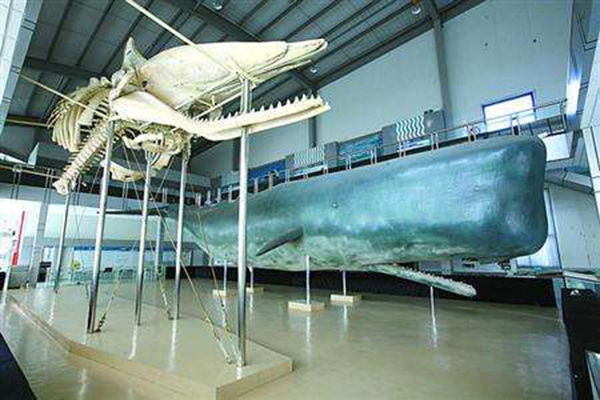
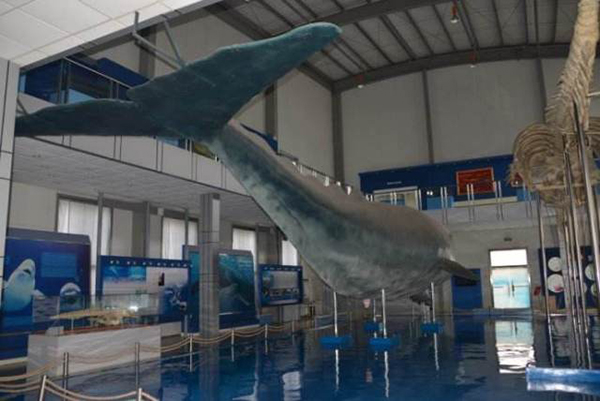
The loom in pre-Qin Dynasty, the largest sperm whale specimen … How rich are Shanghai university museums?

The pictures in this article are all from the Cultural Security Branch of Shanghai Public Security Bureau.

The first museum in the world originated from universities, and university museums are rooted in the deep soil of university culture, which is an important symbol of the profound academic and cultural accumulation of universities. Let’s discuss how to build a museum in a university.

1. Shanghai Jiaotong University School History Museum

No.1954 Huashan Road, Xuhui District
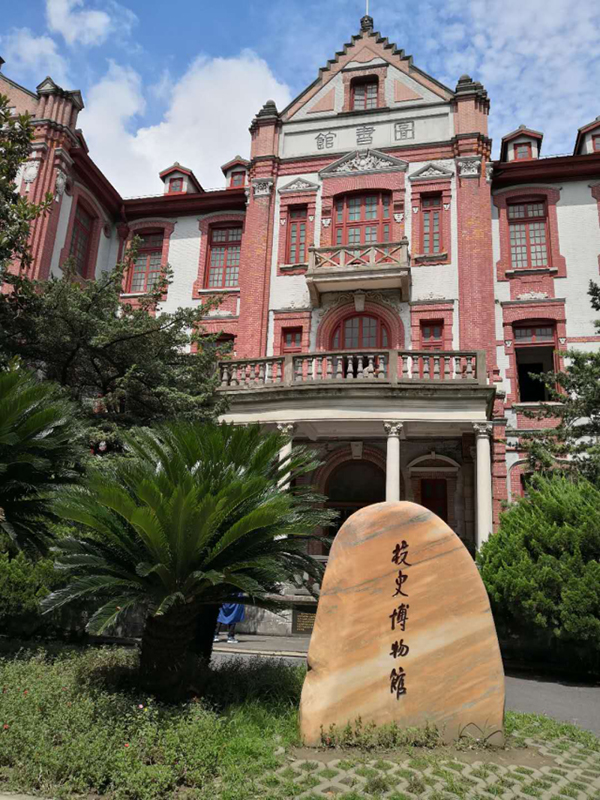
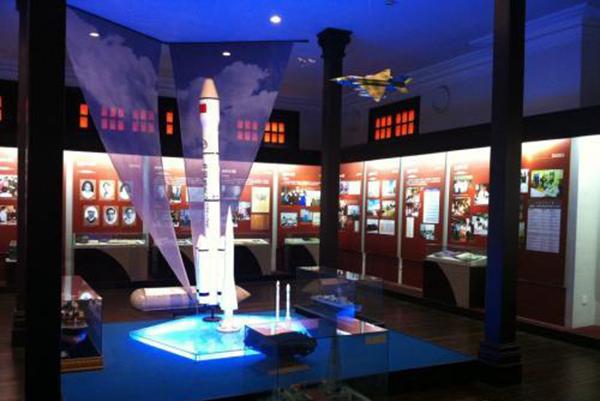
The exhibition hall of the school history museum has a total area of about 600 square meters, with three exhibition halls. The first exhibition hall spans from the establishment of Nanyang Public School to the liberation of Shanghai, and is divided into three periods: "the establishment of Nanyang Public School", "the construction of a modern engineering university" and "Jiaotong University combining science, engineering and management". The time span of the second exhibition hall has been from the liberation of Shanghai to the present. Nearly 700 precious cultural relics, documents, photographs and other materials are exhibited in these two exhibition halls, which reflect the development course of the school for more than a century and the fruitful achievements of academic research. The third exhibition hall is the performance exhibition of academicians of Shanghai Jiaotong University. Nearly 200 academicians of China Academy of Sciences and China Academy of Engineering who studied or taught in Jiaotong University were exhibited, and their biographies and major achievements were introduced in order of birth date. There is also Professor Lin Tongyan’s Exhibition Room in the third exhibition room, which displays more than 300 photos, works, papers and pictures of Mr. Lin Tongyan, a famous alumnus of Jiaotong University, an internationally renowned structural engineer, educator and Chinese American scholar.
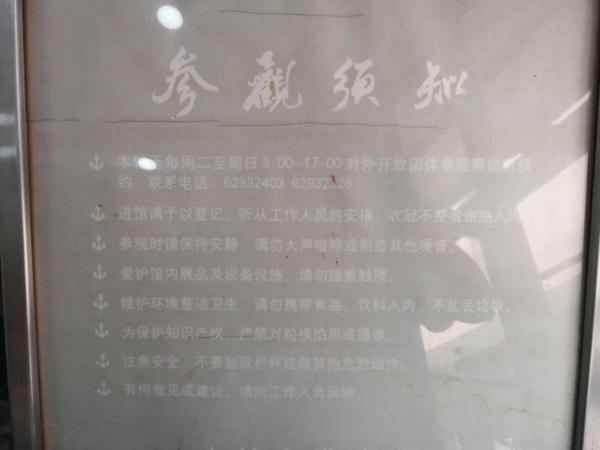
Opening hours: every Tuesday to Sunday, from 9: 00 to 17: 00, and the telephone numbers are 62932403 and 62932326.

Route: Take bus Xumin Line and get off at Xujiahui Station, and walk for about 1.1 kilometers.

2. Shanghai Fudan University Museum

220 Handan Road, Yangpu District

Fudan University Museum is located in Fudan University, No.220 Handan Road. The museum showroom has a total area of about 800 square meters and is divided into two fixed exhibition halls-Gaoshan folk cultural relics exhibition and cultural relics teaching specimen exhibition, and two temporary exhibition halls. The museum has a collection of more than 2,000 pieces, which are donated by Henan Provincial Museum, Luoyang Cultural Relics Team, Shanghai Museum and other units, as well as the old collections of Fudan University Library, Wenbo College and Biology Department.

Museum fixed exhibition hall

Gaoshan folk cultural relics exhibition: the exhibits in the museum-Gaoshan exhibits were collected by Professor Liu Xian from the Biology Department of Fudan University in the 1920s from the Gaoshan settlements in Taiwan Province; The exhibition selected more than 100 pieces from its 400-odd collections, combined with documents and pictures, reflected the traditional customs and culture of Gaoshan people from various angles, and made some restorative scenes. Under the illumination of special spotlights for the exhibition, the whole exhibition was very bright, beautiful and lively.

Exhibition of teaching specimens of cultural relics: There are nearly 200 pieces of cultural relics of past dynasties, such as copper, pottery, porcelain, stone, jade, bamboo and wood ware, etc. This exhibition mainly serves the professional teaching of the Department of Culture and Art, and it has also become a place for non-professional audiences to cultivate their sentiments and appreciate ancient material culture because of the appropriate artistic expression and easy-to-understand text description.

Temporary exhibition hall of museum

The two temporary exhibition halls hold exhibitions of various collections or foreign art works. The exhibitions that have been held include the Picture Exhibition of Fudan University’s history of more than 90 years, the Introduction Exhibition of Hong Kong University, Guizhou Nuo Sculpture Art Exhibition, American Abstract Art Exhibition, American Indian Art Exhibition and Japanese Kikukawa Guofu Calligraphy Exhibition.

Opening hours: every Tuesday, Thursday and Friday, from 14: 00 to 16: 00 (except winter, summer and holidays). Group visits are reserved in advance and are not subject to the above time limit).

Route: Bus No.118, get off at Fudan University Station, and walk for about 1 km.

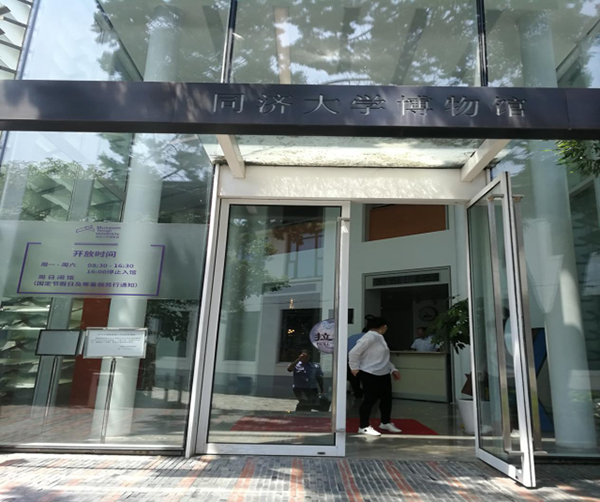
3. Shanghai Tongji University Museum

1239 siping road.

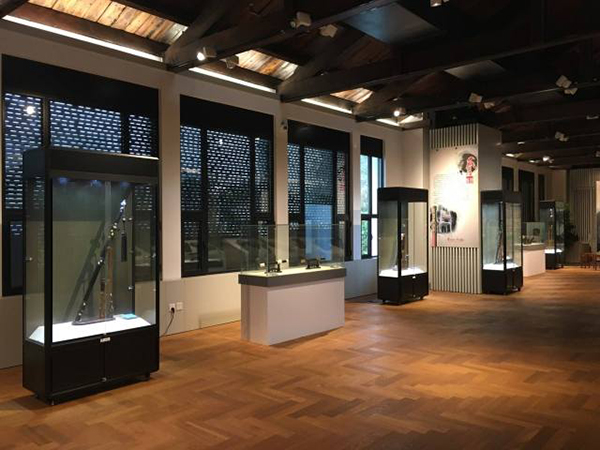
Tongji University Museum is located in the 129 building of Tongji University, No.1239 Siping Road, with an exhibition area of about 2,000 square meters. Tongji University Museum, as a historical building with a mixed structure of brick and wood, retains the internal and external formal features of the building to the maximum extent. The two-story high-rise room has a clear contrast between the old and new elements and a clear handover.

Recent exhibition in the museum: "Red Soil Muxia-2018 Australian Aboriginal Artists and China Artists (Shanghai) Joint Exhibition". This exhibition mainly displays 50 paintings, sculptures and ceramic artworks created by Australian aborigines, and 20 works by China artists who have visited Australian aborigines’ tribes reflecting the life of Australian aborigines. The exhibition will last until July 30th.

Opening hours: Monday to Saturday from 8: 30 to 16: 30 (except winter and summer holidays and legal holidays).

Route: Take Metro Line 10 to Tongji University Station and walk about 180 meters.

4. Shanghai University of Finance and Economics Business Museum

No.777 Guoding Road, Yangpu District

The Business School Museum of Shanghai University of Finance and Economics is located in Yuheng Building, No.777 Guoding Road Campus. The Business School Museum is centered on the Business School Museum, supplemented by the Insurance Museum, the Tax Bill Museum, the Currency Museum and the Computer Museum. It displays the evolution and development of China’s century-old higher business education in a panoramic and multi-dimensional way. At present, the Currency Museum and the Computer Museum are under renovation and are closed to the public.

You need to make an appointment on the campus network in advance to visit the Business Museum. The opening hours are from 13: 30 to 16: 30 every Tuesday, Thursday and Saturday.

Route: Take Bus No.406 and get off at Guoding Road, and walk for about 280 meters.

5. Shanghai University Museum

2695 Hutai Road

The Shanghai University Museum is located in the east of the headquarters (No.333 Nanchen Road, Baoshan District). The museum has more than 6,000 pieces (sets) with an area of 4,200 square meters. The future exhibition will show Shanghai (maritime) art and reflect the history of Shanghai University, supplemented by temporary exhibitions, serving the discipline construction of Shanghai University and the alumni of teachers and students, and will be open to the whole society free of charge. The current curator of Shangda Museum is Associate Professor Liu Shaoxue, and the curator of Shanghai Museum, Mr. Chen Xiejun, and other experts in the field of cultural relics museum science and Shanghai culture research inside and outside the school form an advisory committee.

Shanghai University Museum is a member of the Professional Committee of University Museums of China Museum Association and a member of the National Alliance of University Museums for Educating People. It plays the role of museum education through temporary exhibition activities and volunteer work.

Opening hours: Monday to Friday from 8: 00 to 16: 00.

Route: Take Metro Line 7 to Shangda Road Station, exit 3, and walk for about 850 meters.

6. Shanghai University of Traditional Chinese Medicine Museum of Traditional Chinese Medicine

No.1200, Cai Lunlu, Pudong New Area
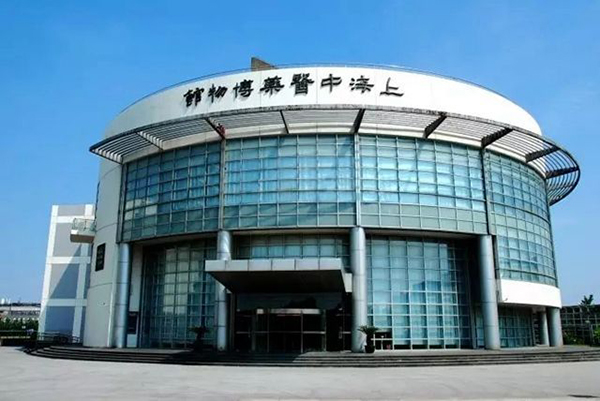
Shanghai museum of tcm is a national popular science education base, a national traditional Chinese medicine culture publicity and education base, a national 3A-level tourist attraction and a Shanghai patriotism education base. Shanghai museum of tcm was founded in 2003, formerly known as the Museum of Medical History of Chinese Medical Association, which was founded in 1938. The museum has a building area of 6,314 square meters and an exhibition area of 4,050 square meters, and there is a "Herb Garden" of nearly 10,000 square meters outside the museum. The basic exhibition is divided into eight topics: primitive medical activities, ancient medical and health remains, medical management of past dynasties, medical collections of past dynasties, health culture, modern maritime Chinese medicine, herbal prescription appreciation and contemporary Qihuang new look, which reflect the main achievements of Chinese medicine in various historical periods and predict its bright future development.
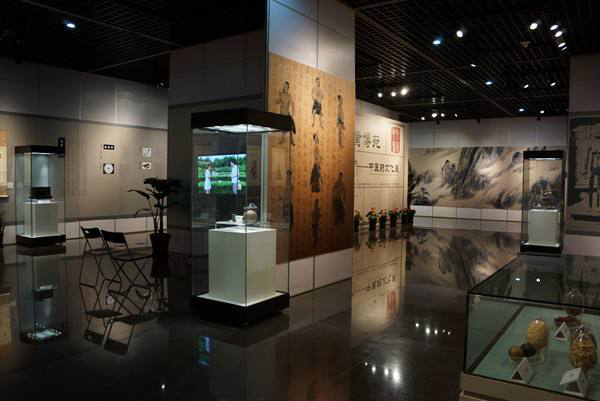
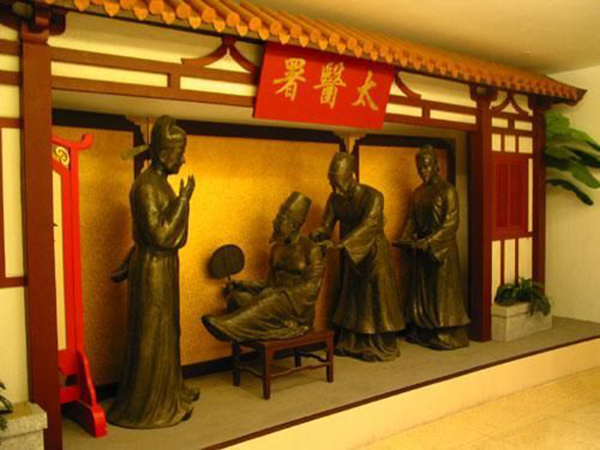
Opening hours: 9:00~16:00 (Tuesday to Sunday) and closed on Monday.

Route: Take Bus No.1057 to Cai Lunlu Huatuo Road Station and walk for about 120 meters.

7. Donghua University Textile and Apparel Museum

849 Zhongshan West Road

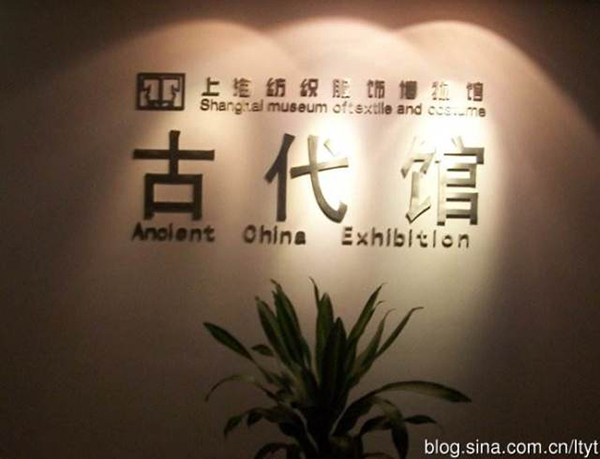
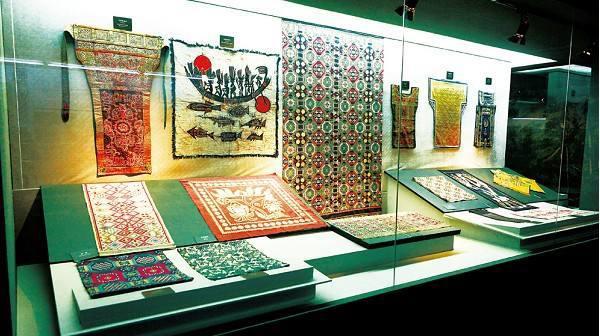
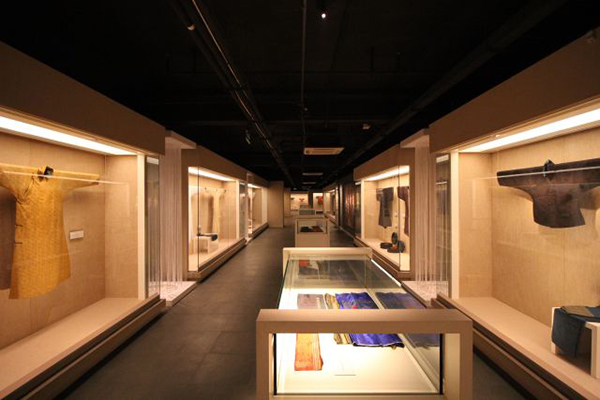
The existing building area of the exhibition hall is more than 6,700 square meters, and the exhibition area of the first phase is more than 3,000 square meters. It is divided into four branches: the popular science museum, the ancient museum, the modern museum and the minority museum.

The first floor of the Exhibition Hall of the Textile and Apparel Museum of Donghua University is the Popular Science Museum, which displays the industrial chain and its characteristic links in the field of textile and apparel in the form of dynamic and static display, supplemented by high-tech display means and interactive exhibitions, and popularizes the scientific and cultural knowledge of textile and apparel. The interactive exhibition area is an important feature of the Science Museum, where a variety of interactive projects such as spinning, weaving, dyeing and clothing design are concentrated, including computer embroidery, knitting and weaving, ink-jet printing, hand-painted T-shirts, buckle knot making, jewelry DIY, dress consultant and digital stitching of clothing styles, etc. Visitors can experience these production and design processes and walk into textiles and clothing.

The second floor is the Ancient Museum, which displays the pictures and objects of textiles and garments in different periods in ancient China, and shows the development of ancient fabrics and textile appliances and the evolution of garments in past dynasties. From the ju loom in the pre-Qin period, the heald loom, the multi-heald multi-nie loom in the Han dynasty and the Zhuang bamboo cage loom in the Song dynasty, to the large jacquard machine representing the highest level of hand-woven satin and circular flower in the Ming and Qing dynasties; At the same time, it shows four famous Chinese brocade with rich colors and exquisite craftsmanship, namely Shu Brocade in Han and Tang Dynasties, Song Brocade and Zhuang Brocade in Song and Yuan Dynasties and Yun Brocade in Ming and Qing Dynasties.

On the third floor, there are the Modern Museum and the Minority Museum. The Modern Museum mainly displays the physical objects and image materials of modern China textile and clothing. The exhibits are mainly China traditional clothing, including related accessories. The contents are divided into three parts: women’s clothing, men’s clothing and children’s clothing. The fabrics of the clothes basically cover the fabric types at that time, reflecting the evolution of modern textile and clothing from the late Qing Dynasty to the Republic of China. The National Minority Pavilion displays the textile processing and the costumes of ethnic minorities through physical scenes, pictures and multimedia presentations.

Opening hours: every Tuesday to Saturday (9:00~16:00), and arrangements will be announced separately during national holidays and winter and summer vacations.

Route: Take Metro Line 4 to Exit 2 of Yan ‘an West Road Station and walk for about 1.1 kilometers.

8. China Fish Culture Museum of Shanghai Ocean University.

No.318 Jungong Road, Yangpu District
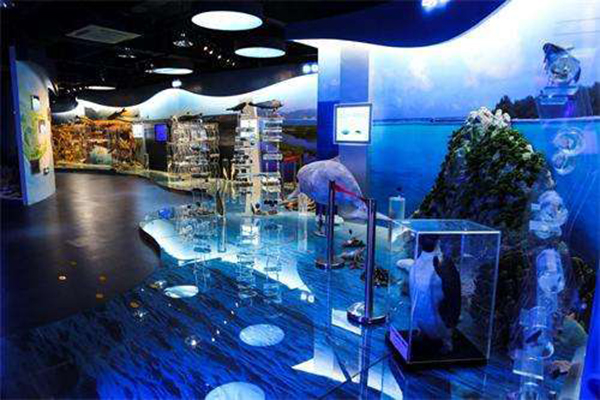
China Fish Culture Museum of Shanghai Ocean University is located at No.318, Jungong Road, Yangpu District, Shanghai. It is a popular science education base for aquatic organisms in Shanghai and one of the national culture museums in Shanghai universities. It has a total construction area of 1,036 square meters, 40,000 specimens, about 3,000 species and more than 1,000 species on display. In 1952, Zhu Yuanding, a famous ichthyologist, founded the Fish Specimen Room of Shanghai Fisheries University. In the early days of its establishment, equipment, personnel and funds were very tight. Zhu Yuanding led his colleagues to overcome many difficulties, and started to collect fish specimens and materials by himself. In just a few years, the herbarium has collected more than 900 species and more than 25,000 specimens, forming an elementary scale and soon becoming an important base for ichthyology research in China. Since then, the specimen room has been renamed the fish research room. By the year 2000, the fish laboratory had been one of the four bases for studying fish taxonomy in China.

In 2002, the laboratory obtained the largest sperm whale specimen in China with a length of 18.4 meters. Subsequently, the laboratory was upgraded and evolved into the whale hall of Shanghai Fisheries University.

At the end of 2005, the China Fish Culture Museum was unveiled in the former Shanghai Fisheries University at No.334 Jungong Road. At the same time, Shanghai Fisheries University and Shanghai Ocean Aquarium signed a cooperation agreement, which opened the prelude to the establishment and protection of fish culture in China.

Nowadays, Shanghai Ocean University is moving to the new campus of Nanhui Lingang, and the China Fish Culture Museum will be renamed again. Starting from 2008, the new campus will build the first museum with the theme of ocean in China, realizing the transformation from fish culture to marine culture. The building area of the new museum will reach 7,000 square meters, and 12 exhibition halls will be set up, including Fish Culture Museum, Fishery History Museum, Fishing Gear and fishing method Pavilion, which will become a professional museum integrating teaching, scientific research, popular science and cultural heritage.

Opening hours: 24 hours a day.

Route: Take Metro Line 12 to Exit 2 of Aiguo Road Station and walk for about 1.3 kilometers.

9. Shanghai University of Science and Technology Printing Museum

No.100 Shuifeng Road

The Printing Museum of University of Shanghai for Science and Technology was founded in 1998. It is located on the fourth floor of the library of the School of Publishing, Printing and Art Design of University of Shanghai for Science and Technology. The exhibition hall covers an area of about 1,000 square meters. The museum consists of a historical museum and an equipment museum. The exhibition hall consists of five parts: the origin and development of printing, the introduction and development of modern printing, the start-up and revitalization of national printing industry, the modernization process of Shanghai printing industry and the exhibition of modern Shanghai printing products. The representative cultural relics and materials are displayed, including printing equipment such as printed pottery and wooden movable type, FM network prints, pure gold-plated prints, digital prints and related audio-visual materials, and the exhibition form.
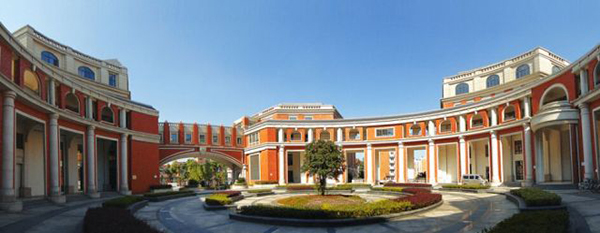
Opening hours: every Tuesday and Friday from 09: 00 to 11: 30; 14:00~16:00。

Route: Take Metro Line 12 to Exit 4 of Longchang Road Station and walk for about 1.2 kilometers.

10. Biology Museum of East China Normal University

Floor 2, Experimental Building B, No.500 Dongchuan Road

The Biology Museum of East China Normal University was founded in 1952, relying on the School of Life Sciences of East China Normal University. The museum has a long history and a rich collection, including animal specimens such as birds, insects, mammals, amphibians, fish and invertebrates, as well as various plant specimens such as seeds, ferns, mosses and algae, with a total of tens of thousands of specimens. Among them, it also includes specimens of many rare animals, including giant pandas, Chinese alligators, crested ibis and sunbirds. The Museum of Biology also has a variety of multimedia videos of biology, in order to help visitors understand the "story behind" of animal and plant specimens more intuitively and deeply.

Opening hours: It is open to the public every Tuesday, Thursday and Saturday (except national statutory holidays).

Route: Bus No.958, get off at Lianhua South Road Station of Dongchuan Road and walk for about 530 meters.

11-1. Museum of Shanghai Normal University

4th Floor, Wenyuan Building, No.81 Guilin Road

Shanghai Normal University Museum is located in Wenyuan Building, Shanghai Normal University, No.100 Guilin Road, Xuhui District, Shanghai. The collection in the museum was formed in the 1950s, and it was officially built in 2001. It has a building area of over 740 square meters, and belongs to an artistic museum, covering more than 2,000 pieces of ceramics, bronzes, calligraphy and painting, jade articles, steles, ethnic minorities and religions. The age spans from Neolithic to contemporary, and the most distinctive features are Tibetan Thangka.

Features: The collection includes jade articles, bronzes, ceramics, inscriptions, calligraphy, paintings, thangkas, costumes, embroidery, etc., among which there are many treasures. The Neolithic jade wares were regular in shape and polished smoothly, reflecting a high level of craftsmanship. Mao Gongding, a three-dimensional rubbing, belongs to the original refined rubbing; The scriptures written by Sui monks and translated by Xuanzang are rare cultural relics. Sheep brain paper gold juice book Tibetan infinite life Buddhist sutra, Tibetan Buddha’s illusion network continued secret sutra, is a rare treasure; Thangka is mostly written in the Qing Dynasty, which has national characteristics. Among the paintings, Wang Yuanqi and Wu Li’s landscape paintings are also excellent; The figure painting of the Qing Palace Temple is also a rare exhibit in Shanghai. The official kiln porcelain from the court is exquisite and gorgeous, showing the unique bearing of the royal family. Shanghai University Porcelain Museum is built on the basis of the porcelain collection of Shanghai Normal University Museum. The collected ceramics started from the painted pottery of Majiayao culture in the prehistoric culture period, and went through various practical and buried ceramics in the Han Dynasty, the Jin Dynasty, the Southern and Northern Dynasties and the Sui Dynasty, including glazed porcelain and tricolor porcelain in the Tang Dynasty, monochrome glazed porcelain, carved porcelain and piled porcelain in the famous kilns in the Song Dynasty, carved porcelain in Xixia, decals, blue-and-white glazed porcelain in the Yuan Dynasty and the Ming Dynasty, and multicolored, pastel, doodle and blue-and-white glazed porcelain in the Qing Dynasty. The collection covers various famous historical kilns such as Ru Kiln, Jun Kiln, Ge Kiln, Longquan Kiln, Jizhou Kiln, Dehua Kiln and Jingdezhen Kiln, which basically reflects the brief history of the development of China ceramics.

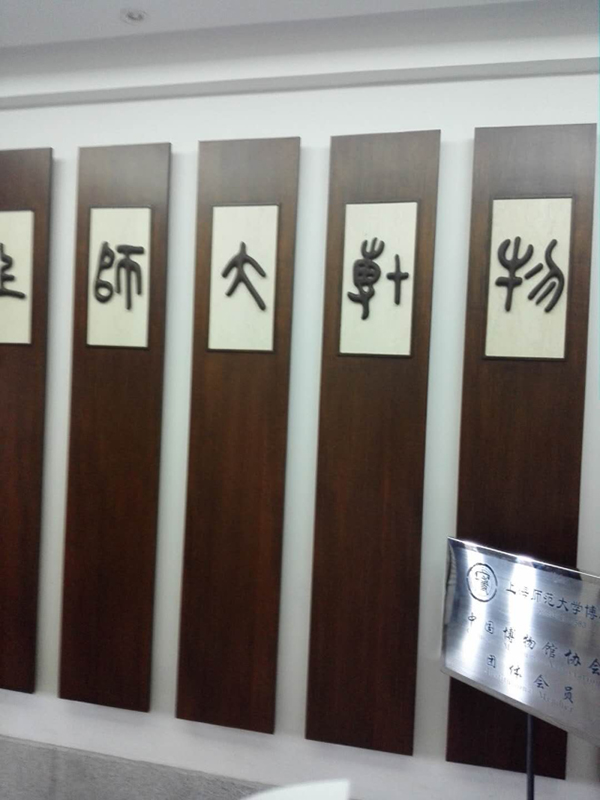
Opening hours: Monday to Friday from 8: 00 to 11: 00 and from 13: 30 to 16: 30.

Weekends, national holidays, winter and summer vacations need to be reserved in advance.

Route: Take bus Xumin Line to Humin Road and get off at Guilin Road Station and walk for about 1.6 kilometers.

11-2. Shanghai Normal University "Comfort Women" History Museum

No.100 Guilin Road

On October 22nd, 2016, the China Museum of Comfort Women held an opening ceremony in Shanghai Normal University, located in Wenyuan Building of Shanghai Normal University. The museum contains a collection of commemorative cultural relics donated by survivors of the comfort women system, and it is the only museum in Chinese mainland with the theme of preserving the evidence of the tragic situation of comfort women.

Features: The only museum in China with the theme of preserving the evidence of the tragic situation of "comfort women".

Opening hours: Tuesday to Sunday from 9: 00 to 16: 00 (closed on holidays, winter and summer vacations).

Route: Take bus Xumin Line to Humin Road and get off at Guilin Road Station and walk for about 1.3 kilometers.

12. Shanghai Conservatory of Music Oriental Musical Instrument Museum

No.20, Lane 18, Gaoan Road, Xuhui District

Shanghai Oriental Musical Instrument Museum is the first musical instrument museum in China’s art colleges. Construction began in the summer of 1985, and its predecessor was "China National Musical Instrument Exhibition Hall" and "Oriental Musical Instrument Exhibition Hall". Inspired by Comrade Jiang Zemin’s inscription "Running First-class Music Education, Creating International Advanced Level", it was expanded into "Oriental Musical Instrument Museum" in 2001, with the name inscribed by the old dean He Lvting. The total area of the exhibition hall is about 1200M2. It is divided into four exhibition areas: China ancient musical instruments, China modern musical instruments, minority musical instruments and foreign national musical instruments, and a multimedia exhibition hall. There are more than 400 kinds of musical instruments in the Oriental Musical Instrument Museum of Shanghai Conservatory of Music. It can be divided into four parts: China ancient musical instruments, China modern musical instruments, China minority musical instruments and foreign minority musical instruments. China ancient musical instruments mainly include: Jia Hu bone flute, 48-piece large chimes, 32-piece chimes, bronze drums in Han Dynasty, lyre in Ming Dynasty, etc. Modern musical instruments in China are exhibited in wind instruments, stringed instruments, plucked instruments and percussion instruments. China’s minority musical instruments include Bawu, Mudi, Dong Di, Zhandi, Lerong, Lusheng and Hulusheng. Ma Guhu, Ai Jieke, Hu Xita and other stringed instruments; Dongbula, Komz, Rewap, Zamunie and other plucked instruments; Dabu, Sabayi, Elephant Horn Drum and other percussion instruments. Foreign minority musical instruments include various musical instruments of Korea, India, Japan, Indonesia, Thailand, Russia, Australia, West Africa and other countries and regions.
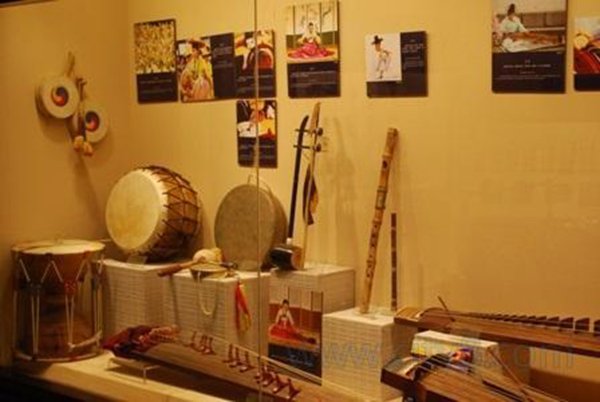
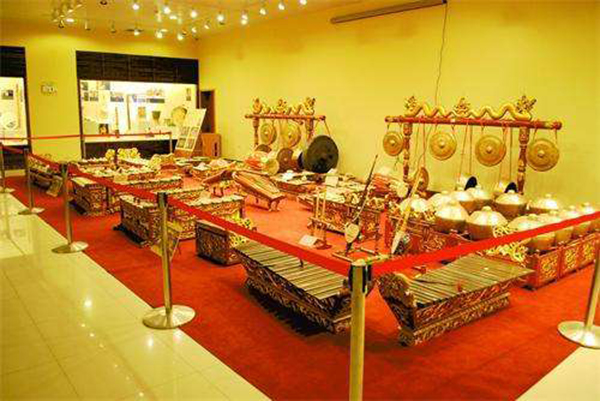
Opening hours: Monday to Friday from 9: 00 to 16: 00.

Route: Bus Xumin Line and get off at Gaoan Road Station of Zhaojiabang Road and walk about 760 meters.

13. Lei Feng Pavilion of Shanghai Jianqiao College

No.1111, Hucheng Ring Road, Pudong New Area

Building a Bridge Lei Feng Pavilion is the first Lei Feng theme memorial hall in Shanghai universities. It is divided into three sections: Lei Feng Story, Lei Feng Spirit and Lei Feng Building a Bridge. It displays the vivid image of Lei Feng in a diversified way, condenses the achievements of building a bridge to carry forward the moral education of Lei Feng spirit, and encourages teachers and students to further start from me, start from the small things around them, know Lei Feng, love Lei Feng, learn from Lei Feng, and radiate to Lingang, Pudong and Shanghai.

Opening hours: Monday to Friday, from 9: 00 to 17: 00 every day.

Route: From Longgang Express to Shuihua Road Station on Olive Road, walk for about 1.4 kilometers.

14. China Accounting Museum of Shanghai Lixin Accounting Institute

No.2800 Wenxiang Road, Songjiang District

China Accounting Museum is the world’s first accounting museum integrating academic and practical work. The museum is located in the beautiful Songjiang University Town, which is in line with the history and culture of Songjiang, the "root of Shanghai". The museum includes China exhibition hall, international exhibition hall, accounting hall of fame, temporary exhibition hall, collection library, literature database, research room, audio-visual room and other functional places, with a total construction area of 4,500 square meters and an exhibition area of 2,500 square meters. Generally speaking, it presents the functional form of "people, things and history", and comprehensively displays the accounting history of China and foreign countries and accounting celebrities who have made outstanding contributions to the accounting development in China in the 20th century.

China Accounting Museum has collected nearly 7,000 pieces of accounting historical relics and related materials at home and abroad, featuring Chinese and foreign account books, accounting supplies, accounting reports, various deeds and company files. China Accounting Museum serves accounting education and academic research and exchange, and has established extensive academic ties with accounting historians and related research institutions in more than ten countries and regions, including the United States, Italy, France, Britain, Canada, Australia, New Zealand, Japan, South Korea, South Africa, Hong Kong and Taiwan Province. The museum was jointly built by Shanghai Lixin Accounting Institute, Lixin Accounting Firm and Lixin Accounting Publishing House, and received strong support and help from all walks of life.

China Accounting Museum is divided into four parts: Preface Hall, China Exhibition Hall, International Exhibition Hall and Accounting Hall of Fame.

Opening hours: Tuesday to Friday from 9: 00 to 16: 00 (the museum is closed from Sunday to Monday, and the school is closed during the winter and summer vacations, and group visits are arranged separately).

Route: Take bus Songjiang No.17 to Wenxiang Road Station on Long Yuan Road and walk about 340 meters.

15. Fu Lei’s Life Exhibition Hall, School of Business and Foreign Languages

No.505 Guanhai Road, Pudong New Area

Thunderstorm and Rain Building-Fu Lei’s Life Exhibition Hall is located in the library of Shanghai Industrial and Commercial Foreign Languages Vocational College, No.505 Guanhai Road, huinan town, Pudong New Area. The exhibition hall will become the training and development base of oral French skills in this hospital. The exhibition hall of Fu Lei’s life contains pictures, videos, physical objects and other materials of Fu Lei’s life, which reflects the course and achievements of Fu Lei’s overseas study, rigorous scholarship, translation-oriented, versatile, and introduces his nearly 50 million-word translated works and more than a dozen versions of Fu Lei’s Letters. The information is rich and informative, and there is an image playing room. Shanghai Vocational College of Business and Foreign Languages will build the exhibition hall of Fu Lei’s life and build it into a training base for oral French skills, which can give full play to the geographical advantages for students to learn, carry forward Fu Lei’s academic spirit and inherit cultural traditions.

Opening hours: The museum is closed to the public on a daily basis, and an appointment is required. Telephone number is 021-68020687.

Route: From Huilu Special Line to Guanhai Road Renmin East Road Station, walk for about 30 meters.

16. Shanghai Publishing and Printing College Printing Museum

No.100 Shuifeng Road, Yangpu District

The printing museum of Shanghai Publishing and Printing College is located at No.100 Shuifeng Road, which was completed in 1998. It is one of the first national culture museums in Shanghai universities, one of the industrial tourism museums in Shanghai, and also a patriotic education base and a popular science education base in Shanghai. The exhibition hall covers an area of nearly 1,000 square meters and is divided into five parts: Origin, Development and Spread of Printing, Introduction and Development of Modern Printing, Shanghai Printing Industry, Printing Experience and Exhibition of Printing Exquisites. Through a large number of cultural relics, documents, physical models, simulation operations and digital images, the profound printing culture is vividly displayed, the ancient and splendid printing civilization is inherited, and the development of modern printing technology is experienced.
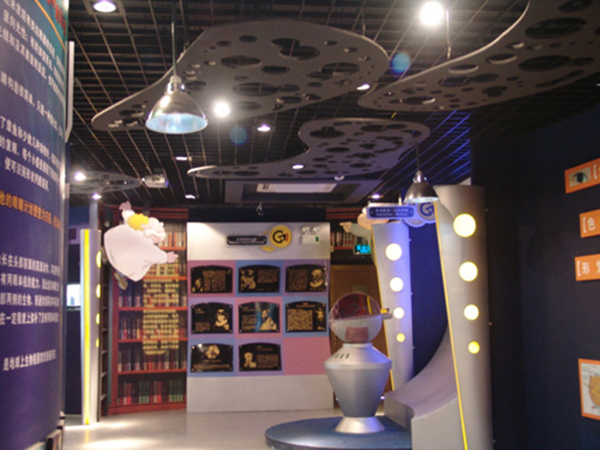
Opening hours: every Tuesday and Friday from 09: 00 to 11: 30; 14:00~16:00 (open by appointment on other working days)
Route: Take Metro Line 12 to Exit 4 of Longchang Road Station and walk for about 1.2 kilometers.

17-1. Exhibition Hall of Shanghai Institute of Sport

4th Floor, Lvwa Building, No.399 Changhai Road

The exhibition hall of Shanghai Institute of Physical Education is located at No.399 Changhai Road, which was completed on the occasion of the 50th anniversary of the school in 2002. It is located on the fourth floor of Lvwa Building, with an area of 840 square meters. The exhibition hall takes "great events, masters and buildings" as the main line, and its style is simple, elegant and plain. It is divided into exhibition areas such as Hall, Historical Exhibition Area, Building Exhibition Area, Master Exhibition Area, Wu Yunrui Thematic Exhibition Area, Competitive Sports Exhibition Area, Recent Development Achievement Exhibition Area and Multimedia Interactive Exhibition Area.

The exhibition hall of Shanghai Institute of Physical Education is open to the whole school and the society free of charge. And now due to the overall renovation of the green tile building, the exhibition hall has been completely demolished. According to the construction arrangement of high-level local colleges and universities in Shanghai, the school will build the "Shanghai Institute of Physical Education Sports Culture Exhibition Hall and Shanghai Institute of Physical Education School History Museum" on the fourth floor of Lvwa Building, which is expected to be completed by the end of 2019.

Opening hours: open by appointment; Tel: 021-51253043.

Route: Take bus 537/842 to Changhai Hospital Station and walk about 80 meters.

17-2. Wushu Museum of Shanghai Sport University

No.399 Changhai Road

The Wushu Museum of Shanghai Institute of Sport is located at No.399 Changhai Road (near Zhongyuan Road or Hengren Road). It was completed in Shanghai Institute of Sport on November 10, 2007, with a total area of 2,000 square meters. It is the first museum in the world to fully display the history and culture of Wushu. The completion of Wushu Museum is of great strategic significance for promoting traditional culture and cultivating national spirit.

There are more than 2,000 pieces in the Wushu Museum, including soldiers’ guns in the Qing Dynasty, warriors’ figurines in the Tang Dynasty, martial arts books, bronze weapons in the pre-Qin period, and stone carvings, plaques and badges related to martial arts in different periods.

Wushu Museum is divided into boxing hall, history hall, exhibition hall, stereoscopic cinema and digital multimedia interactive area. In the exhibition hall, there are more than 500 collections selected from the collection of cultural relics, and the profoundness of China Wushu is displayed from multiple angles by combining literature, pictures and multimedia display means.

Opening hours: every Tuesday to Saturday from 9: 00 to 16: 00. Tickets are free.

Route: Take bus 537/842 to Changhai Hospital Station and walk about 50 meters.

[Tips from Wenbao police]

During the visit, you should always be vigilant, pay attention not only to the exhibits, but also to the state of your belongings. It is best to travel together. Relatives and friends should take care of each other and remind each other, especially those who follow you for a long time and are close to you. Be sure to take good care of personal belongings, valuables and identity documents with you and put them close to your body.

(Original title "Shanghai University Museum Collection")