Japan’s nuclear power plant suddenly broke out!

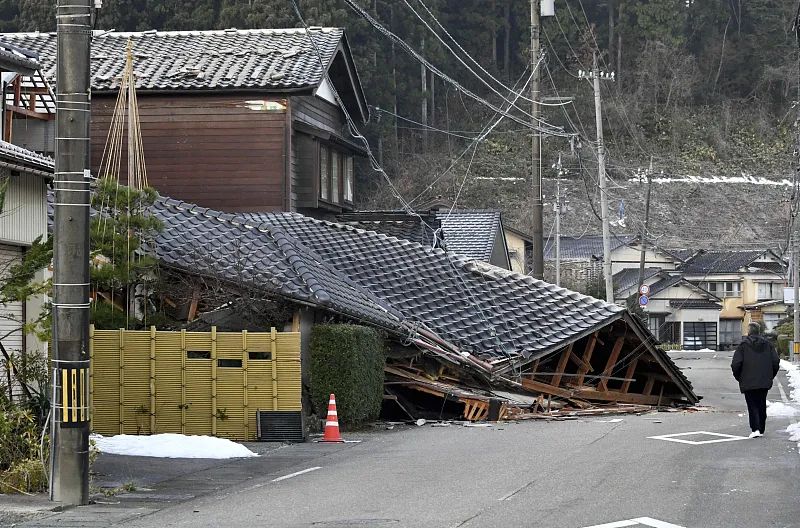
There have been many earthquakes in the Nengdeng area of Ishikawa Prefecture, Japan at 16: 00 local time on January 1, with the strongest reaching 7.6. The earthquake caused many roads and houses to be damaged and many fires broke out. The Japan Meteorological Agency named the 7.6-magnitude earthquake "Nengden Peninsula Earthquake" in 2024.

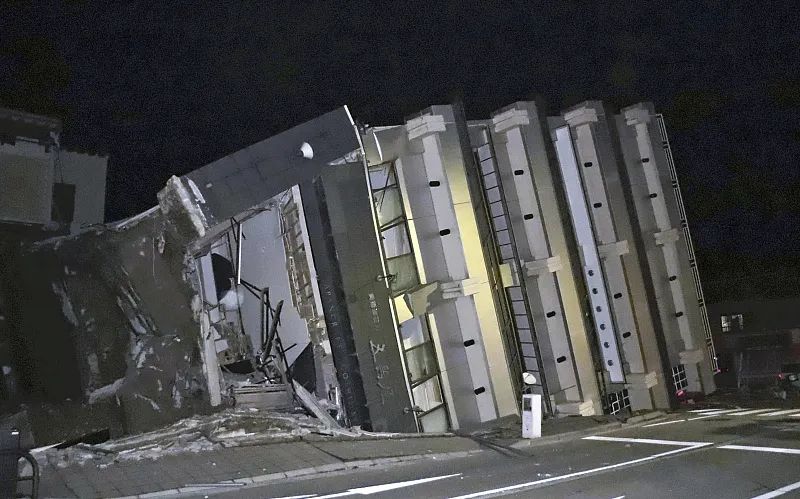
On January 2, local time, a building collapsed in Ishikawa Prefecture, Japan. Source: vision china

After a strong earthquake, the fuel pool of a nuclear power plant in Japan overflowed.

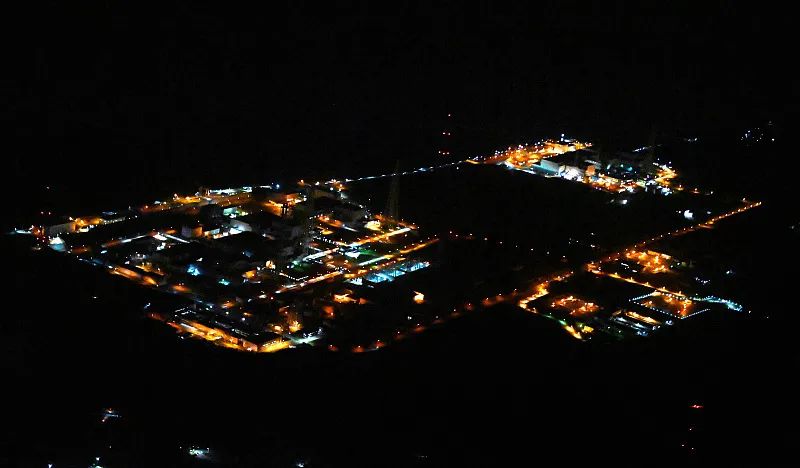
According to Japan’s "Yomiuri Shimbun" reported on January 1, the Tokyo Electric Power Company announced on the same day that it had confirmed that the reactors of Units 2, 3, 6 and 7 of the Kashiwazaki Yuki nuclear power plant in Niigata Prefecture "the water in the spent fuel pool overflowed due to the shaking of the earthquake, but it did not flow outside the building and did not affect the outside world".

Tokyo Electric Power Company said that at around 18: 45 local time on the 1st, when the spent fuel pools of Units 1 to 7 of Kashiwazaki Yuki Nuclear Power Plant were inspected, it was found that the spent fuel pools of Unit 2 were about 10 liters, Unit 3 was about 0.46 liters, Unit 6 was about 600 liters, and Unit 7 was about 4 liters. These waters contain radioactive substances, and their radioactivity levels are being determined.

According to Fuji News, the cooling water in the fuel pool spilled out of the pool due to the earthquake at Shiga Nuclear Power Station in Ishikawa Prefecture. In this regard, the Japan Atomic Energy Regulatory Agency said that the overflow of water from the fuel pool caused by the earthquake will not affect the cooling of fuel, and it has not been found to have an impact on the outside world.

On January 1, the scene of Kashiwazaki Yuki nuclear power plant after many strong earthquakes. Source: vision china

On December 27, 2023, the Japan Atomic Energy Regulatory Commission just announced the lifting of the operation ban of the Kashiwazaki Yuki nuclear power plant. Kashiwazaki Yuki Nuclear Power Plant is one of the largest nuclear power plants in the world, with 7 nuclear reactors and an installed capacity of over 8.2 million kilowatts. The nuclear power plant has been shut down for safety reasons since the Fukushima nuclear accident.

The earthquake in the Nengdeng area of Ishikawa Prefecture, Japan has killed six people.

According to a report by the Japan Broadcasting Association (NHK) on January 2, the police headquarters in Ishikawa Prefecture of Japan said that as of 5: 00 local time on January 2, the earthquake had killed six people.

Dozens of people have been reported injured in Ishikawa, Niigata, Fukui, Toyama and Gifu counties, and others have been buried in damaged houses. In addition, the fire in Lundao City has caused about 200 buildings to be burned, and the fire fighting work is still going on. The local fire department is confirming the casualties.

A building collapsed in Lundao City, Ishikawa Prefecture. Source: vision china

There were 81 earthquakes in 7 hours.

At 16: 10 p.m. local time on the 1st, an earthquake of magnitude 7.6 occurred in Nengden, Japan. Only eight minutes later, an earthquake of magnitude 6.1 occurred again in this area.

After the strong earthquake, aftershocks continued. The Japan Meteorological Agency said on the 1st that from 16: 00 to 23: 00 that day, 81 earthquakes with a magnitude of 2 or above were observed.

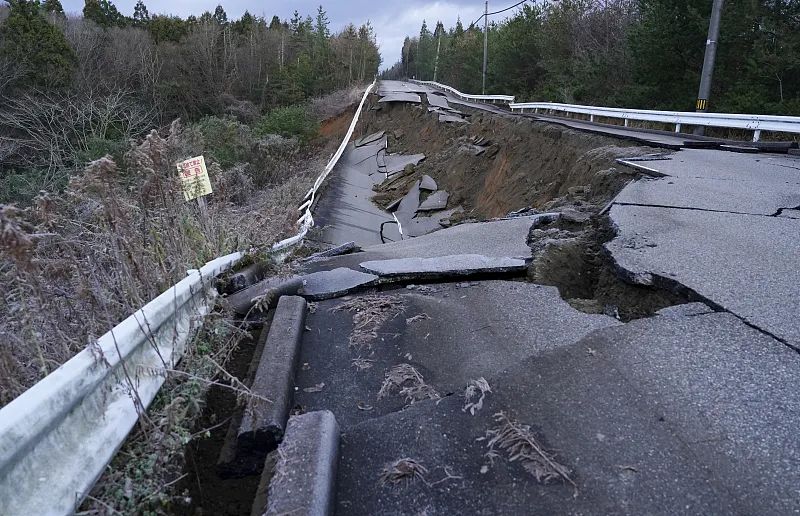
A road in Ishikawa Prefecture was cracked by the earthquake. Source: vision china

According to the sense of body and surrounding conditions, the Japan Meteorological Agency divides the earthquake intensity into 10 levels: 0, 1, 2, 3, 4, 5 weak, 5 strong, 6 weak, 6 strong and 7. The magnitude of the Nengden Peninsula earthquake was the highest magnitude of 7.

After the strong earthquake, several meters high tsunami was observed in many places in Japan, and about 5 meters high tsunami was observed in Ishikawa Prefecture near the epicenter.

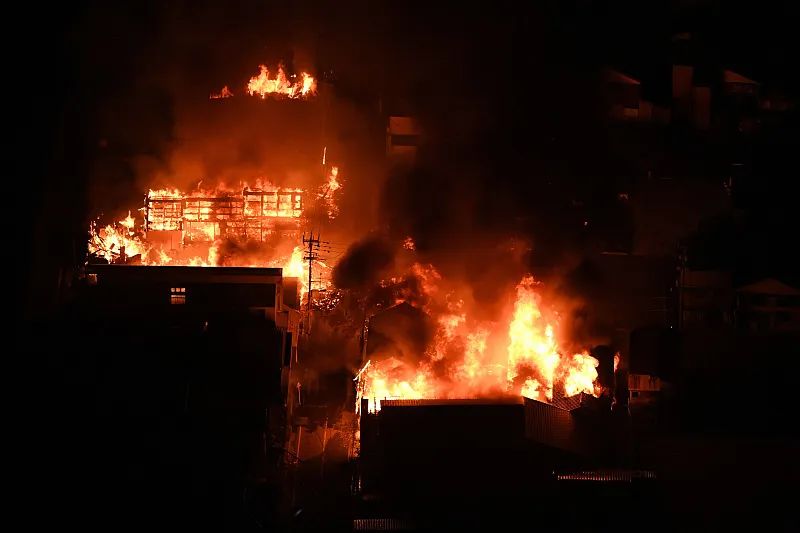
Affected by the earthquake, many residential houses collapsed in Lundao City and Zhuzhou City of Ishikawa County, and some road sections were broken. At present, four or five cracks with a depth of more than 10 cm and a length of more than 10 meters have been found on the runway of Nengdeng Airport. A "large-scale" fire broke out in Lundao City due to the earthquake. According to the local fire department, about 200 buildings including residential shops have been burned.

A fire broke out in Ishikawa Prefecture after several strong earthquakes. Source: vision china

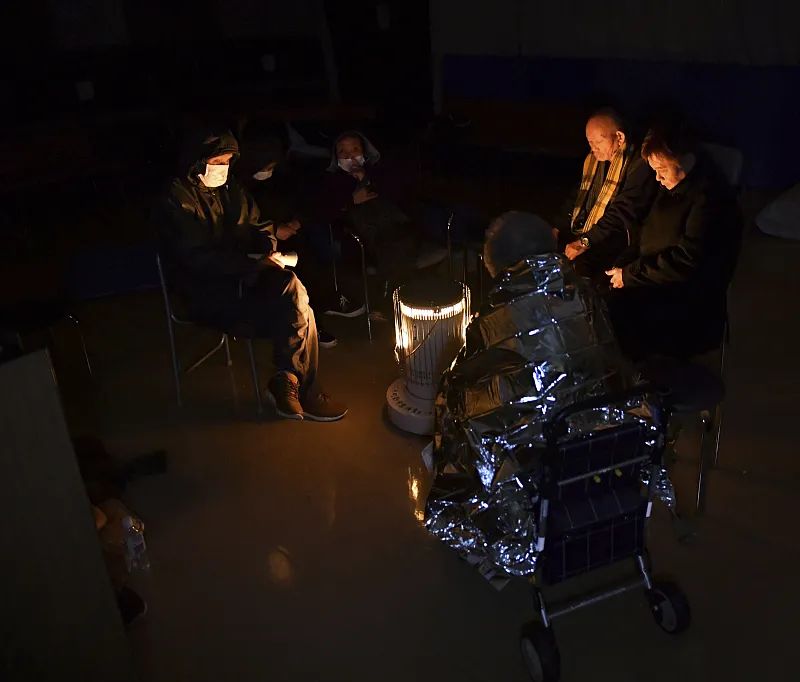
In Ishikawa, Niigata and other places, water and electricity were cut off. Japan’s Tohoku Shinkansen, Shangyue Shinkansen and Hokuriku Shinkansen have been suspended or delayed.

During the power outage, residents in Ishikawa County warmed up in the evacuation center. Source: vision china

An earthquake and tsunami struck the east coast of South Korea.

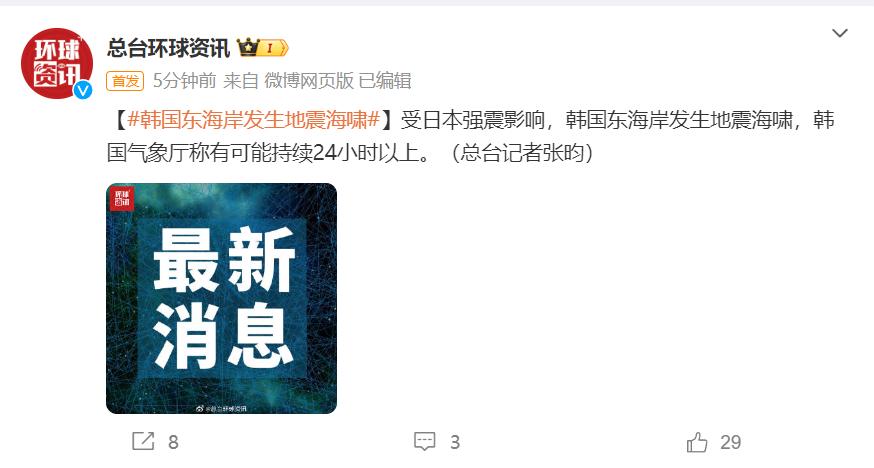
According to the news from @ 中中中中中中, affected by the strong earthquake in Japan, an earthquake and tsunami occurred on the east coast of South Korea, which the Korea Meteorological Agency said may last for more than 24 hours.

CCTV quoted an alarm issued by the Korea Meteorological Agency, saying that at 18: 30 local time on January 1, a tsunami with a height of about 0.5 meters reached Gangneung in the northeast of South Korea, and then the tsunami reached Gaocheng area further north at around 18: 48, and the tsunami reached Pohang area in the southeast at around 19: 17.

The Korea Meteorological Agency said that although the highest wave height of the tsunami is currently predicted to be 0.5 meters, the sea level rise may change due to the upward adjustment of the scale of the earthquake in Japan, and further observation of the tsunami is still needed.

On the evening of the 1st, according to the latest monitoring and analysis results, the Tsunami Warning Center of the Ministry of Natural Resources pointed out that the earthquake had triggered a local tsunami near the source, but it would not affect China’s coastal areas.

China Embassy in Japan urgently reminds.

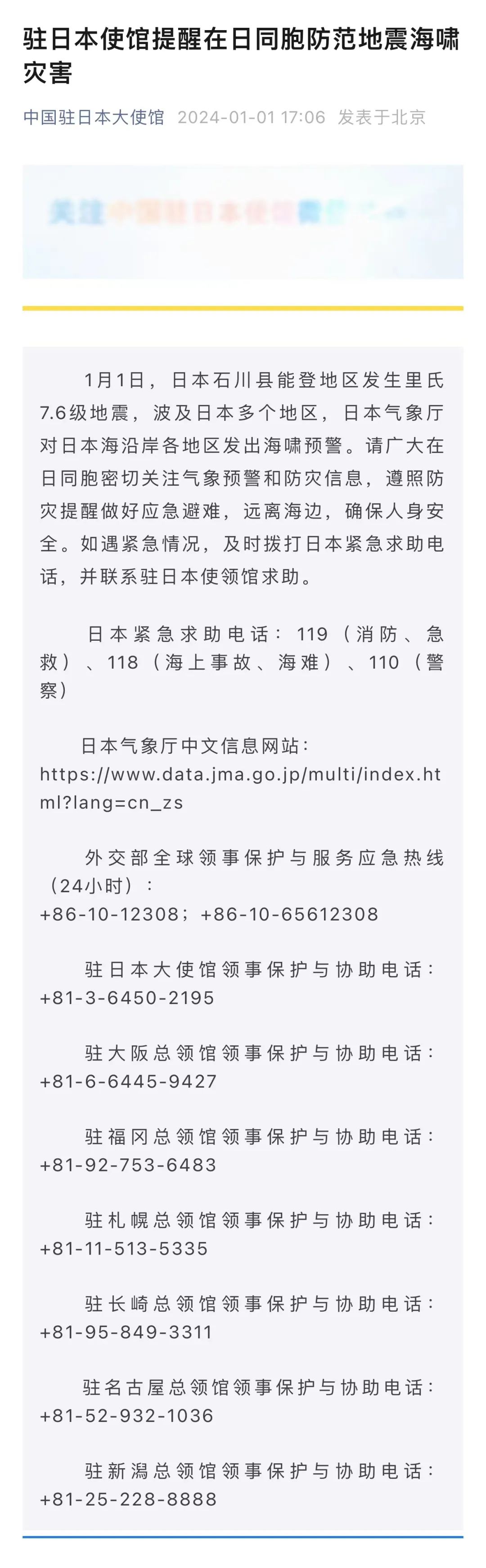
On the afternoon of the 1st, the Japanese Embassy in Japan issued a document to remind our compatriots in China to guard against the earthquake and tsunami disaster. Please pay close attention to meteorological early warning and disaster prevention information, take emergency shelter according to disaster prevention reminders, and stay away from the seaside to ensure personal safety. In case of emergency, call the Japanese emergency number in time and contact the embassy or consulate in Japan for help ↓

Source: Integrated CCTV News Client, @ 中中中中中中, China News Network, Japanese Embassy in Japan, etc.

First trial: Long Xiaoyan

Review: Wang Qiong Review: Yong Wang

Submission email: czrbxmt@126.com

Original title: "Japan’s nuclear power plant suddenly! 》

Read the original text

The first wave of pollen warning in 2024

  In the spring when everything is revived and the grass grows and the warblers fly, some people may "have a snot and a tear" every day. They are the groups allergic to pollen.

  In recent years, the incidence of pollen allergy has been rising, from infants to 60-year-olds, there have been allergic cases, and it is estimated that the allergic population in China exceeds 200 million.

  Experts summarize the main symptoms of pollen allergy and teach you how to spend this pollen season smoothly.

The first wave of pollen warning in 2024

  Pollen concentration will reach a peak.

  In the face of the upcoming pollen season, many patients with allergic rhinitis have already "shivered". According to the data of previous years, the pollen concentration in most areas reached its peak in the middle and late March, and the 2024 pollen detection and forecast service in Beijing began on March 2.

  Qin He, deputy chief physician of Otolaryngology Head and Neck Surgery, Chang Gung Hospital, Tsinghua, Tsinghua University, said that the number of patients with allergic rhinitis who came to see a doctor recently increased significantly.

  The biggest pollen allergy in spring is trees, and the common ones are Sabina vulgaris, Sycamore, Willow, Poplar and Elm. These pollen are spread by wind, which are large in quantity and small in diameter, and are easy to induce allergies.

  If the following symptoms appear periodically every spring, it may be pollen allergy:

  Rhinitis: inflammation and swelling of nasal mucosa, itchy nose, nasal congestion and sneezing, and watery nose. Usually, the symptoms in the morning will be more serious than those in the evening, and it will be aggravated in dry and windy weather, and it will feel a little better indoors than outdoors.

  Conjunctivitis: the eyes are bloodshot, itchy and tearful, and I always want to rub my eyes.

  Allergic asthma: cough, chest tightness, shortness of breath, and even "hissing" abnormal sound can be heard when panting.

  Rash: The skin, ears, mouth and palate are itchy, and rashes may appear on the skin, or little red dot and eczema like mosquito bites may appear.

  Accompanied by food allergy: people who are allergic to pollen may have symptoms such as swollen lips, vomiting and diarrhea after eating fruits or nuts.

  3 strokes to deal with pollen allergy

  Pollen allergy in spring usually lasts until May, and people with allergic history can relieve discomfort through the following measures.

  Advance medication

  Seasonal allergy can be treated first, and people with allergic history should use anti-allergic drugs according to the doctor’s advice 10~14 days before the allergic season comes. For example, nasal glucocorticoid spray and nasal antihistamine can help the nasal cavity to establish a protective barrier and reduce allergic symptoms.

  Watch the sky go out.

  Dry weather, high temperature and strong wind are more conducive to the spread of pollen and easy to cause allergic reactions.

  Allergic patients should reduce going out in this weather, especially during the period of high pollen concentration from 10 am to 5 pm. Pay attention to pollen monitoring and forecasting, and reduce outdoor activities when the index is high.

  Make good protection.

  When you have to go out, you should take necessary protection, wear masks and goggles, and apply cream to exposed skin, which can play a role in isolation. After returning home, clean the exposed skin such as nose, face and hands, and put on clean clothes.

  In addition, it is necessary to open the window less during the pollen season, and try not to hang clothes, sheets, etc. outdoors to avoid pollen contamination.

  Don’t "carry it hard" after allergies.

  Many people choose to "carry" after allergic symptoms appear, thinking that the symptoms will disappear when the allergic season passes.

  This practice is actually not desirable. If allergic rhinitis is not treated for a long time, it may further lead to diseases such as bronchial asthma and sinusitis. Children’s rhinitis may also cause secretory otitis media and aggravate adenoidal hypertrophy.

  Can be used for treating different symptoms, and can effectively relieve the discomfort caused by allergy.

  1 Pollen allergic rhinitis

  When the nose is itchy, runny nose or sneezing, you can use a nose washer and wash the nasal cavity with normal saline prepared with nasal washing salt. It is not recommended to use pure water or self-prepared salt water, which is easy to choke and cause danger.

  When the symptoms are serious, antihistamine oral medicine and local nasal spray can be selected according to the condition under the guidance of a doctor.

  2 Pollen allergic conjunctivitis

  When the eyes are itchy, you should close your eyes and gently press around the eyes to avoid touching the eyeball. Don’t rub your eyes with your hands, it may bring in more germs and cause infection.

  Some allergic conjunctivitis should be treated with hormone eye drops, which should be used reasonably under the guidance of a doctor.

  3 pollen allergic dermatitis

  When the skin shows mild erythema and rash without exudation, calamine lotion can be used to relieve itching.

  Pay attention to sun and pollen protection when going out to avoid aggravating dermatitis.

  4 pollen allergic asthma

  Asthma patients should take preventive measures before the pollen season, and keep salbutamol, terbutaline and other drugs according to the doctor’s advice, and relieve the acute attack in time.

  How to distinguish pollen allergy from cold?

  Guan Kai, deputy chief physician of Allergy Department of Peking Union Medical College Hospital, said that the symptoms of pollen allergy and cold are different.

  The number of sneezes is different. The number of cold sneezing attacks and the number of continuous sneezing are relatively small, generally 1~2 at a time. During the attack of allergic rhinitis, there are often several paroxysmal sneezes every day, ranging from 3 to 5 at a time to more than a dozen or even more.

  Whether the nose itches. When catching a cold, the main symptom of the nose is not itching, but prolonged nasal congestion and runny nose. The common symptoms of anaphylaxis are itchy nose and a large number of clear-water nasal mucus and nasal congestion.

  Are there any systemic symptoms? A cold is often accompanied by fever, headache, fatigue, muscle aches and other general malaise symptoms. Allergies are generally not accompanied by systemic symptoms such as fever.

  What is the state of the eyes? If you are allergic to eyes, you will often rub your eyes and blink frequently in severe cases.

  People with no allergic history, if they often have itchy nose, sneezing, runny nose and stuffy nose, sneeze many times at a time, and have no symptoms such as fever and general weakness, should not treat a cold directly or take cold medicine by themselves, so as to avoid the harm to health caused by wrong medication.

  Interviewed experts:

  Qin He, Deputy Chief Physician of Otolaryngology Head and Neck Surgery, Chang Gung Hospital, Tsinghua, Tsinghua University.

  Guan Kai, Deputy Chief Physician, Department of Allergy, Peking Union Medical College Hospital

[Editor in charge:
Zhao Xi
]