The Sacrifice’s box office is bright and sincere, paying tribute to historical heroes

1905 movie network news The film is being shown in the country, and the box office exceeded 240 million on the second day of release. The single-day box office and the number of people watching movies were the highest on that day, and the next day after the painting was opened, it still contributed more than 60% of the market. On the day of the release on the 23rd, the highest scores of 9.5 and 9.4 were reached on the first day of the annual release of the ticketing platform. Even in the unpopular period after the National Day, the film still aroused the audience’s high enthusiasm for watching movies, driving the mainland market to pick up.
The film continues to gain a good reputation: "The whole film is like a generous and tragic heroic poem." "Zhang Yi, Jason Wu and other leading actors have dedicated their superb acting skills!" The film not only attracted the elderly audience to the cinema to relive the eventful years, but also the young audience walked into history in the light and shadow of the big screen, spontaneously stood up and applauded, and said with excitement: "Thank you The Sacrifice for letting me see my grandparents when they were young, and thank the motherland for remembering them." It is also the audience’s praise that makes the box office of the film continue to be strong and is expected to go out of the long term.
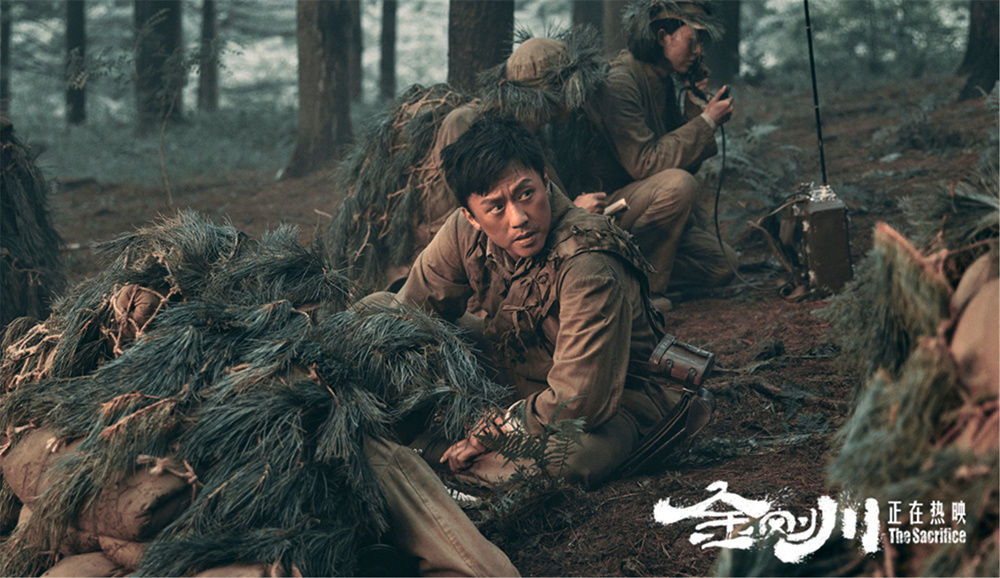
无论是纪念抗美援朝出国作战70周年的历史写照,还是引发国人集体共鸣的时代辉映;无论是三位硬核导演协力创作探索工业新高度,还是“金刚天团”并肩作战深度诠释战地群像,都是《金刚川》剧组上下五千余人在紧张周期内奉上的心血答卷,不仅体现出中国电影人的行业担当,更传递着全员对当年英烈的敬畏之情。
主题背景篇 经典题材“信服民族之不可战胜”
抗美援朝战争,是世界战争史上的一次奇迹,是一次以弱战强,以小对多,一次实力悬殊但结果让人震惊的战争。70年前,中国人民志愿军雄赳赳气昂昂跨过鸭绿江,投身这场保家卫国之战,最终用伟大胜利向世界宣告:“西方侵略者几百年来只要在东方一个海岸上架起几尊大炮就可霸占一个国家的时代是一去不复返了。”以战止战、以武止戈,用胜利赢得和平、赢得尊重,恰恰是“抗美援朝,保家卫国”不可磨灭的历史意义所在。而回首新中国电影史,抗美援朝题材亦从不缺乏经典。无论是1956年造成万人空巷,令一首《我的祖国》传唱至今的。还是1964年,“为了胜利,向我开炮”的。都是艺术水准与人文精神俱佳的传世之作。
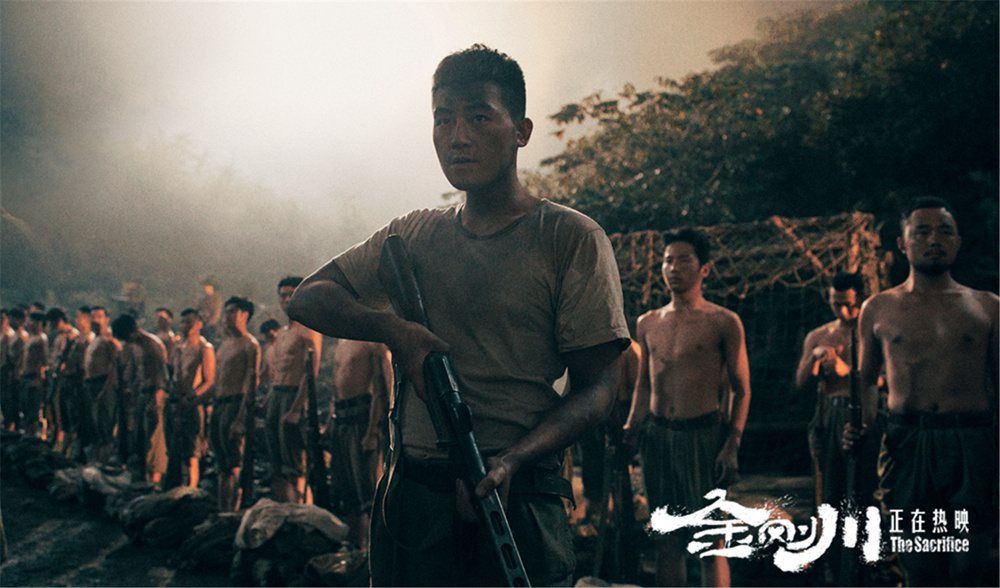
This time, The Sacrifice brought the audience back to the long-lost theme of the War to Resist US Aggression and Aid Korea, which was released on the occasion of the 70th anniversary of the War to Resist US Aggression and Aid Korea. It is China soldiers’ spirit that spans the times and never dies, which has created a solid footprint of the great rejuvenation of the Chinese nation and inspired us to move forward in the future. The bridge that is constantly being destroyed and rebuilt in the film refers to the destruction and reconstruction of human body and spirit in the battlefield. When people’s flesh and blood become the last line of defense in war, the cruelty and sacrifice among them directly hit people’s hearts. Some film critics were deeply moved by the heroic spirit conveyed by the film across the times: "This kind of film, which focuses on showing the little people on the non-frontal battlefield, can make people feel the truth and the embodiment of the national backbone in individuals, thus convincingly realizing why a nation with such an individual is invincible."
Director’s cooperation article "Light and shadow thinking" The development of film industry can be seen by the naked eye "
In The Sacrifice, the three directors, with their strong control ability and personal expression on big scenes, actions and war themes, made concerted efforts with their respective directors, taking a little-known "crossing the bridge" as the breakthrough point. Different from the omniscient perspective narration of general war movies, The Sacrifice was upgraded to three groups of perspectives presented by three directors. From the perspective of soldiers on one side of the bridge, the perspective of the sky and the perspective of gunners on the other side of the bridge, the three segments resonate with each other. Some viewers intuitively felt the fresh way of presentation: "The collaborative treatment of multiple scenes by the three directors on both sides of the river made the plot more closely connected and the war scene more realistic." The overall impression of the film also made the film critics amazed: "The whole film is neat and smooth, and the parts directed by the three directors are seamlessly connected. You have me. If you don’t know the audience, you may not even feel the difference, regardless of the image texture or style."
Director Guan Hu revealed that from the initial preparation to the completion of the film, the time is tight and the task is heavy, and almost every day, the film is rushing to make progress. However, thanks to the sincere cooperation of the three directors, "Director Frant Gwo has an intensive work style with high accuracy and completion; Director Lu Yang accurately grasps the emotional factors among tiny characters. The three of us have become one person, regardless of you and me, in order to complete this film. " Director Frant Gwo recalled his shooting experience, and had already pre-filmed the camera before starting. The 2600-person visual effects team cooperated sincerely and produced it efficiently, "seeing the development of China film industry with the naked eye". Director Lu Yang can’t forget the difficulties in shooting: "The natural environment for shooting is particularly harsh, and continuous rainfall has consumed too many shooting cycles, making the whole team constantly experience the ability to improvise. "The Sacrifice’s unique structural perspective is a novel and ingenious shooting attempt. The three directors combine their own strengths in different dimensions to present the audience with a different kind of war film with new era thinking.
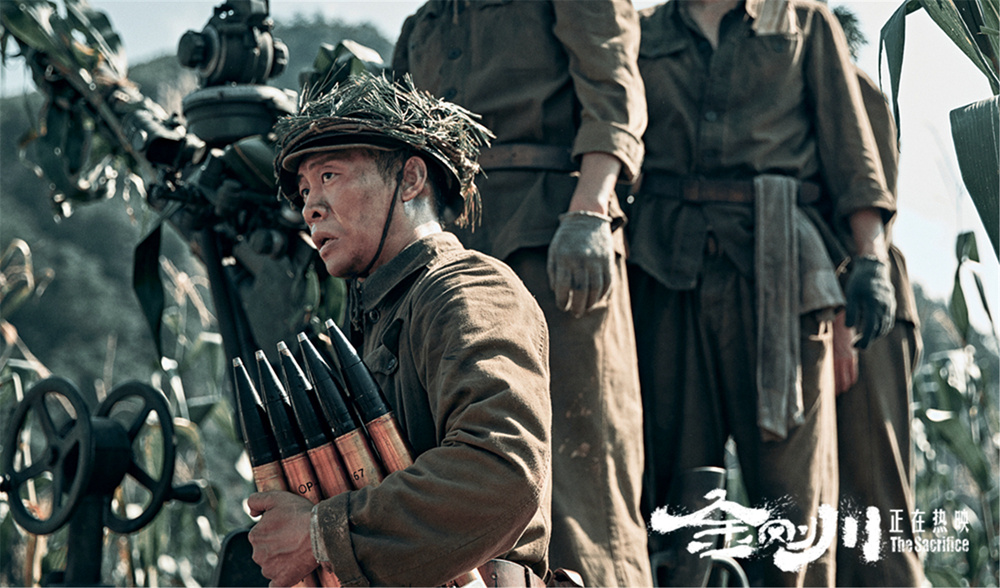
The strength lineup of the actor group demonstrates the friendship between life and death.
The Sacrifice was starred by Zhang Yi, Jason Wu, Li Jiuxiao and Vision Wei, especially by Deng Chao, starring Qiu Tian and Zhou Siyu, and played by Ouhao Friendship, creating a portrait of the moving people in history. Zhang Yi and Jason Wu play gunner Zhang Fei and Guan Lei respectively, and make self-sacrifice to ensure that large troops cross the river. A pipe bag and a whistle convey the tenderness of caring for each other and competing to die. The company commander played by Deng Chao also forgot his life to protect the bridge. The phrase "Don’t worry about me, repair the bridge" was heard by countless audiences in tears; Li Jiuxiao and Qiu Tian play fellow villagers, and they have no chance to talk on the battlefield. The "see you at the front line" conveyed in the walkie-talkie has become a "difficult meaning" in the hearts of many viewers; Vision Wei plays Yan Rui, the company commander of the engineering company, and without moving a shot, he interprets the heroic fight against the enemy and the division of labor. Outside the main battlefield, the soldiers completed the ceremony of fighting and life in the undercurrent King Kong Kawanoe, and the rumbling guns echoed in the distance.
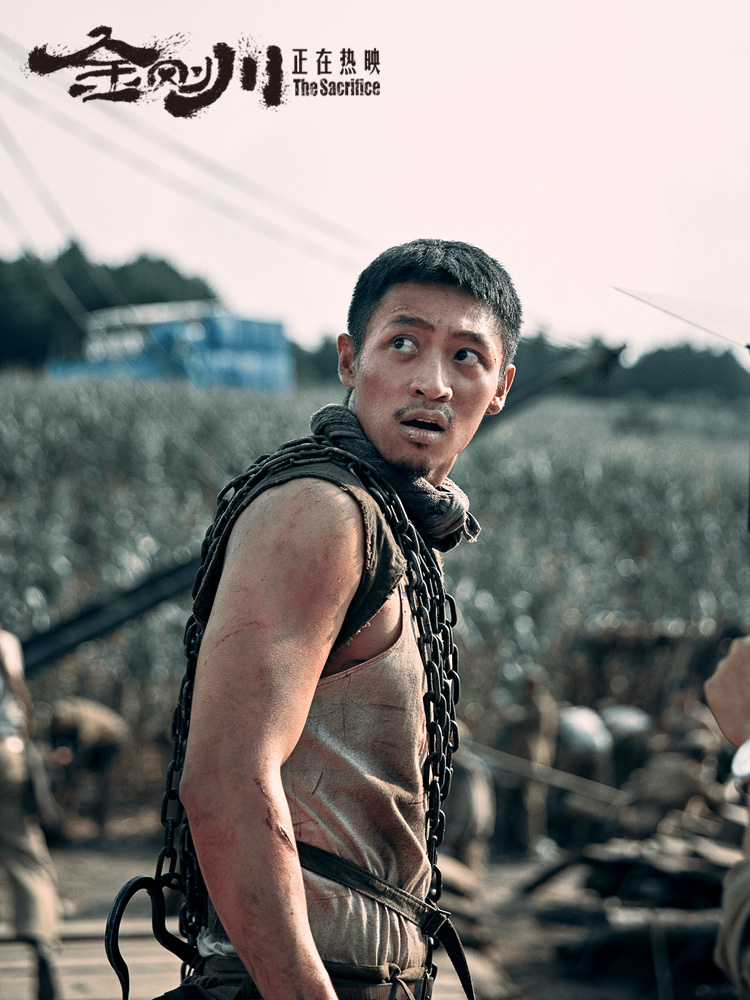
The Sacrifice’s cast is the mainstay of the war types in recent years, and there is no lack of fresh blood to join. The filmmakers sincerely and wholeheartedly pay tribute to the most lovely people, and record this little-known war stories with light and shadow. The wonderful group image interpretation makes the audience hooked: "The battlefield is very vivid and three-dimensional, from dialects and life details to emotional accumulation and outbreak. Every actor is relaxed." "Several turning points and dramatic points of the characters have been deeply played by Zhang Yi. It can be said that his performance is not only the eye of the film, but also one of the best performances in Chinese films this year." "Jason Wu, Deng Chao and Li Jiuxiao are highly integrated with the characters, and Vision Wei’s appearance is also beyond the shackles of idols. The image of a tough guy is impressive."
The audience empathizes with each other, constructs spiritual dialogue, and conveys the prayer for peace.
2020 is an extraordinary year for Chinese. At the beginning of the year, the "COVID-19" epidemic broke out and swept the world. Under the madness of the virus, one side was in trouble and all sides supported it. Tens of thousands of medical staff across the country resolutely supported Hubei in fighting the epidemic and staged a "most beautiful retrograde". The people of the whole country have spontaneously set up countless lifelines to transport medical supplies, and practiced the national spirit of courage and unity with practical actions. Since the flood season, the southern part of China has experienced several rounds of heavy rainfall, and some areas have experienced serious floods. In times of crisis, officers and men of the People’s Liberation Army and the Armed Police Force threw themselves into fighting floods and making every effort to protect people’s lives and property. It can be said that China has never lacked heroes. The so-called hero is just every ordinary person who stands up in times of crisis.
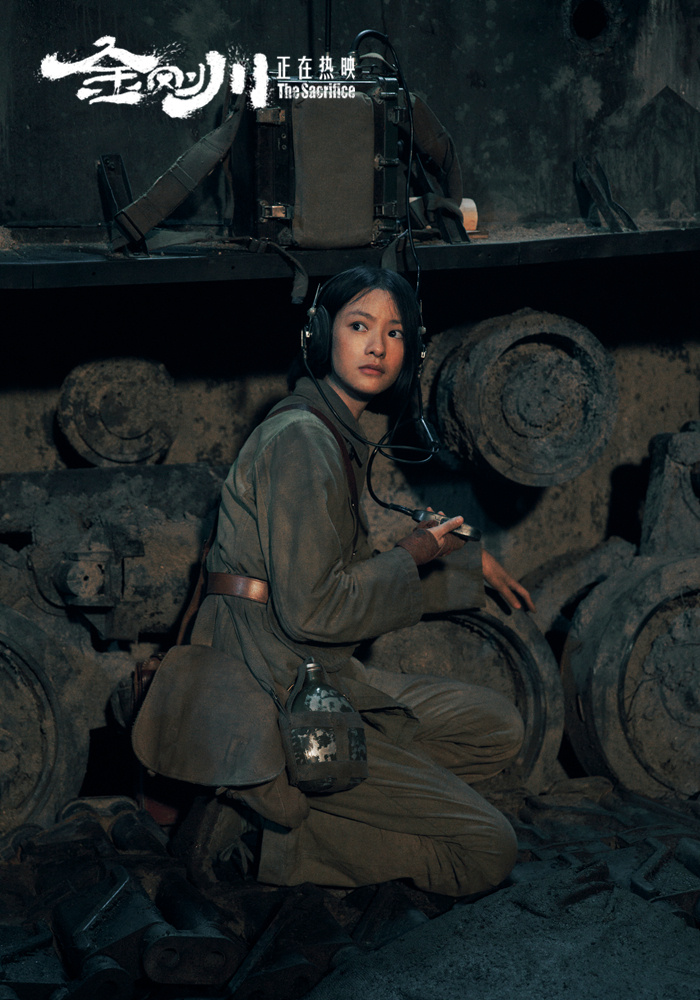
Under this background, the release of The Sacrifice is aimed at the common memory and emotion of China, and the emotional richness behind it has been accumulated in the hearts of Chinese from generation to generation. As director Guan Hu said: "We not only want to let the older audience look back, but also hope to let a new generation of young audiences enter history and build a bridge of spiritual dialogue across the times." A young audience was moved and said: "In the past, my understanding of the War to Resist US Aggression and Aid Korea only stayed in history textbooks. The Sacrifice let me feel the eventful years of that era through the big screen, and I really understood the fearless spirit of the martyrs who exchanged flesh and blood for national peace." Some viewers feel that peace is hard-won: "Only by truly interpreting the cruelty of war can the audience feel the greatness of their ancestors and better cherish the current peace."
The film The Sacrifice focuses on the tiny characters in the war. They inspire and entrust each other with life and death, and their fighting will and battlefield friendship show that every audience can feel the emotional resonance across the times — — Based on the national justice rooted in the traditional culture of China, it depicts an epic of national heroes in the present society. The Sacrifice asked several generations of audiences to join hands and look back at the historical light and shadow with a sense of ceremony, pinning Chinese’s collective national feelings and thinking about the war, so as to cherish the present peace more.