Japan’s nuclear power plant suddenly broke out!

There have been many earthquakes in the Nengdeng area of Ishikawa Prefecture, Japan at 16: 00 local time on January 1, with the strongest reaching 7.6. The earthquake caused many roads and houses to be damaged and many fires broke out. The Japan Meteorological Agency named the 7.6-magnitude earthquake "Nengden Peninsula Earthquake" in 2024.
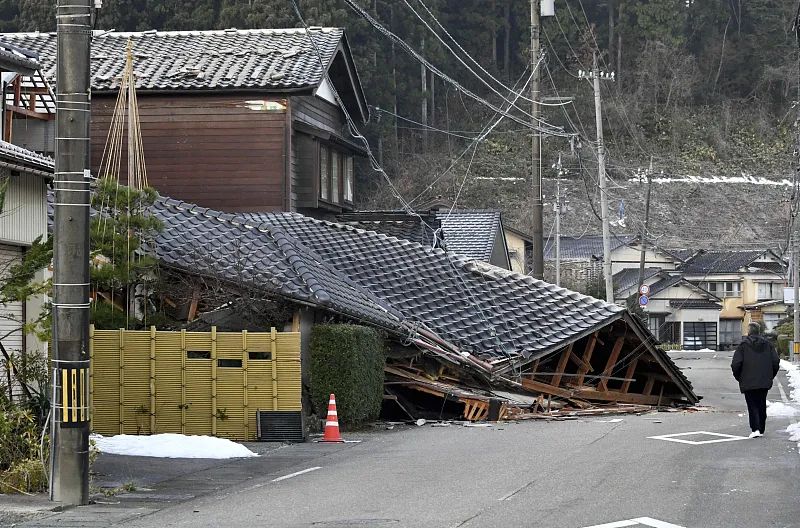
On January 2, local time, a building collapsed in Ishikawa Prefecture, Japan. Source: vision china

After a strong earthquake, the fuel pool of a nuclear power plant in Japan overflowed.

According to Japan’s "Yomiuri Shimbun" reported on January 1, the Tokyo Electric Power Company announced on the same day that it had confirmed that the reactors of Units 2, 3, 6 and 7 of the Kashiwazaki Yuki nuclear power plant in Niigata Prefecture "the water in the spent fuel pool overflowed due to the shaking of the earthquake, but it did not flow outside the building and did not affect the outside world".

Tokyo Electric Power Company said that at around 18: 45 local time on the 1st, when the spent fuel pools of Units 1 to 7 of Kashiwazaki Yuki Nuclear Power Plant were inspected, it was found that the spent fuel pools of Unit 2 were about 10 liters, Unit 3 was about 0.46 liters, Unit 6 was about 600 liters, and Unit 7 was about 4 liters. These waters contain radioactive substances, and their radioactivity levels are being determined.

According to Fuji News, the cooling water in the fuel pool spilled out of the pool due to the earthquake at Shiga Nuclear Power Station in Ishikawa Prefecture. In this regard, the Japan Atomic Energy Regulatory Agency said that the overflow of water from the fuel pool caused by the earthquake will not affect the cooling of fuel, and it has not been found to have an impact on the outside world.
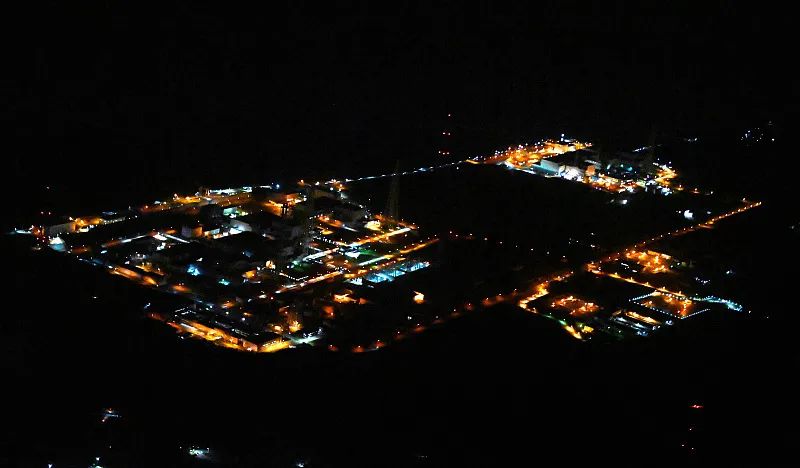
On January 1, the scene of Kashiwazaki Yuki nuclear power plant after many strong earthquakes. Source: vision china

On December 27, 2023, the Japan Atomic Energy Regulatory Commission just announced the lifting of the operation ban of the Kashiwazaki Yuki nuclear power plant. Kashiwazaki Yuki Nuclear Power Plant is one of the largest nuclear power plants in the world, with 7 nuclear reactors and an installed capacity of over 8.2 million kilowatts. The nuclear power plant has been shut down for safety reasons since the Fukushima nuclear accident.

The earthquake in the Nengdeng area of Ishikawa Prefecture, Japan has killed six people.

According to a report by the Japan Broadcasting Association (NHK) on January 2, the police headquarters in Ishikawa Prefecture of Japan said that as of 5: 00 local time on January 2, the earthquake had killed six people.

Dozens of people have been reported injured in Ishikawa, Niigata, Fukui, Toyama and Gifu counties, and others have been buried in damaged houses. In addition, the fire in Lundao City has caused about 200 buildings to be burned, and the fire fighting work is still going on. The local fire department is confirming the casualties.
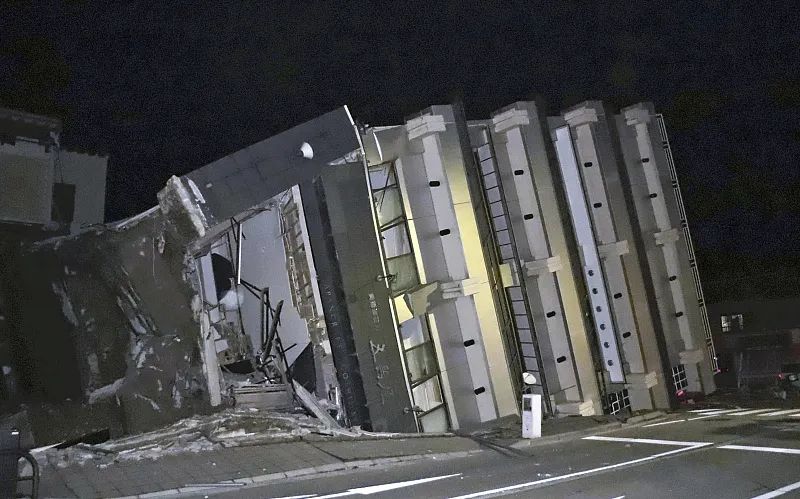
A building collapsed in Lundao City, Ishikawa Prefecture. Source: vision china

There were 81 earthquakes in 7 hours.

At 16: 10 p.m. local time on the 1st, an earthquake of magnitude 7.6 occurred in Nengden, Japan. Only eight minutes later, an earthquake of magnitude 6.1 occurred again in this area.

After the strong earthquake, aftershocks continued. The Japan Meteorological Agency said on the 1st that from 16: 00 to 23: 00 that day, 81 earthquakes with a magnitude of 2 or above were observed.
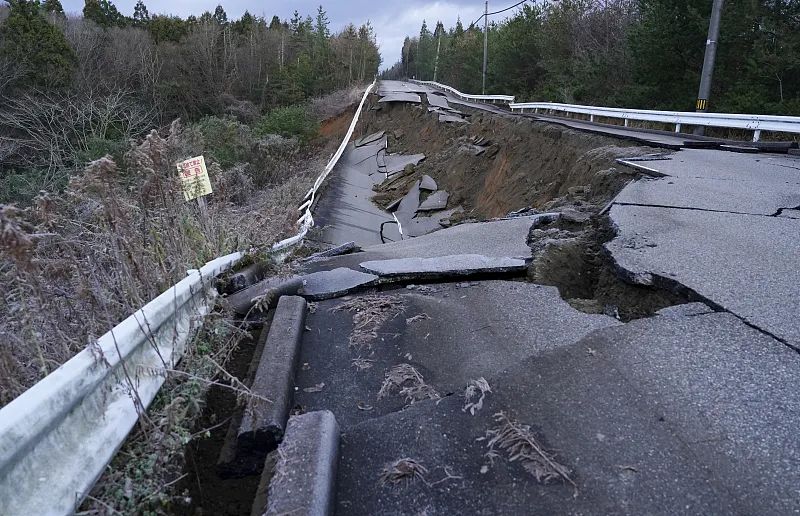
A road in Ishikawa Prefecture was cracked by the earthquake. Source: vision china

According to the sense of body and surrounding conditions, the Japan Meteorological Agency divides the earthquake intensity into 10 levels: 0, 1, 2, 3, 4, 5 weak, 5 strong, 6 weak, 6 strong and 7. The magnitude of the Nengden Peninsula earthquake was the highest magnitude of 7.

After the strong earthquake, several meters high tsunami was observed in many places in Japan, and about 5 meters high tsunami was observed in Ishikawa Prefecture near the epicenter.

Affected by the earthquake, many residential houses collapsed in Lundao City and Zhuzhou City of Ishikawa County, and some road sections were broken. At present, four or five cracks with a depth of more than 10 cm and a length of more than 10 meters have been found on the runway of Nengdeng Airport. A "large-scale" fire broke out in Lundao City due to the earthquake. According to the local fire department, about 200 buildings including residential shops have been burned.

A fire broke out in Ishikawa Prefecture after several strong earthquakes. Source: vision china

In Ishikawa, Niigata and other places, water and electricity were cut off. Japan’s Tohoku Shinkansen, Shangyue Shinkansen and Hokuriku Shinkansen have been suspended or delayed.
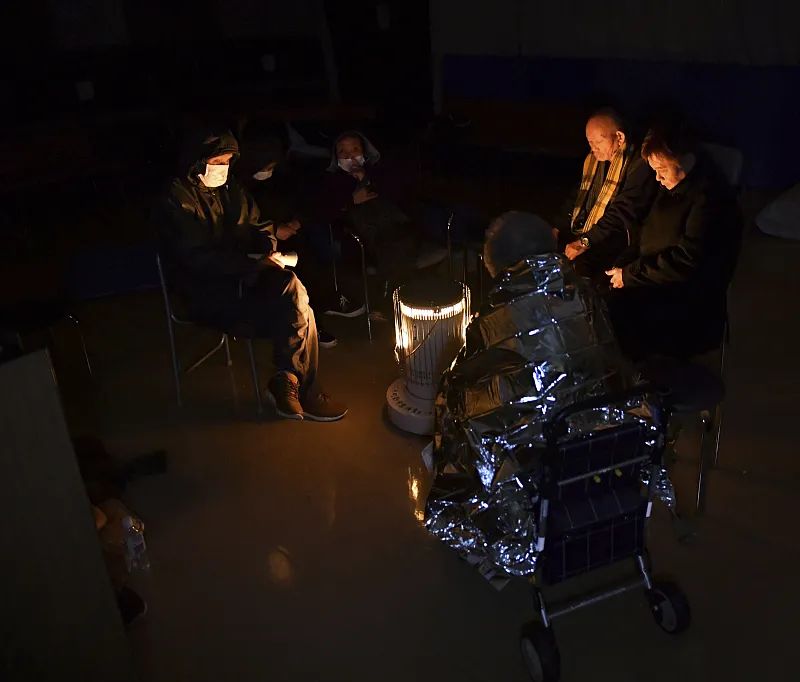
During the power outage, residents in Ishikawa County warmed up in the evacuation center. Source: vision china

An earthquake and tsunami struck the east coast of South Korea.

According to the news from @ 中中中中中中, affected by the strong earthquake in Japan, an earthquake and tsunami occurred on the east coast of South Korea, which the Korea Meteorological Agency said may last for more than 24 hours.

CCTV quoted an alarm issued by the Korea Meteorological Agency, saying that at 18: 30 local time on January 1, a tsunami with a height of about 0.5 meters reached Gangneung in the northeast of South Korea, and then the tsunami reached Gaocheng area further north at around 18: 48, and the tsunami reached Pohang area in the southeast at around 19: 17.

The Korea Meteorological Agency said that although the highest wave height of the tsunami is currently predicted to be 0.5 meters, the sea level rise may change due to the upward adjustment of the scale of the earthquake in Japan, and further observation of the tsunami is still needed.

On the evening of the 1st, according to the latest monitoring and analysis results, the Tsunami Warning Center of the Ministry of Natural Resources pointed out that the earthquake had triggered a local tsunami near the source, but it would not affect China’s coastal areas.

China Embassy in Japan urgently reminds.

On the afternoon of the 1st, the Japanese Embassy in Japan issued a document to remind our compatriots in China to guard against the earthquake and tsunami disaster. Please pay close attention to meteorological early warning and disaster prevention information, take emergency shelter according to disaster prevention reminders, and stay away from the seaside to ensure personal safety. In case of emergency, call the Japanese emergency number in time and contact the embassy or consulate in Japan for help ↓

Source: Integrated CCTV News Client, @ 中中中中中中, China News Network, Japanese Embassy in Japan, etc.

First trial: Long Xiaoyan

Review: Wang Qiong Review: Yong Wang

Submission email: czrbxmt@126.com

Original title: "Japan’s nuclear power plant suddenly! 》

Read the original text

A new round of world military scientific and technological revolution is surging.

The Russian military "dagger" hypersonic weapon system successfully completed the test in the Arctic, and the US Navy began to test unmanned sailboats in the waters near Jordan … At the end of the year and the beginning of the year, military powers such as the United States and Russia made frequent moves in the research and development of new weapons and equipment. After a little combing, it is not difficult to find that in recent years, with the continuous progress of global scientific and technological level, a large number of cutting-edge technologies have been applied to the military field, a new round of world military scientific and technological revolution is surging, and the form of war is quietly changing.

Hypersonic weapons have developed rapidly

Hypersonic weapons mainly refer to weapons based on hypersonic flight technology, which fly at more than 5 times the speed of sound, including missiles, bombers, reconnaissance planes and so on. This new weapon, which is known for its quickness, is considered by many military experts to change the future war mode to some extent. In recent years, the United States, Russia and other world military powers have launched fierce competition in the field of hypersonic weapons, launched a number of hypersonic weapons research and development projects, and some projects have made major breakthroughs.

Russia is in a leading position in the field of hypersonic weapons. As early as the late 1980s, the Soviet Union began to develop the hypersonic cruise missile code-named "X-90". At present, there are three kinds of hypersonic missiles owned by Russia, namely zircon, dagger and pioneer. Among them, the "dagger" hypersonic missile has a speed of up to Mach 10, which is mounted and launched by MIG -31 fighters. It can carry conventional warheads or nuclear warheads and is the first hypersonic weapon put into use by the Russian army. The speed of "Pioneer" hypersonic intercontinental missile exceeds Mach 20, which is enough to easily penetrate the air defense and anti-missile network carefully constructed by opponents. At the end of 2019, the first land-based "Pioneer" missile regiment of the Russian army joined the combat duty. "Zircon" is Russia’s first sea-based hypersonic cruise missile. It was successfully tested in October 2020 with a flight speed of Mach 9 and can be launched from a warship or submarine.

America also attaches great importance to hypersonic weapons. At present, the US military services are developing hypersonic weapons, mainly including the navy’s "conventional fast attack" hypersonic glider, the army’s "long-range hypersonic weapon", the air force’s AGM-183 "air-launched rapid response weapon" and "hypersonic attack cruise missile". However, the development of US hypersonic weapons is not smooth. In 2021, the US Air Force conducted three test launches of new hypersonic missiles, all of which ended in failure.

In addition, Japan, South Korea, India and other countries also have their own hypersonic weapons development plans and projects. It can be predicted that in the field of hypersonic weapon research and development, the situation of fierce competition among countries will become more and more obvious.

Artificial intelligence technology is widely used.

Artificial intelligence is one of the core technologies leading a new round of military revolution. In recent years, in order to seize the commanding heights of military science and technology, major countries have promoted the application of artificial intelligence technology in the military field while upgrading the research and development of artificial intelligence to a national strategy.

The United States is the first country to develop artificial intelligence technology and apply it to the military field. At present, the Advanced Research Projects Agency of the U.S. Department of Defense has launched the "Next Generation Artificial Intelligence" project, which mainly includes: promoting the technical update of key business process automation of the Department of Defense, improving the adaptability and reliability of the artificial intelligence system, enhancing the security and flexibility of machine learning and artificial intelligence technology, and innovating the algorithms and applications of the next generation artificial intelligence. At the same time, the US military has incorporated the development of artificial intelligence technology into the information plan of the Ministry of National Defense. According to reports, the US Navy EA-18G Growler electronic warfare aircraft has the ability to counter the enemy’s unknown radar due to the use of machine learning algorithms and other technologies.

Russian military artificial intelligence technology has been tested in actual combat. In the battle to help the Syrian government forces fight against the rebels, the Russian army used combat robots, drones and automated command systems. At present, the artificial intelligence marine robots independently developed by Russia include "Platform -M" and "Argo", which can perform tasks such as patrol, reconnaissance, demining and close fire support. In addition, the Russian army has also developed a robot that looks like a military dog and can run quickly, which is used to undertake tasks such as transporting ammunition supplies to the line of fire.

Britain, Germany, Israel and other countries have also taken artificial intelligence technology research as the focus of national defense construction. Britain claims to have developed a military robot called Homo sapiens. Germany’s Typhoon fighters have successfully connected with remote control vehicles. The Israeli military is developing intelligent tanks, which can plan tasks independently, drive automatically and use weapons automatically.

Unmanned combat weapons are in the ascendant

In today’s era, a new round of world scientific and technological revolution is developing rapidly, and the form of war is accelerating to intelligent evolution. In order to win the future war, major countries have accelerated the development of unmanned combat weapons and actively explored man-machine cooperative warfare methods.

According to the plan of the Russian Ministry of Defense, the Russian army is setting up the first unmanned combat unit composed of attack robots. The unit includes five sets of Uranus -9 robot systems and 20 unmanned combat vehicles. Uranus -9 is a multi-functional combat platform, equipped with 2A72 30 mm automatic artillery, 7.62 mm machine gun, anti-tank missiles and other weapons. At present, the Russian army, navy and air force have all installed unmanned combat platforms. Every division and brigade-level unit of the Russian Army has a drone company, and the Russian Northern Fleet has a drone regiment.

Most of the US Army combat units at all levels have UAV units. The US Navy is implementing the "Ghost Fleet" plan and preparing to build a force including 10 unmanned ships. At present, the US Navy has completed the twin-boat test of two unmanned ships, the Wanderer and the Ranger. These two ships will be equipped with Mk41 missile vertical launch system or Mk57 advanced vertical launch system. According to a guidance document issued by the US Navy in early January this year, medium and large unmanned surface combat ships and their formations will be the focus of their future development.

France, Britain and other countries are also striving for breakthroughs in the research and development of unmanned combat weapons. The British Ministry of Defence plans to start manufacturing the first unmanned combat aircraft in 2025. Equipped with missiles and electronic warfare equipment, the fighter will become the first unmanned fighter in Britain to shoot down enemy aircraft and resist the threat of surface-to-air missiles. The British Ministry of Defence claims that this unmanned aerial vehicle can find and avoid the enemy’s air defense system, and can continue to perform tasks even in the case of cyber attacks.

(Author: School of Information and Communication, National University of Defense Technology)

Above: Russian naval vessels test-fired "Zircon" hypersonic missiles.

Information picture